
Essential Overhead Crane Electrical Troubleshooting Guide
Key Faults And Analysis
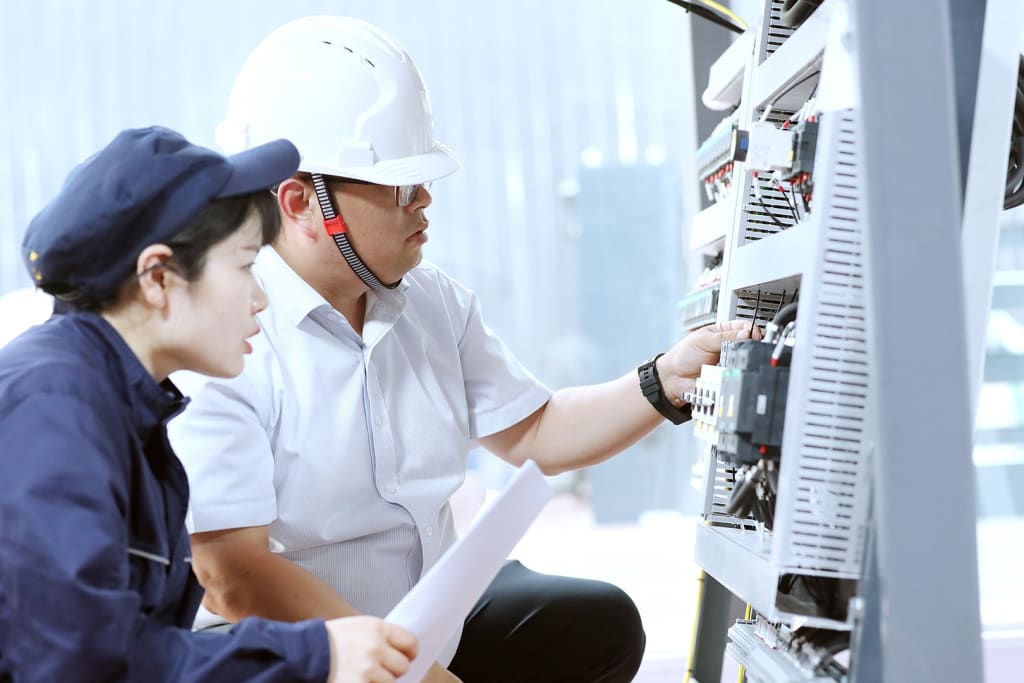
Overhead Crane Electrical Troubleshooting is crucial due to the high frequency of crane usage. Any malfunction can significantly impact continuous production, potentially causing damage to high-value production equipment such as generators and turbines, which would result in financial losses for the company. Therefore, conducting fault analysis and addressing issues promptly in bridge cranes has become an essential part of equipment management in modern enterprises.
The Meaning Of Overhead Crane Electrical Faults
Electrical faults refer to events and conditions where electrical systems, devices, or components can no longer, or will soon be unable to, perform their intended functions. In other words, when at least one critical characteristic or parameter in the system, device, or component deviates significantly from its acceptable range, or when the system, device, or component’s performance is significantly below its normal level and unable to fulfill its expected function, it is considered a fault. Broadly speaking, electrical faults can also be defined as any abnormal phenomenon that causes an electrical system to exhibit undesired characteristics.
From a system perspective, electrical equipment faults have two main meanings:
- Deviation from normal functionality: This refers to the situation where the technical parameters of electrical equipment deviate from its normal operating or rated state. The cause of this deviation is usually abnormal working conditions (including components), which can often be corrected through technical and parameter adjustments, or by repairing or replacing faulty components, bringing the equipment back to normal functionality. For example, a generator shows reduced power, lower frequency, and increased vibration during operation.
- Functional failure: This refers to a continuous deviation from normal functionality, which progressively worsens and renders the equipment unable to perform its basic functions. This failure is typically caused by the damage of critical components, leading to a total loss of functionality. For instance, a motor winding is experiencing a short circuit or open circuit fault.
Classification Of Electrical Faults
By nature:
- Human error faults
- Natural faults
By rate of development:
- Sudden faults
- Gradual faults
By cause of failure:
- Intrinsic faults
- Usage-related faults
By severity:
- Minor faults
- General faults
- Severe faults
By electrical device configuration:
- Power supply faults
- Circuit faults
- Equipment and component faults
Electrical fault phenomena vary widely. The same type of fault can manifest in different fault phenomena, and different types of faults can present similar symptoms. This duality of fault occurrence complicates fault diagnosis. However, fault phenomena are the primary basis for diagnosing electrical faults and serve as the starting point for troubleshooting. Therefore, it is crucial to observe and analyze fault phenomena carefully, identify the most significant and typical aspects, and understand the time, location, and environment in which the fault occurs. This article uses a 30/5T bridge crane as an example to conduct a fault analysis.
Working Principle Of The Overhead Crane Electrical System

Overhead Crane Electrical System scaledThe crane uses a wound rotor motor with external resistance in the rotor circuit for speed control. The trolley and cart controls use cam controllers to directly control the start/stop and running speed of the hoisting mechanism, while the main and auxiliary hooks are controlled by a combination of conventional contactors, relays, and main control controllers to manage lifting and lowering.
The protection system includes motor overcurrent protection, short circuit protection, undervoltage protection, controller zero-position interlocking, and safety switches for the operator's cabin and guardrails.
Due to production process requirements, the main and auxiliary hooks are equipped with six speed control gears to achieve different motor mechanical characteristics, ensuring the crane meets various lifting and operational conditions.
The control principle involves using forward and reverse contactors to switch the motor stator’s phase sequence, controlling the motor's forward and reverse rotation. The brake contactor activates the three-phase electromagnetic brake, while the rotor circuit includes seven symmetrical connected resistors. The first two resistors are reverse braking resistors, and the remaining four are starting and accelerating resistors.
Overhead Crane Electrical Faults Troubleshooting Guide
Based on the electrical control of the crane, this section analyzes common electrical faults of bridge cranes. For detailed information, please refer to the PDF below.
Guide to Troubleshooting of Overhead Crane Electrical Equipment DOWNLOAD
From the PDF, it can be observed that when a single electrical device fails in the crane’s electrical system, the fault phenomenon is usually obvious, making it easier for maintenance personnel to identify and resolve the issue. However, as the crane ages and the overall performance of the electrical equipment declines, the fault phenomenon often becomes a combination of multiple faults, making it much more complex. In such cases, it may be difficult to pinpoint a specific fault, and the issue may not be easily identified. These scenarios are commonly reflected in operator feedback and maintenance reports.
Conclusion
In conclusion, to ensure the smooth operation of the enterprise’s production and prevent safety risks due to crane malfunctions, companies should focus on improving equipment management by enhancing the understanding of electrical technology and safety knowledge among equipment operators. Crane operation, maintenance, and repair should be prioritized, with increased frequency of maintenance and inspections. Taking proactive measures to prevent crane faults can significantly reduce the likelihood of complex failures, thus extending the service life of the equipment.
About the Creator
Through Every Storm, I Chose You
The first time I saw Lina, it was raining. Not the gentle kind of rain that people enjoy while holding coffee in a café. It was the kind that came with heavy clouds and cold winds, the kind that made people run for shelter. But Lina stood under a bus stop roof, laughing as the rain splashed around her shoes.
By Truth words a day ago in Lifehack
Work Less, Create More: Why Smart Creators Are Delegating Their Work
What once required a publishing company can now be done with a laptop, a website, and a strong idea. But as many bloggers quickly discover, running a successful online platform involves far more than writing articles.
By Bella Clum3 days ago in Lifehack
Tatt~Master
— Assembly Line Tatt Machine ~ Impressions to Impress — As I begin to understand more about the Tattoo Phenomenon. I've written silly, yet verbatim, dating site anecdotes in 'Frazzled.' So let me ask you: Would you be More attracted to someone slathered with tattoos, or Less?
By Jay Kantor7 days ago in Humor


Comments
There are no comments for this story
Be the first to respond and start the conversation.