
Difference between the TCX and TPX suffix after the PANTONE color number.
What is TCX & TPX of Pantone color number?

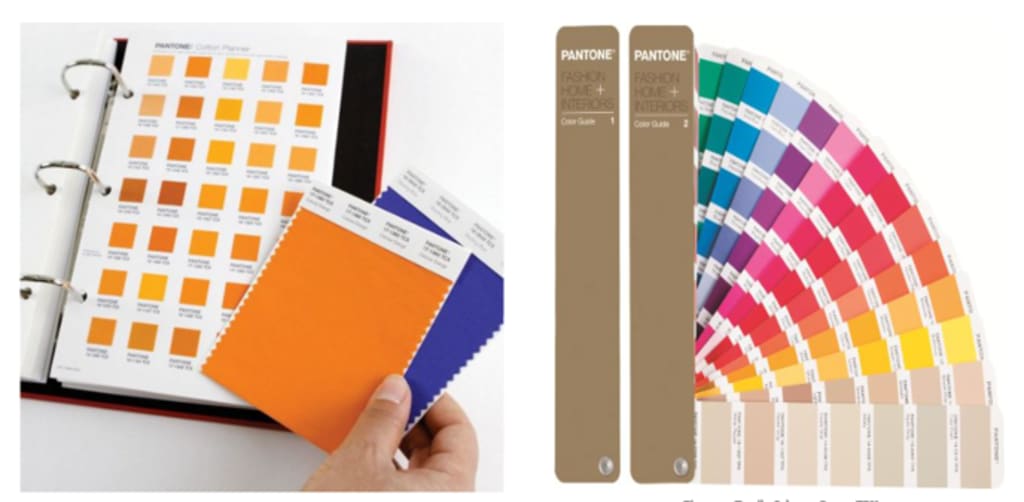
If you work in fashion house and buying house, garments & textile sector, you have to use Pantone colors. But how do you know what colors to use? And what’s the difference between TCX & TPX codes? This article will help you what you need to know.
First of all, you have to know, what is pantone color number. Pantone is a standard 'color matching system' where a code number is used to identify each color. Whatever the color, it is easy to identify any color with the Pantone Color Guide, because every color has a unique code number.
Examples
1.PANTONE 14–4510 TPX or Aquatic,
2.PANTONE 15–1247 TCX or Tangerine
Introduction of TCX and TPX
TCX and TPX are both Pantone's color standards, but they are designed separately for different purposes. Both are designators from the PANTONE TEXTILE Color System.
PCX is a colorful pure “Cotton Swatch” in each individual color and TCX Pantone books are much more expensive, because it is a completely dyed on cotton fabric swatch.
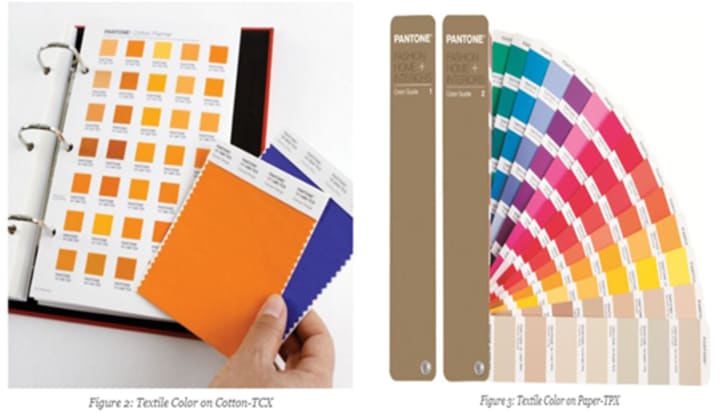
On the other hand, TPX is made of “Paper Swatch” instead of cotton swatch and the TPX Pantone Book is much cheaper than the TCX. The TPX Pantone book has recently been updated to the TPG (Textile Paper Green) Pantone book. TPX & TPG colors are the same, but the TPG is much eco-friendlier.
Full Abbreviation
- TCX-Textile cotton xtend
- TPX-Textile paper xtend
Meaning
- TCX - color is done on cotton woven fabrics.
- TPX - color swatch on paper.

Some information about TCX and TPX
- TCX is commonly used as a standard color swatch for reactive dyes, disperses dyes.
- TPX is followed for pigment, it is used as standard color swatch for printing.
- TCX is the standard color swatch dyed on cotton fabric
- TPX is the standard color swatch printed on paper
- Since TPX is a color printed on paper, its color lightness and brightness will be a little higher than TCX.
- On the other hand, since TCX is a color applied on a cotton fabric, its color depth will be higher than TPX, also the brightness will be less.
- The shades of TPX & TCX of the same Pantone number are different. In this case TPX is 15% lighter than TCX or TCX is 15% deeper than TPX.
Significance of PANTONE Numbers
TCX and TPX numbers are not just a unique number, they have some special meaning that reflects some of the characteristics of the colorant. three color are namely: Hue, Value and Chroma. Pantone numbers (TCX, TPX) are usually consists of 6 numbers which The first two numbers represent the Lightness of the color. The middle two represent his Hue (i.e., Red/ Yellow/Green/Blue). The last two represent the chroma (i.e., the dullness or color depth).

For example:
- PANTONE 19–4052 TCX (Classic Blue)
- 19 = Lightness
- 40 = Hue
- 52 = Chroma
Explanation of Hue, Value and Chroma
Value (lightness) describes overall intensity to how light or dark a color is. It is the only dimension of color that may exist by itself.
Hue is described with the words we normally think of as describing color: red, purple, blue, etc.
Chroma (Saturation) may be defined as the strength or dominance of the hue. On the outer edge of the hue wheel are the intensely saturated hues. Towards the center of the color wheel, no hue dominates and they become less and less saturated.

Here the Hue is purple.
There are 60+ colors here, but all of them are purple-hued colors.
Chroma changes from left-to-right
- Low Chroma colors are on the left...
- mid-Chroma colors near the center...
- high Chroma colors on the right.
Value changes from bottom-to-top
- Low values (shades) near the bottom
- High values (tints) near the top
About the Creator
Ashrafur Rahman
My name is Ashraf, a textile Engineering graduate. I write about Textile, Garments & Merchandising, Moral Stories and Ancient stories.
Reader insights
Nice work
Very well written. Keep up the good work!
Top insight
Expert insights and opinions
Arguments were carefully researched and presented
Keep reading
More stories from Ashrafur Rahman and writers in Lifehack and other communities.
Foods that increase sexual energy quickly
People get their sexual energy from their food. If you don't have any real problem, you don't need any medicine to increase your sexual energy, daily nutritious food is enough. You can easily have a healthy sex life if you make some changes in your food list every day. Let's talk about some foods that increase sexual energy.
By Ashrafur Rahman5 years ago in Longevity
5 Simple Lifehacks to Keep Your Teeth Healthy Every Day
Healthy teeth aren’t just about occasional dental visits—they’re shaped by the little choices you make every day. Simple habits, when done consistently, can prevent cavities, gum issues, sensitivity, and other oral concerns while keeping your smile bright and comfortable. These lifehacks are easy to integrate into your routine and don’t require drastic lifestyle changes.
By Smile Sydney2 days ago in Lifehack
Guard Your Battery
Why are some people so attractive just by standing there? It’s not because they are "likable," but because they don’t need everyone to like them. I realized later that truly charismatic people allow themselves to be criticized, but they never criticize themselves. They never try to please the world; instead, the world stops to watch them.
By Emily Chan - Life and love sharing2 days ago in Poets



Comments
There are no comments for this story
Be the first to respond and start the conversation.