
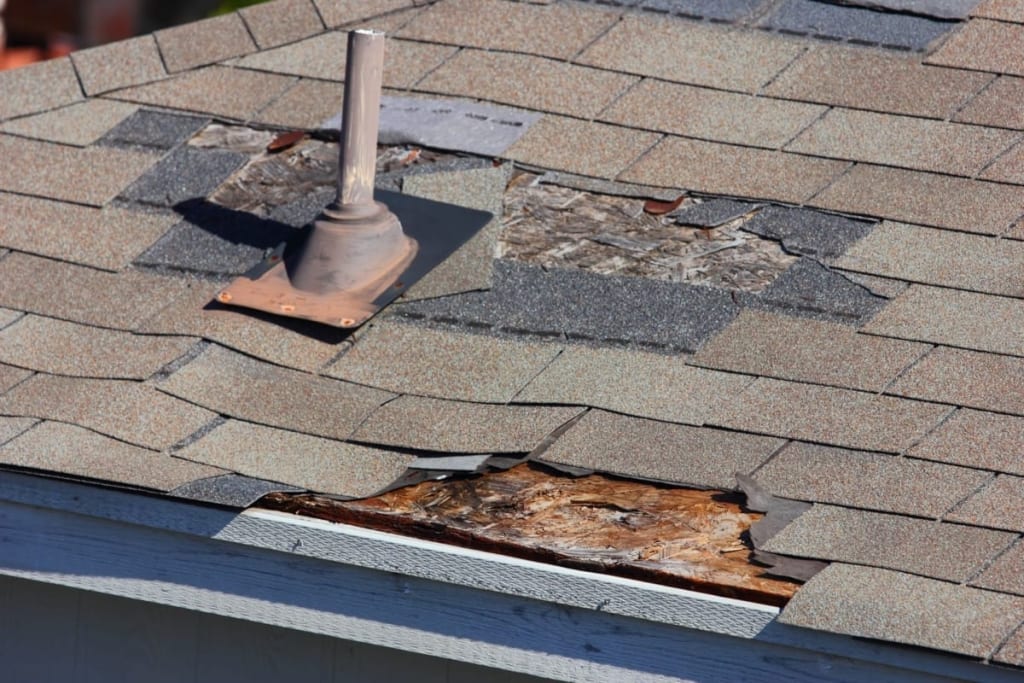
Has your inspection convinced you that you need to replace the cover? Before requesting quotes from roofers, you can easily get an idea of what your next roofing will need!
Choose your shingle
The most common shingle these days is called architectural. It is a double layer shingle reinforced with fiberglass. It should be understood that this is still an asphalt shingle but that fiberglass replaces cardboard in the assembly of each sheet.
You usually choose your shingle based on the following factors:
- a reputable manufacturer who inspires us with confidence;
- the manufacturer's warranty associated with the product;
- a look that suits our home and our tastes;
- the budget we want to allocate to the repair of our roof;
- the climatic conditions of the place where the product will be installed.
A roof is a system
If we first think of the shingle, the other components of the roof are just as important! The principle of the weakest link applies: the quality of a cover is equal to the quality of its weakest component. Better not to skimp on the details.
It is for this reason that a good industry practice is to work with “families” of materials: we want all the components to come from the same manufacturer. If damage should occur, the manufacturer will check that its products have been installed, not just its shingle. The manufacturer could refuse to guarantee your roof if products from competing brands have been installed under the shingle.
The self-adhesive membrane
A waterproofing membrane is installed on the edges of the roof, over a width of 3 to 6 feet. It is also installed in the junctions between the slopes of the roof and in places subject to leaks, such as the perimeter of chimneys and skylights.
There are more robust membranes available for roofs subject to ice build-up or located in very windy areas. Depending on the manufacturer of your choice, check which membrane is required for your situation.
If your roof is equipped with a skylight, the surface downstream of it must be completely covered with membrane. Skylights often create ice barriers in the winter, so you definitely want to put more rugged protection under the shingle in this area!
Roofing underlayment
The undercoat is a kind of canvas applied to all surfaces that are not covered with membrane. It acts as an intermediate protection between the shingle and the roof deck.
In the past, asphalt felt (15 lbs paper) was king when it comes to underlayment. Today, underlays are generally made from synthetic fibers and have some breathability. It is this property that allows them to wick moisture away from the deck and prevent mold.
Each manufacturer offers its own underlayment's, the properties of which vary. The four main properties sought after in an undercoat are:
impermeability . After all, the underlay is an additional barrier against the elements. Its ability to repel water is essential; tear resistance. F or obvious reasons, the underlayment should not tear around nails during installation;
grip . The underlayment is located directly under the shingle and must allow it to adhere well to its surface;
breathability. An underlay should not keep moisture trapped, it should allow it to drain away.
First and foremost, it is up to you to choose the underlayment recommended by the manufacturer of the shingle you have chosen. The manufacturer, knowing their products better than anyone, is in the best position to design underlayments optimized for their shingles!
The drip holes
Drip trays are metal bands that are installed on the banks, at the bottom of the slopes. Their role is to direct the water in the gutters and especially to prevent it from infiltrating the eaves.
If your roof already has drip edges, it may be possible to keep them without having to replace them. First check if your roof is equipped with drip trays, then check their condition. Are they dented, punctured or loose? If so, it is better to replace them.
Some types of work require replacement of the drip edges. For example, if you are replacing or doubling the wood decking, the drip edges will need to be replaced. Your roofer will be able to advise you on drip edges before starting the work.
The ventilation of your attic
The ventilation (also called ventilation) of an attic is very simple when you understand its principle. Basically your attic needs an air inlet and outlet. The air exchange is done in principle of the chimney effect.
THE FIREPLACE EFFECT
The temperature of an attic is always higher than the outside temperature. In summer, the air in the attic is warmed by the heat absorption of the asphalt shingle. In winter, it is the heat escaping from the building that heats the attic. In both cases, it is always hotter in the attic!
As the warm air moves upwards, an air outlet is installed at the top of the roof to allow air to escape. This is called an aerator. To fill the void left by the hot air having escaped, cool air inlets are installed at the bottom of the roof. These are the soffits.
There is therefore a constant - and passive - air circulation that occurs in the attic. This circulation allows moisture to be evacuated and serves to temper the temperature of the attic.
There are three main things to check when it comes to ventilation:
the air outlets (aerators) . Aerators should be installed at the top of the blanket and should be in sufficient number for the area of your blanket. Each roof section must have at least one air outlet, unless its attic communicates with another ventilated section;
air inlets (soffits) . Soffits should allow fresh air to enter the attic freely. We will therefore check that the insulating wool does not “choke” the soffits.
TIP: TO FIND OUT IF THE SOFFITS LET AIR IN WELL, SLIP YOUR HEAD INTO THE ATTIC AND MAKE SURE YOU SEE THE LIGHT ENTERING AT THE BOTTOM OF EACH SLOPE.
unwanted openings. Some houses have openings in the siding at the top of the gables. These openings date from construction and are not compatible with modern roof ventilators. They must absolutely be blocked, otherwise they will prevent good ventilation by the chimney effect. They are sealed from the inside with plywood, duct tape or a membrane.
Roof bridging
Decking is a major element of your roofing: it is on it that the entire roof rests! It is a layer of wood attached to the joists, on which all the other roof components are installed.
We inspect the deck below, by visiting the attic! If the roof has been infiltrated, it is quite possible that the bridging has been affected. Signs of mold, rot, or swollen wood are good indicators that bridging work should be considered. You can either repair the bypass by changing only a portion, or replace it entirely.
The bypass has the particularity of being accessible only when replacing a cover. Once the new roof is installed, it will have to be removed again to repair the decking. If in doubt, it is better to take this rare opportunity to carry out the necessary work!
On houses of a certain age, the decking consists of wooden planks. These boards, over the years and roof replacements, tend to split. Although still stiff, these boards provide a poor quality nailing base for the shingle.
On newer homes, the decking is made of sheets of plywood or OSB. Depending on the period, these leaves are sometimes very thin (up to ⅜ of an inch)! After a few decades, a thin bypass tends to sag. We then observe deformation on the roof and surfaces which should be quite straight are hilly.
A warped bypass is an unequivocal sign that a dubbing or replacement should be considered!
- Replacement or doubling of the bypass?
- A plank deck requires special attention if:
- the wood seems dry and fragile;
- the wood is cracked in several places;
- there are several wooden ribs, detached from the deck;
- the wood is broken, rotten or moldy in some places.
- A plywood or OSB deck requires special attention if:
- the roof surface is deformed;
- there is mold, rot or a broken board;
- it is blackened;
- it is swollen.
If corrections need to be made, you have two options: double or replace the bridging, in whole or in part.
Double a bypass
A deck liner involves adding a layer of plywood or OSB over the existing deck to give it body and rigidity. This is the cheapest option and can have great results, provided the existing bypass is healthy. A deck will generally be doubled when it is made of boards or plywood that is too thin.
Replace a bridge
When there is mold, rot, swollen wood or when the existing deck is badly damaged, a replacement is recommended. If the entire deck is in good condition but a small part needs replacement, it is possible to replace only one section of the deck.
To do this, remove the old decking and install plywood with a minimum thickness of ½ inch. We never replace a bypass with an OSB.
About the Creator
Keep reading
More stories from Raz Smiths and writers in Lifehack and other communities.
300 Thousands Sneakers Match Tees
Sneaker culture has evolved in recent years, with footwear becoming an essential part of personal style. And now, one of the hottest trends is pairing your favorite kicks with the perfect match tee. With over 300,000 match tees available, these stylish shirts are designed specifically to complement iconic sneakers like Nike Dunks, Air Jordans, New Balance, and more, making it easier than ever to level up your sneaker game.
By Raz Smithsabout a year ago in Lifehack
The Burnout Generation: Why I’m Rejecting Hustle Culture for My Mental Health
I used to believe that grinding—24/7, no breaks, no excuses—was the only way to succeed. Coffee in one hand, deadlines in the other, my brain constantly buzzing, my chest tight, my mind refusing to rest.
By Anie Liban7 days ago in Lifehack



Comments
There are no comments for this story
Be the first to respond and start the conversation.