
Damp & Timber Survey
A damp and timber survey is usually undertaken before purchasing a property in order to ascertain whether or not the property has any timber, or damp issues within it.

A damp and timber survey is usually undertaken before purchasing a property in order to ascertain whether or not the property has any timber or damp issues within it.
Within a timber survey a surveyor will usually look for problems such as, timber rot, dry rot, wet rot and timber infestation.
Damp and timber surveys can also be undertaken for timber framed structures, such as a barn, loft or attic roof timbers, pergola, church or a house.
WHAT TO EXPECT FROM A TIMBER SURVEY?
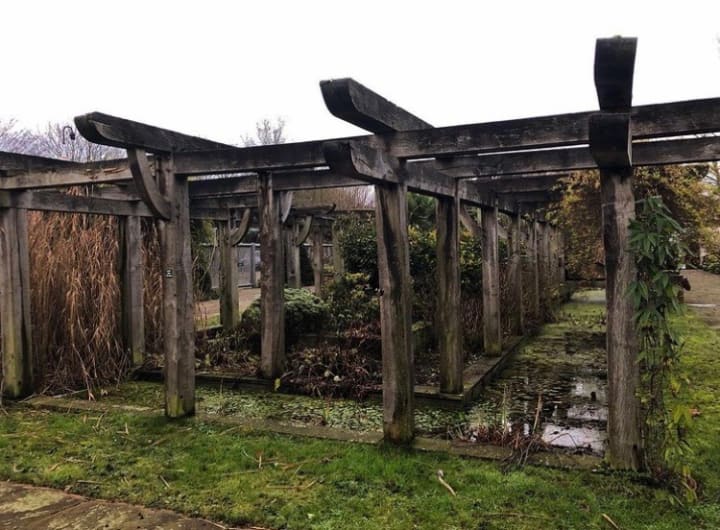
Take a look at this interesting oak framed pergola. This was a timber survey that was recently carried out for a new client, in the London Borough of Hammersmith & Fulham. During this survey the surveyors were asked to assess the level of deterioration of the pergola.
Our surveyors ascertained that the pergola was suffering from severe deterioration, because the frame was not treated to protect against the elements of the weather.
Other considerations of this survey found that no membrane had been installed between the post and the concrete slab plinth.
HOW LONG DOES A PROFESSIONAL TIMBER & DAMP SURVEY TAKE?
In terms of how long a timber survey takes, it is dependent on the condition of the timber being surveyed.
However at Alpine Surveys we will complete the survey and provide you with an in-depth, thorough and comprehensive report, including all of our findings and recommendations within 48 - 72 hours of the survey’s completion.
Furthermore, all our reports are guaranteed to diagnose timber dry rot and wet rot issues, providing the recommendations are carried out within the report within a reasonable timeframe.
WET ROT
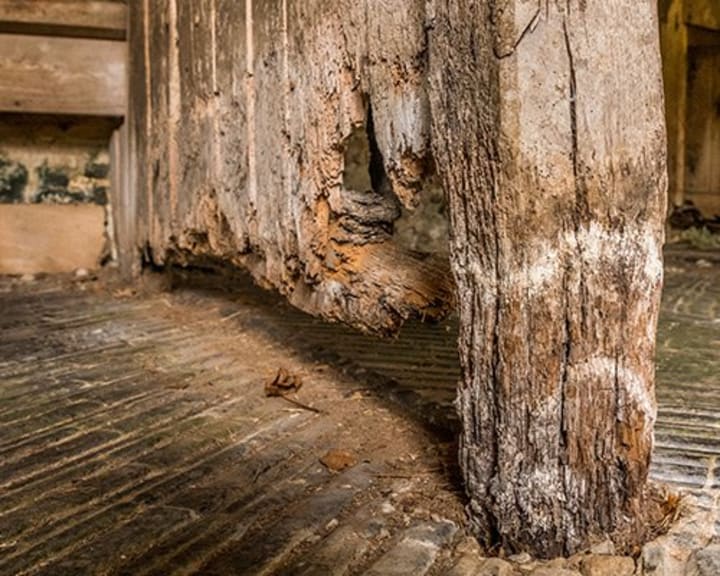
Wet Rot is a fungus that develops in areas of timber saturation. It is common in areas where water leaks have occurred and are left undiagnosed or external timbers that are deteriorating and are exposed to rain.
Alpine Surveys will investigate the reason for the rot occurring and will recommend remedial works in order to correct the deterioration, as well as advising you on what is required to stop it from returning.
How to look for wet rot on timber
- Darkened timber (darker than surrounding timber).
- Soft and spongy timber.
- Cracked appearance that may crumble when dry.
- Localised fungus growth.
- A damp, musty small.
DRY ROT
Dry Rot is caused by fungal spores landing on timber and taking root.
However, if the timber is not suitably moist, the fungus cannot develop and grow, therefore, the correct diagnosis should be to determine why the timber has become dry and why the rot is continually spreading.
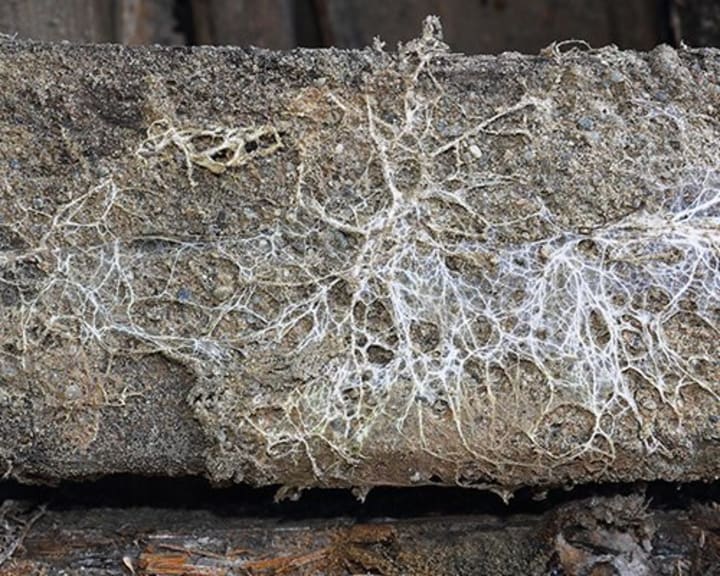
When dry rot begins to develop, grey strands spread across the timber, draining the moisture from it, drying the timber out and making it completely unusable.
The fungus will multiply until the grey strands become what appears to look like cotton wool, and in turn, turning into a brown coloured pancake shaped fungal body, which, emits thousands of destructive spores into the air.
Alpine Surveys will undertake the correct survey, using professional methods, in order to diagnose the reason why the Dry Rot has developed and provide the correct recommendations to eradicate it.
How to look for dry rot on timber:
- Damaged or decaying timber.
- Damp or musty smell.
- Deep cracks in timber grain.
- Concentrated patches of orange-brown spore dust.
- Grey strands on timber.
HOW TO PREVENT DRY ROT
The best and most effective method of preventing dry rot in timber is to ensure the atmosphere remains dry and free of moisture to prevent the spores from absorbing the moisture within the timber, thus causing, "dry rot".
Dry rot if left untreated, or if dry rot has been wrongly diagnosed and/or poorly treated, it can cause immense problems.
It is therefore imperative that you seek the help, support and professional guidance of an experienced timber specialists, such as Alpine Surveys, who provide reports and surveys backed by a guarantee.
They can confidently do this as they have the knowledge, decades of experience and the confidence to know what to look for and how to rectify any dry rot timber issues.
It is not advisable to use chemicals to treat dry rot timber as this will often,
- make the issue worse
- cause the fungus to spread
- create more problems within the building
- can cause health issues
WORD OF CAUTION
Unfortunately, some companies will try to convince you that a chemical remedy is the best option.
This is often due to a lack of knowledge on their part, or based on the fact that selling you a chemical based service, as opposed to a survey, is far more financially profitable for them and easier to sell.
About the Creator
Keep reading
More stories from Chris Seagal and writers in Lifehack and other communities.
Lessons Learned in a Wheel Chair, Singing in the Sunshine 🥀
It starts with love. . . and life . . . Motivational Mantra: Living with Disabilities “To think in terms of either pessimism or optimism oversimplifies the truth. The problem is to see reality as it is.” — Thich Nhat Hạnh
By WILD WAYNE : The Dragon King3 days ago in Lifehack
Preparing Water with Shungite
Water plays a central role in every biological system. For generations, people have turned to natural materials to enhance water quality through physical interaction and adsorption processes. One such material is Shungite — a carbon-rich mineraloid originating from Karelia, Russia.
By Andreas Krobathabout 6 hours ago in Lifehack
The Duelist
The rays of a dying red sun flashed against the onrushing blade. The grey beards say the key to dueling lies in size, speed, reach, righteous fury, whatever the person in front of them pays them to say. Matteo knew better than any it was none of these and had an undefeated record on these sands to prove it.
By Matthew J. Frommabout 17 hours ago in Fiction


Comments
There are no comments for this story
Be the first to respond and start the conversation.