
Can AI Reimagine Public Transportation in Urban Areas?
Introduction


Urban transportation is an essential part of modern cities, with millions relying on buses, trains, and other forms of public transit every day. As cities grow and face increasing traffic congestion, pollution, and limited space, finding solutions to improve public transportation is becoming more important than ever.
One of the most promising innovations is artificial intelligence (AI). But how exactly can AI reimagine public transportation in urban areas?
According to Deloitte, AI ensures improved productivity, government efficiency, and protection of citizens' rights, advancing fairness and privacy.
Let's explore how AI could transform the way we travel within cities.
AI and the Future of Urban Transportation
AI is already making its way into many industries, and transportation is no exception. In urban areas, AI can help improve efficiency, reduce traffic, and provide better services to passengers.
Just like how a smart laptop can use data to optimize performance and enhance user experience, AI in urban transportation can harness data's power to create smarter, faster, and more sustainable systems.
It provides numerous answers to urban transit problems, from route optimization to predictive maintenance, guaranteeing commuters a smooth and effective trip.
1. Smarter Traffic Management with AI
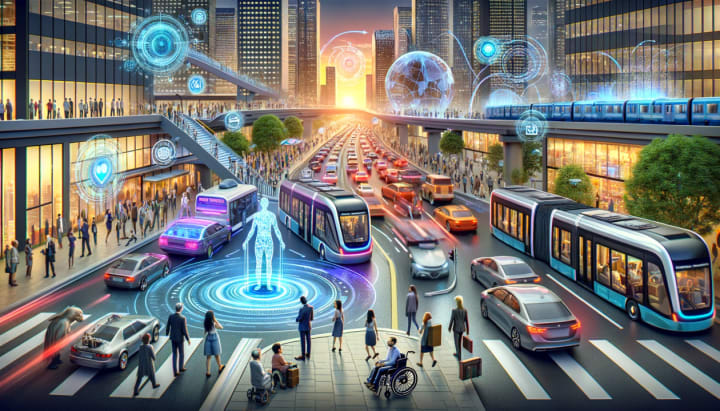
One of the most important applications of AI in public transportation is smarter traffic management. Traffic congestion is a major problem in many cities, especially during rush hours.
AI can help by analyzing real-time traffic data to optimize traffic signals and reduce delays. This system can also predict traffic patterns based on weather, events, and road conditions, allowing for better planning and decision-making.
AI-powered traffic management systems can communicate with traffic lights, buses, and even autonomous vehicles to ensure that traffic flow is as smooth as possible. This reduces wait times, improves travel time, and even decreases air pollution by lowering the number of idling vehicles.
2. Autonomous Vehicles: A New Era for Public Transit

Autonomous vehicles (AVs), also known as self-driving cars or buses, are another exciting innovation that AI is bringing to urban transportation. These vehicles use AI-powered systems like sensors, cameras, and machine learning algorithms to navigate the streets without human intervention.
In the context of public transportation, autonomous buses and shuttles could provide flexible, on-demand services. These vehicles can operate without a driver, lowering operational costs and making transportation more affordable.
These vehicles can improve passenger convenience and service reliability by utilizing AI to optimize routes and schedules, ensuring that buses and shuttles are always in the right place at the right time.
3. AI-Powered Transit Apps: Personalizing the Commuter Experience
Today, many people use smartphone apps to navigate public transportation systems. These apps provide schedules, route information, and sometimes even real-time updates about delays. AI can take these apps to the next level by offering personalized experiences based on user preferences.
For example, AI can learn a commuter's regular routes and preferences, offering suggestions for the fastest or most eco-friendly routes. AI can also provide personalized notifications about delays or disruptions, ensuring that passengers are always informed and can adjust their plans accordingly.
The CA insights states, AI ensure public safety as a proactive effort to create healthier, stronger communities requires technologies and processes that enable flexibility.
AI can also assist in forecasting when buses or trains will be less crowded, improving passenger comfort during travel, by evaluating data on demand, traffic, and weather. This creates a more efficient and customer-friendly experience, helping people get to their destinations with less stress.
4. Optimizing Public Transport Routes and Schedules

Traditionally, transit routes and timetables are created based on past data and fixed schedules, but this approach doesn't always reflect real-time demand.
AI can significantly improve the way public transportation routes and schedules are planned.
With AI, cities can gather data from a variety of sources, such as GPS sensors, social media, and even weather forecasts.
This data can then be analyzed to determine the most efficient routes and schedules based on current demand.
For example, if there is an unexpected surge in commuters due to a local event, AI can adjust bus or train schedules in real-time to accommodate additional passengers.
AI can ensure that public transportation is always available when and where it is most needed, increasing efficiency and convenience, by continuously monitoring the system and making necessary adjustments.
5. Reducing Carbon Footprint with AI
Sustainability is a key concern for urban areas, and AI can play a significant role in reducing the carbon footprint of public transportation. AI-powered systems can help optimize the operation of electric buses, trains, and other eco-friendly modes of transport, ensuring that energy is used as efficiently as possible.
For instance, AI can monitor the energy consumption of electric buses and adjust their routes and schedules to minimize energy use. It can also help determine the best times to charge electric buses, ensuring that they are always ready for use without overloading the city's power grid.
6. AI and Predictive Maintenance for Public Transit
Maintaining a fleet of buses, trains, and other public transport vehicles is a complex and costly task. AI can help by predicting when a vehicle is likely to need maintenance before a breakdown occurs.
Using sensors and machine learning algorithms, AI can monitor the health of individual vehicles and alert maintenance teams when repairs are needed.
This predictive maintenance can reduce the number of unexpected service interruptions, increase the lifespan of vehicles, and lower maintenance costs. It also helps ensure that passengers aren't inconvenienced by sudden delays or breakdowns, improving the overall reliability of the transportation system.
Conclusion
AI has the potential to revolutionize public transportation in urban areas, making it smarter, safer, more efficient, and sustainable. From optimizing traffic flow and route planning to enabling autonomous vehicles and predictive maintenance, AI offers a wide range of solutions that can help cities solve their transportation challenges.
Urban areas can enhance the quality of life for their inhabitants and create transportation systems that are better suited to the demands of contemporary life by adopting these innovations.
About the Creator
Amelia Hebrew
Amelia Hebrew, a tech enthusiast and gadget guru, thrives on exploring the latest innovations in technology. With a passion for sharing knowledge, i provide insightful suggestions, creative ideas, and practical advice on tech-related.
Keep reading
More stories from Amelia Hebrew and writers in Lifehack and other communities.
The Gym Left Me Empty. This Is the Connected, Joyful Future of Fitness
My Wellness Was a Mess. Here’s How I Discovered 2025’s Life-Changing Trends (And Actually Stuck With Them). Let me be brutally honest for a second. Two years ago, my idea of “wellness” was a chaotic, guilt-driven scramble. It was kale smoothies I hated, a gym membership I used as a $70/month guilt-trip, and a phone filled with meditation apps I opened once. I was chasing trends, not results. I felt overwhelmed, disconnected from my own body, and honestly, a bit like a failure. The noise was deafening: “Biohack this!” “Detox that!” “Crush your workout!” I was trying to follow all the rules, but my energy was in the gutter, my sleep was a mess, and that feeling of vibrant health felt like a myth sold to other people.
By John Arthorabout 8 hours ago in Lifehack
Cardio Machines for Home Gyms: What Really Matters (and What You Can Ignore)
Cardio equipment is one of the most common—and expensive—mistakes people make when building a home gym. Not because cardio is unnecessary, but because many buyers focus on the wrong things: flashy screens, trendy brands, or features they rarely use after the first few weeks.
By Enrique Navarro2 days ago in Lifehack




Comments
There are no comments for this story
Be the first to respond and start the conversation.