
Creating a project budget that is both accurate and practical doesn’t have to be daunting. By following four clear and actionable stages, you can ensure your budget is well-defined, grounded in reality, and aligned with your project’s unique needs.
Stage 1: Start with a solid foundation by validating your cost projections through focused questions.
Stage 2: Uncover the hidden factors—assumptions, constraints, and risks—that shape your budget.
Stage 3: Ditch the guesswork and opt for measurable contingencies instead of unreliable padding.
Stage 4: Put tracking mechanisms in place to ensure your budget remains a dynamic tool, not a static document.
With this structured approach, you can craft budgets that strike the perfect balance between precision and flexibility—helping your project stay on track, every step of the way.
Master Project Budgeting in 4 Practical Stages
Realistic project budgets can be achieved in four (4) steps designed to ensure that your budget are sufficiently defined and aligned to existing project needs and capabilities.
Stage 1: Set a justifiable basis for your budget projection by answering the following questions....
What is the source of the cost projection?
How was the projection derived?
How was the projection validated?
How confident are you in the accuracy of each projection?
Stage 2: Identify assumptions and constraints.
Project budgets are based on more than actual numbers. Behind every cost projection lie three factors – assumptions, constraints and risks. Assumptions are the beliefs assumed to be true for the purposes of planning. Constraints are the conditions, circumstances or events that limit “the possibilities" and are known from the outset (i.e. lack of staff). Risks are possible and probable conditions, circumstances or events that could threaten the success of a given project.
In order to prepare a realistic budget, these three factors have to be identified and defined in so far as they pertain to budgetary matters. This analysis will reveal the “wiggle room” in the budget estimate to determine the likelihood that the estimate will be realized, as well as the degree to which the estimate may be subject to change.
Stage 3: Skip the pad and plan for measureable contingencies.
Budgets are often “padded” to account for the unknown, taking verifiable cost estimates and then adding a “fudge factor” percentage, usually 10 to 20%. This can work for smaller, less complex projects, but in large, complex projects, fudge factors can be difficult to manage and justify. In order to establish a credible budget, separate budgets can be created to account for contingencies.
Stage 4: Establish actionable tracking procedures.
Once a budget is approved, expenditures must be monitored, and for that, budgets must be tied to a schedule (how much will be spent and when?). In this way, expenditures can be tracked for expected utilization… i.e. at any given point in time have we spent more than expected, less than expected, or pretty much as expected? Variances can then be examined to determine whether they can be absorbed or whether corrective action must be taken.
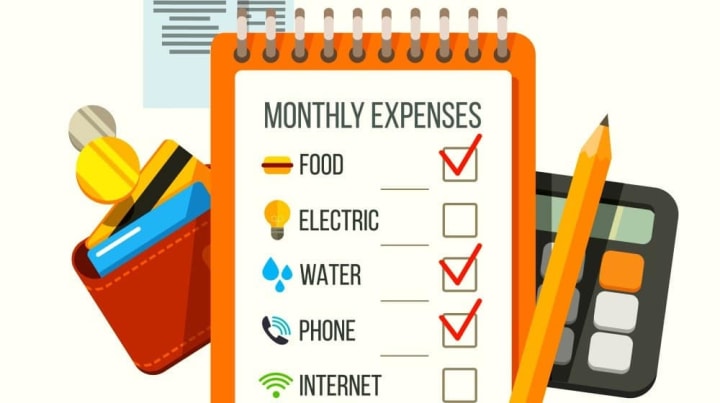
Based on the needs of the project, budget status reporting should be a regularly scheduled project deliverable. Budget reporting should account for actual utilization compared to projected utilization, along with an explanation for any variances (and action plan as well).
Bonus Tip: Foster Communication and Collaboration
A budget is only as effective as the team that implements it. Open lines of communication ensure everyone involved in the project understands the financial expectations and limitations. Regular updates, collaborative reviews, and transparent reporting can prevent misunderstandings and ensure alignment throughout the project lifecycle.
With this structured approach, you can craft budgets that strike the perfect balance between precision and flexibility—helping your project stay on track, every step of the way.
Closing Tip: Finding the Budget "Sweet Spot"
No one wants to be over budget, and while “under budget” may seem attractive, if projects are continually under budget, at some point, individual budgeting skills will be called into question. And once skills are in question, so is credibility. So the trick is to find the sweet spot – a realistic budget with appropriate contingency funding to allow for the unexpected.
About the Creator
Keep reading
More stories from writers in Lifehack and other communities.
Transforming Patient Care: Healthcare Mobile App Trends in Florida
I reckon if you’d told me five years ago that my phone would be better at spotting a heart murmur than my actual GP, I’d have called you a few choice names. Yet, here we are in 2026, and Florida’s healthcare scene is looking more like a sci-fi set than a waiting room. It’s hella weird but strangely brilliant.
By Sherry Walker5 days ago in Lifehack
Choosing the Right Moving Company in Edmonds, WA
Relocating is rarely just about transporting boxes from one place to another. In a city like Edmonds, Washington, where neighborhoods vary widely in layout, elevation, and access, the choice of a moving company can significantly influence how smooth the entire process feels. Whether you’re moving into Edmonds for the first time or relocating within the city, understanding what sets local movers apart is an essential step.
By House Doctor2 days ago in Lifehack



Comments
There are no comments for this story
Be the first to respond and start the conversation.