
Budget Tech That Feels Like Luxury
Premium. Priced Humanely.

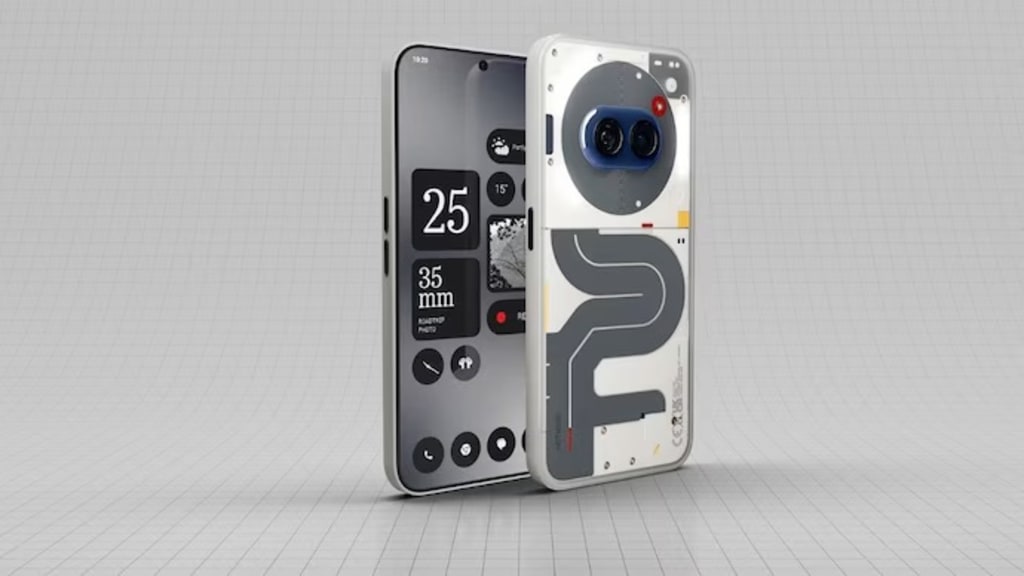
The world of consumer technology has long been dictated by a simple, seemingly unbreakable rule: you get what you pay for. Luxury experiences—think the satisfying heft of a titanium frame, the crisp clarity of a high-resolution display, or the seamless fluidity of a powerful processor—were reserved for those willing to spend a small fortune. But a quiet revolution is underway. A new class of products is systematically dismantling this notion, proving that premium feel and budget-friendly prices are no longer mutually exclusive. This is the era of budget tech that feels like luxury.
This shift isn't about cutting corners; it's about smarter engineering, strategic compromises, and a deep understanding of what truly creates a sense of quality for the user.
A Prime Example: The Nothing Phone (2a) – ~$349
To understand this phenomenon, look no further than the Nothing Phone (2a). At roughly a third of the price of a flagship iPhone or Galaxy S-series, the Phone (2a) masterfully demonstrates how to create a luxurious experience on a budget.
• How It Achieves the Luxury Feel:
1. Design and Materials: Instead of cheap plastic, Nothing uses a unique plastic polymer composite with a textured finish that feels secure in the hand and resists fingerprints. The semi-transparent back, a signature Nothing aesthetic, reveals carefully arranged internal components, turning the design itself into a feature. This bold, conversation-starting look is something you’d expect from a concept phone, not a mid-range device.
2. User Experience (Software): Nothing’s operating system, Nothing OS, is a masterpiece of software optimization. It runs on a clean, near-stock version of Android, free of the bloated, duplicate apps that often slow down devices from larger manufacturers. This results in a smooth, fast, and fluid interface that feels responsive and premium. The custom glyph lighting interface for notifications and alerts is a unique and delightful tactile and visual experience.
3. Strategic Performance: It uses a capable but not top-tier MediaTek Dimensity 7200 Pro processor, optimized in partnership with Nothing for efficiency. The compromise isn't on day-to-day smoothness but on extreme, niche tasks like high-end mobile gaming. For the vast majority of users—social media, messaging, streaming, photography—the performance is flawless and feels high-end.
• Why It Works: Nothing focuses its budget on the aspects the user interacts with most: design, software smoothness, and a unique aesthetic identity. It sacrifices the exorbitant cost of the absolute latest flagship processors and pro-grade cameras, which many users don't fully utilize anyway.
The "How": Where Brands Save and Where They Splurge
The recipe for luxury-feeling budget tech involves a careful balancing act:
1. Premium Materials in Key Areas: A device might have a plastic frame but feature a Gorilla Glass front. Headphones might use a plastic body but have aluminum sliders and plush, memory foam earcups. The touchpoints are where the quality is felt.
2. Software Optimization Over Raw Power: Brands are investing in software engineers to clean up and optimize user interfaces. A well-optimized mid-range processor can feel smoother in daily use than a bloated, poorly optimized flagship chip.
3. Design as a Differentiator: Instead of chasing expensive technical specs, companies invest in bold, unique designs that stand out. This creates emotional value and a sense of owning something special, not just something cheap.
4. Targeted Feature Excellence: A budget phone might not have three professional-grade cameras, but its main sensor could be spectacular. A laptop might not have a 4K display, but it could have a best-in-class 1080p screen with excellent color accuracy and a high refresh rate.
The "Why": A Paradigm Shift in Value
This trend is driven by both economics and evolving consumer wisdom. People are tired of paying a four-figure sum for incremental yearly upgrades. They are more discerning, realizing that the pursuit of the absolute "best" specs often means paying for power they will never use. The value is now placed on the holistic experience—how a device feels, looks, and performs in real-world scenarios—rather than on a spec sheet.
Industry Quote:
"We've moved past the era where megahertz and gigabytes were the only metrics that mattered. Today's consumer values experiential quality—the haptic feedback of a typing experience, the weight distribution of a device, the intuitive simplicity of an interface. This is where the true battle for perceived value is won, and it doesn't have to come with a premium price tag." – Sarah Chen, Principal Analyst at TechSight Advisory.
Conclusion: Luxury Redefined
The democratization of luxury in tech is one of the most consumer-friendly trends of the decade. It proves that luxury is not an inherent price point but a carefully crafted perception of quality, design, and user delight. Brands that succeed in this space understand that the feeling of luxury is a holistic recipe, not a single ingredient. For the savvy consumer, it means that experiencing the joy of a well-designed, premium-feeling product is more accessible than ever before. You just need to know where to look—beyond the price tag.
________________________________________
FAQ:
Q1: Where are the compromises in these budget "luxury" devices?
The compromises are typically in areas the average user may not notice. This includes using very high-end (but not the most high-end) processors, less expensive materials in non-critical areas (e.g., a plastic frame instead of aluminum), and cameras that perform excellently in good light but may struggle more in extreme low light compared to a $1,200 flagship.
Q2: Isn't this just good marketing?
While marketing plays a role, the feel is real. The difference is in the execution. It’s the choice of a specific type of plastic that feels better, the investment in software teams to optimize code, and the focus on industrial design. You can't market a clunky, slow device as "luxurious" for long; user experience will always reveal the truth.
Q3: Will these devices last as long as true flagships?
Build quality is often excellent, and the software support cycle is improving dramatically. Many brands now promise 3-4 years of major Android OS updates and security patches, bringing them much closer to the support lifecycle of Samsung and Apple devices.
Q4: Can you get a true luxury experience without spending any money?
"Budget" is relative. This category typically refers to the $300-$600 range for phones or $100-$250 for headphones, as opposed to $1000+ for flagships. While a $50 phone will feel like a $50 phone, the devices in this mid-range segment are where the magic of "feeling luxury" happens.
Q5: What other brands excel at this?
Brands like Anker and Soundcore (for audio), OnePlus (Nord series), Google (Pixel A-series), and Xiaomi (POCO and Redmi lines) have consistently delivered products that punch far above their weight class in terms of design and user experience.
About the Creator
Jacky Kapadia
Driven by a passion for digital innovation, I am a social media influencer & digital marketer with a talent for simplifying the complexities of the digital world. Let’s connect & explore the future together—follow me on LinkedIn And Medium
Keep reading
More stories from Jacky Kapadia and writers in Lifehack and other communities.
Monetizing Creativity: Why Vocal Media Is the Future of Independent Publishing
For generations, the dream of sharing creative work with the world – stories, essays, poems, insights – was inextricably linked to the gatekeepers of traditional publishing. Authors faced daunting hurdles: securing an agent, winning over editors, navigating opaque contracts often offering minimal advances and royalties, and enduring production timelines stretching into years. Meanwhile, independent creators like bloggers and essayists often poured their hearts into platforms offering exposure but little tangible reward. The disconnect between creative output and sustainable income stifled voices and discouraged potential. Enter Vocal Media, a platform fundamentally reshaping this landscape by placing monetization at the core of the independent creator experience. Vocal isn't just another publishing site; it represents a compelling vision for the future where creativity is directly and transparently valued.
By Jacky Kapadia6 months ago in Lifehack
Between Places and Possibilities: The Human Experience of Moving in Rockville, Maryland
Moving often begins quietly. It starts with small decisions — sorting belongings, noticing how spaces feel different, imagining life somewhere new. Gradually, what once seemed distant becomes immediate. Rooms empty, routines shift, and the familiar begins to transform into memory.
By House Doctor6 days ago in Lifehack
Why Cold Exposure Is Gaining Popularity
From elite athletes to busy professionals, more people are stepping into tubs filled with icy water—and loving it. Ice baths, also known as cold plunges, have surged in popularity over the past decade. What was once a recovery tool reserved for professional sports teams is now a mainstream wellness practice.
By AnthonyBTV6 days ago in Lifehack
Trickle Them Down, But Not Out
The thing about smart people is that they should know better, but alas, intelligence is not the same as wisdom. Not only do the mistakes of experts too short on vision—when they are not corrected—have the potential to do great and far-reaching damage, but they also undermine public confidence in the very notion of expertise. This is particularly so when expertise is wielded in defence of the rich and powerful as a cudgel against those laid low. As an academic, this lack of faith in “so-called experts” is painful to see as it plays out in the spread of dis-/misinformation, conspiracy theories, and anti-intellectualism writ large. But it is also an understandable impulse given the catastrophic failure of an economic ideology pushed by certain economic experts. Supply-side economics has shaped a broken system for the last half-century and has arguably done more to undermine the fabric of the American Dream than any policy framework of the past century.
By Cory Wright-Maley5 days ago in Humans


Comments
There are no comments for this story
Be the first to respond and start the conversation.