

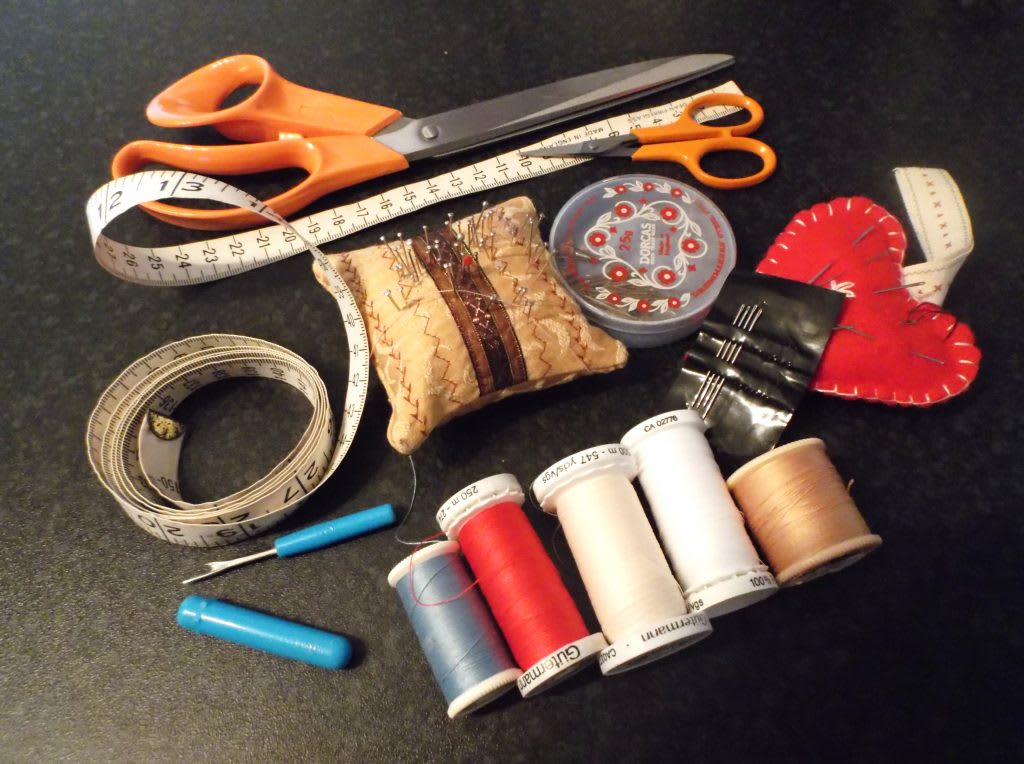
September is the National Sewing Month. Sewing is an essential skill that everyone should know. Ronald Reagan declared this monthly holiday back in 1982 to recognize the importance of this at-home activity. Six out of ten people have a strong desire to learn to sew, making it a 36 billion dollar industry with 41% of its sales coming from crafters between 18 to 34 years old. For someone new to this, putting together your own sewing kit is the best way to get started.
Needles
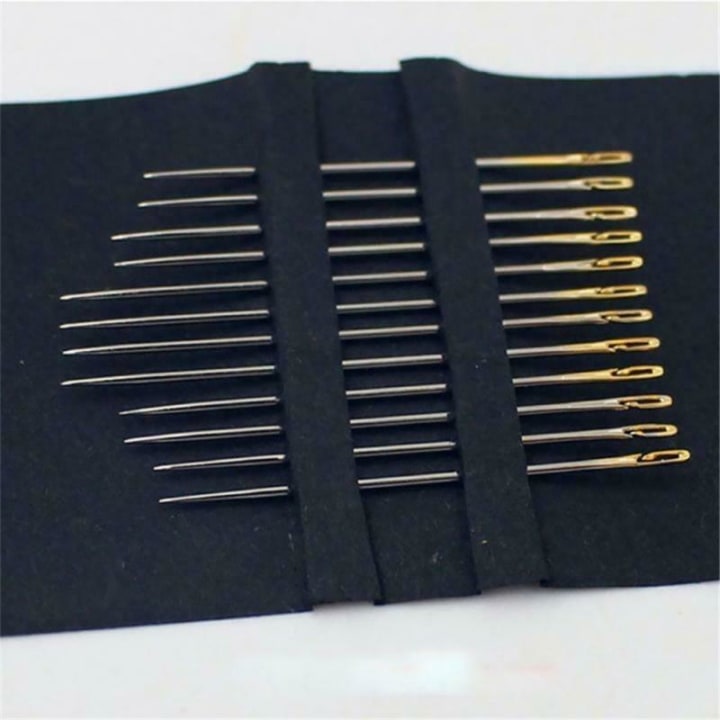
Sewing Needles are a staple piece in your sewing kit. It is a sharp, pointy object with a hole at the top of it, known as the eye. Throughout history, we have made them from a variety of materials. Today, we make them from steel coated in nickel or gold to prevent rusting. Needles come in all shapes and sizes, but having a variety is important. The one you use is determined by the thickness of the material you are working with. The most common, all-purpose needle shape needle, is the round type.
Thread

Like sewing needles, thread is an essential piece of your sewing kit. Sewing thread is a flexible yarn strand treated with a surface coating, lubricant, or both. They come in a variety of thicknesses, in just about every color you can think of. They often sell it in packs of six or more for less than $10 or get them individually on a holder called a spool for $3 a color. Buy a thirty-piece thread set to cover all your bases color-wise. For a little extra, buy a couple of spools of invisible thread.
Needle Threader

A needle threader is a tiny wire attached to a coin-like tab. It can be found in packs of thread or bought individually. Their purpose is to help you get the thread through the eye better. To do this, you’ll insert the wire tip through the eye. You will then put your thread through the hole the wire created. Slowly pull out the wire, with the tread in it, out of the eye. Finally, you’ll remove the thread from the wire, but not the eye of the needle. Here is a video explaining it better.
Fabric Shears
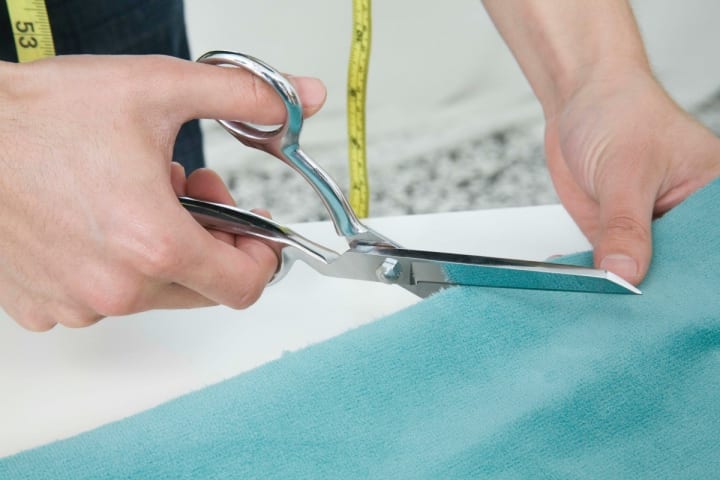
Fabric shears, or sewing scissors, cut fabric more easily than the scissors you’ll find in the stationary aisle. Fabric can be very thick, so these scissors will be very sharp. Like needles, they come in a variety of shapes and sizes depending on the craft project you are working on. They designed some with a specific task in mind. Embroidery scissors are small with long. Pointy tips for precise cutting. Rotary cutters are scissors that resemble a pizza cutter and is meant for quilting projects.
Safety/Straight Pins
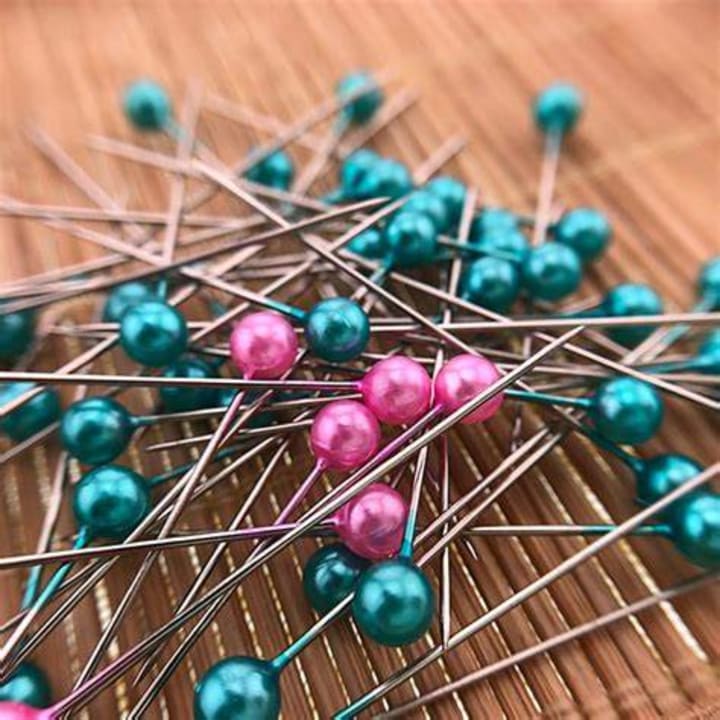
These can be a real time-saver on extensive projects. Their primary job is to hold your fabric together so you can complete a job faster and with less struggle. You can also use them to mark your hemlines when making wardrobe adjustments. When buying straight pins, you want the one-and-a-half-inch ones with a round head on top. After you gained some experience, consider moving to the flat-head version. For an absolute beginner, go with safety pins until you get used to handling fabric.
Pin Cushion

A pin cushion is a small cushion used to stick pins and needles in so you don’t lose them while working on a project. Once you use straight pins, you’ll be going through a lot while working on something, and because of their small size, they get lost in the worst places. I use mine to hold the sewing needle upright while threading it. While starting off, get one with a basic design. Once you get more in-depth into sewing, look into getting a fancy-designed pin cushion on Etsy, or make your own with scrap fabric from a different project. Most sewing boxes have one built into the lid if looking to save space in your kit. You can also consider getting a more modern magnetic pin cushion if you wish. This is a personal decision.
Thimble

A thimble is another device designed to protect yourself from the sharp tips of needles. Whether you’re a newbie or a professional seamstress, you will stick yourself with a pin or needle, no matter how hard you try not to. It’s a common hazard of the hobby. To protect your fingertips from being stuck with a needle, get yourself a couple of thimbles. A thimble is a metal or plastic cap with a closed-end you slip over your finger. They have a grooved finish to help you grip fabric better. Like pin cushions, they range from a basic design to a fancier one.
Flexible Tape Measure

No matter what you are sewing, you will need to measure something at some point. Measuring your fabric is the most important, and often the first, step in sewing. The flexibility of this type of measuring tape allows you to measure a person’s body easier than a stiff ruler. They come in a variety of colors for under $7 each, or in packs for a little more. Some come on retractable wheels to allow for easier storage and protection from damage or tearing. While using one, remember the old saying, “measure twice, cut once”.
Fabric Marking Pens

Once the fabric is measured, you’ll need something to mark it with. If you aren’t adjusting a hemline or attaching pieces of fabric together, then using pins is not recommended. So, instead, use these to mark your fabric after measuring. These pens have very fine tips and are filled with washable paint. If you don’t wish to buy these high-quality markers, there are cheaper options available to you. The most commonly used substitutions are washable markers and chalk. Just double-check at the time of purchase that what you are buying is washable, as they often sell permanent markers in similar-looking packaging.
Seam Ripper

Mistakes are common, especially among beginners. Even those experienced with sewing can mess up a stitch or two from time to time. A seam ripper is a small hook device used to pull out the thread that shouldn’t be there. These work in place of scissors to remove the thread, without risk of damage to the fabric. You can also use the pointed tip to make button holes when making something to wear. They are often four to five inches long and come in a variety of colors to pick from.
The Case

Once you’ve gathered all your sewing supplies together, it’s time to buy a case for it. Really anything works for this from a basket to a Royal Dansk Butter Cookie tin. Most craft stores sell specialty boxes, totes, and caddies designed just for holding and organizing your supplies better. So pick whatever you like. If you are still unsure whether you should pursue sewing full-time, consider getting a pre-made starter kit that includes most of the fundamental tools of the trade to give you a taste of what sewing is all about.
For some cool sewing project ideas check out the National Sewing Month website at https://www.nationalsewingmonth.org/
About the Creator
M.L. Lewis
Welcome to my little slice of pie. This blog will primarily focus on prepping and homesteading skills with a sprinkle of fiction every now and then.
Keep reading
More stories from M.L. Lewis and writers in Lifehack and other communities.
When Life Gives You Mold
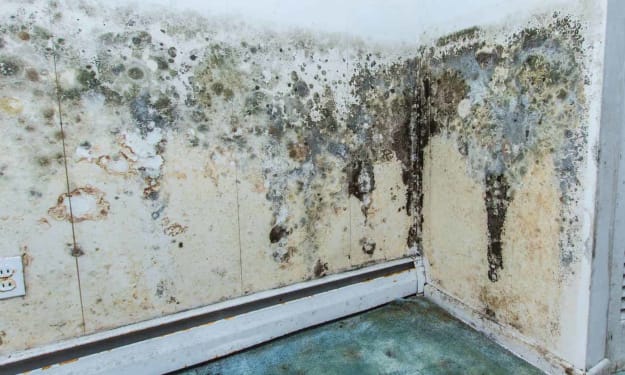
The National Indoor Mold Society has established September as Mold Awareness Month. Mold is a common issue that could affect any home, hitting those in hot, humid areas more frequently. Mold is a diverse group of fungi known for causing extensive property damage and health risks. They are plant-like organisms that are a natural part of the environment, often thriving in warm, moist conditions. Mold can cause many illnesses like athlete’s foot, allergies, and other conditions. Here are some ways to kill the spores on common surfaces of your house.
By M.L. Lewis4 years ago in Lifehack
5 Simple Lifehacks to Keep Your Teeth Healthy Every Day
Healthy teeth aren’t just about occasional dental visits—they’re shaped by the little choices you make every day. Simple habits, when done consistently, can prevent cavities, gum issues, sensitivity, and other oral concerns while keeping your smile bright and comfortable. These lifehacks are easy to integrate into your routine and don’t require drastic lifestyle changes.
By Smile Sydneyabout 22 hours ago in Lifehack
A Knight of the Seven Kingdoms Series Review (Season 1)
As one of the biggest properties in fantasy, A Song of Ice and Fire remains immensely popular with audiences. After reaching far into the past with House of the Dragon, a second spin-off was on the cards. A Knight of the Seven Kingdoms serves up a bite-sized slice of action and drama, but it still claims a spot among the best small-screen titles.
By Robert Cain5 days ago in Geeks


Comments
There are no comments for this story
Be the first to respond and start the conversation.