
AI Will Replace You? – The Future of Jobs in the Age of Artificial Intelligence
Exploring How Automation Is Reshaping Careers and What Skills Will Matter Most
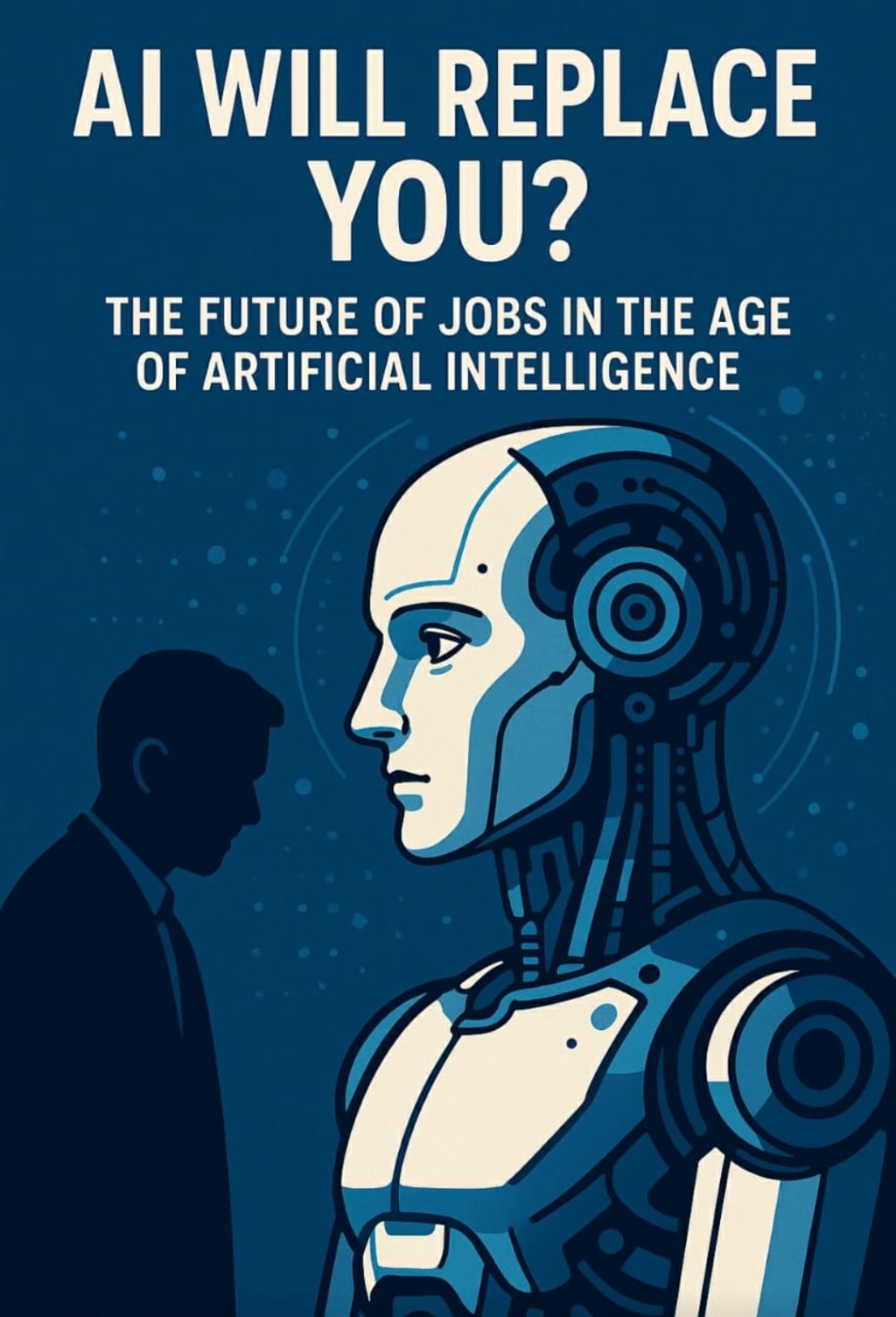
In recent years, artificial intelligence (AI) has evolved from a niche field of computer science to a transformative force shaping industries and redefining the nature of work. From autonomous vehicles and intelligent chatbots to predictive algorithms and robotic automation, AI technologies are rapidly being integrated into daily business operations. This development has sparked widespread debate: will AI replace human jobs, or will it augment our capabilities and create new opportunities?
Understanding the Impact
AI is not a single technology but a broad range of systems capable of mimicking human cognitive functions—such as learning, problem-solving, and decision-making. It is already disrupting several industries. In manufacturing, robots have taken over repetitive tasks on assembly lines. In customer service, AI-powered virtual assistants handle routine inquiries. In finance, algorithms conduct complex analyses in milliseconds.
According to a report by McKinsey Global Institute, up to 800 million jobs could be displaced by automation by 2030. However, the same report suggests that new job roles will emerge to offset these losses—provided that workers are willing and able to adapt.
Jobs at Risk
Certain types of jobs are more vulnerable to AI-driven automation. These typically include roles that involve repetitive, predictable tasks:
#Data entry clerks
#Telemarketers
#Cashiers
#Assembly line workers
#Bookkeepers
For instance, self-checkout machines are increasingly replacing human cashiers, and AI can now perform data analysis more efficiently than junior analysts. Chatbots are managing customer queries, reducing the need for large customer support teams.
Jobs Evolving, Not Just Vanishing
While some jobs may disappear, others are being reshaped. Professionals are now required to work alongside AI systems, leveraging them as tools rather than competitors. For example:
Doctors now use AI for faster diagnostics.
Teachers can use AI-based platforms for personalized learning.
Marketers utilize AI to analyze consumer behavior and tailor campaigns.
This indicates a shift—not a complete eradication of human roles, but a transformation of skill requirements.
New Opportunities
AI also brings new opportunities, creating demand for jobs that didn’t exist a decade ago:
#AI and machine learning engineers
#Data scientists
#Cybersecurity analysts
#AI ethicists
#Robot maintenance technicians
These roles require a mix of technical, analytical, and creative skills, emphasizing the importance of education and upskilling.
The Human Advantage
AI, despite its rapid progress, has limitations. It lacks emotional intelligence, empathy, moral reasoning, and creativity in the human sense. Occupations that depend on interpersonal skills, critical thinking, and creativity are less likely to be replaced:
#Psychologists and counselors
#Writers and artists
#Social workers
#Educators
#Entrepreneurs
Humans excel at tasks requiring emotional nuance, ethical judgment, and deep contextual understanding—areas where AI continues to fall short.
Preparing for the Future
The question is not whether AI will change the workforce, but how we prepare for that change. Governments, educational institutions, and companies must work together to ensure a smooth transition. Key strategies include:
Reskilling and upskilling: Continuous learning programs must be implemented to help workers transition into AI-resilient roles.
Curriculum reform: Schools and universities should focus on teaching digital literacy, critical thinking, creativity, and emotional intelligence.
Social safety nets: Support mechanisms for workers displaced by automation can reduce economic disruption.
Individuals also have a role to play—staying curious, embracing lifelong learning, and adapting to change will be essential qualities in the age of AI.
Ethical Considerations
With great power comes great responsibility. The rise of AI raises ethical concerns: bias in algorithms, privacy invasion, job displacement, and the concentration of power among tech giants. Transparent, fair, and accountable AI development is crucial to ensure that the technology benefits everyone equally.
Policymakers must develop regulations to oversee AI’s use, ensuring it aligns with societal values and human rights. Companies should also be held accountable for the ethical implications of their AI systems.
Conclusion
So, will AI replace you? The answer is not black and white. AI will certainly replace some jobs, especially those based on routine tasks. However, it will also enhance many professions and create entirely new fields of employment. The future of jobs lies not in resisting AI but in adapting to it. The human workforce must evolve—embracing collaboration with machines, learning new skills, and focusing on what makes us uniquely human.
Rather than fearing AI, we should shape its development in a way that enhances human potential. After all, the most powerful use of AI may not be in replacing us, but in enabling us to do more than we ever thought possible.
About the Creator
Keep reading
More stories from Mubasshir Haque and writers in Lifehack and other communities.
Hotels Just for Sleeping
In today’s fast-paced world, sleep has become a luxury for many. From buzzing phones to tight deadlines, quality rest often gets sacrificed. As awareness around sleep hygiene grows, an unusual and fascinating trend has emerged across the globe—hotels designed solely for sleeping. These establishments are not about luxury dining, sprawling pools, or sightseeing packages. Instead, they offer a haven for tired souls who simply want to rest, recharge, and disappear into the silence of slumber.
By Mubasshir Haque 8 months ago in Lifehack
What Your Grandmother Knew about Gold that Wall Street Forgot
My grandmother kept her gold bangles in a faded velvet pouch at the back of her wardrobe. Not in a safe, not in a bank vault, just tucked between old shawls and photographs. When I asked her once why she bothered keeping them, she looked at me like I'd asked why the sky was blue.
By Marcus Briggs5 days ago in Lifehack
Top 9 Wearable App Development Companies in the US
In today’s digital age, wearable technology has reshaped how users interact with digital experiences on the go. From fitness trackers and smartwatches to AR glasses and healthcare monitors, wearable devices depend on robust, intuitive apps to deliver real-time insights and seamless connectivity. Choosing the right development partner ensures your wearable application not only meets technical requirements but also excels in user experience, reliability, and future scalability. Below is a curated list of the top 10 wearable app development companies in the United States that are leading innovation in this niche space.
By Steve Waugh6 days ago in Lifehack




Comments
There are no comments for this story
Be the first to respond and start the conversation.