
AI Meets X: The Future of Smart Social Media
How artificial intelligence is reshaping the way we connect, create, and communicate on the world’s most dynamic platform

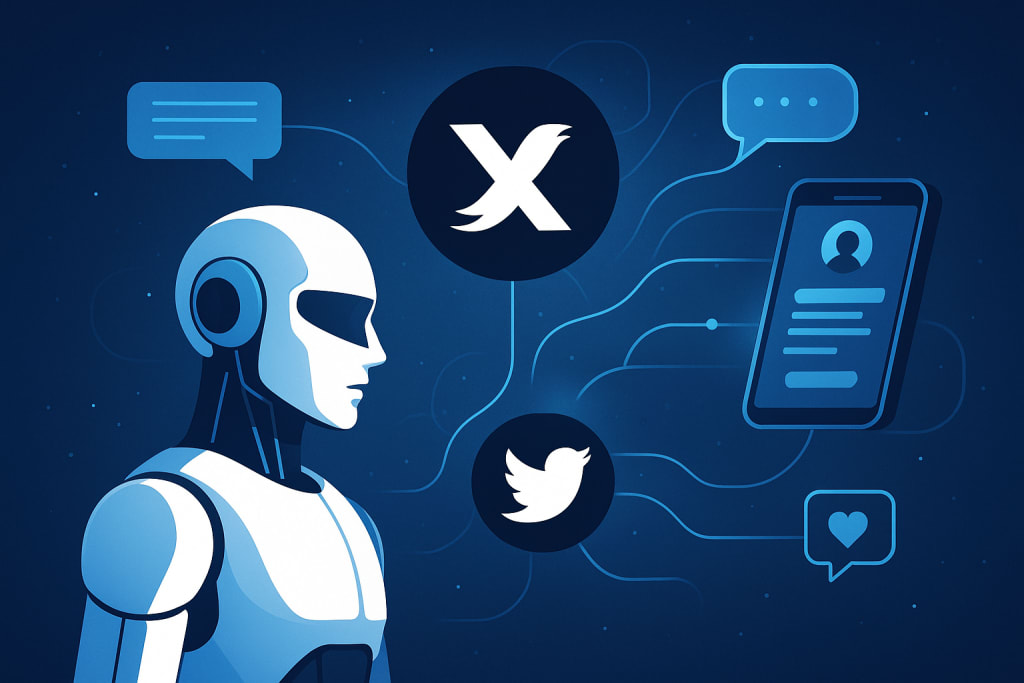
In the fast-moving world of digital communication, social media platforms shape how we connect, consume information, and even form opinions. Among these platforms, X (formerly Twitter) has long been a space for real-time conversation, cultural commentary, and breaking news. But as artificial intelligence (AI) moves from the background to the center stage, X is beginning to transform—not just in name, but in purpose.
So what happens when AI truly meets X? The answer could redefine what we expect from social media altogether.
Beyond the Algorithm
For years, social media platforms have used algorithms to curate content. But those systems were mostly rule-based: show more of what people "like," suggest what’s trending, and keep users scrolling. Now, machine learning models—capable of understanding language, recognizing images, and even predicting user intent—are powering a more intelligent experience.
X, under Elon Musk’s vision, has shown signs of embracing a deeper integration of AI into its core systems. This isn’t just about smarter content recommendations. It’s about creating a platform that feels more responsive, more human-like, and more aware of context.
Imagine a feed that doesn't just show you the most popular posts but understands your mood, preferences, and even your intent in the moment. Want news? You'll get the most relevant updates, not just what's viral. Want thoughtful discussion? You’ll be guided toward communities and conversations that matter to you.
This is not science fiction—it’s the emerging reality of smart social media.
Smarter Moderation, Better Conversations
One of the thorniest issues social media faces is content moderation. Hate speech, misinformation, and harassment have plagued platforms for years. Traditionally, moderation has relied on a mix of human reviewers and basic filters—often too slow or inconsistent.
With AI in the loop, moderation becomes more scalable and nuanced. Instead of blanket bans or delayed reactions, AI can assess tone, context, and intent in real time. It can flag problematic content while understanding sarcasm, humor, or cultural references that older systems might misinterpret.
For users, this could mean a healthier online environment—less toxicity, more meaningful interaction. For creators and influencers, it means clearer boundaries and fewer arbitrary takedowns.
Personalization Without the Creep Factor
One challenge AI faces in social media is balancing personalization with privacy. Users want feeds tailored to their interests, but not at the cost of feeling watched or manipulated.
New generations of AI are tackling this by learning from on-platform behavior without harvesting excessive personal data. Federated learning, for example, allows AI models to improve on-device without sending your data to a central server. It's like your feed learning from you, without spying on you.
If X gets this right, it could set a new standard for ethical, user-centric personalization in social media.
From Tweets to Smart Agents
Another fascinating frontier is the idea of AI-powered agents or assistants within the platform. Imagine being able to ask questions directly in your feed—“What’s the latest on the elections?” or “Explain this economic chart”—and getting an accurate, unbiased summary instantly.
X could evolve into more than a space for micro-posts; it could become an intelligent dialogue hub where you interact with both humans and machines in real time.
Some already speculate that X might integrate AI tools like chatbots or language models to assist with content creation, translation, or fact-checking. That means less time crafting the perfect post and more focus on what you want to say.
The Rise of AI-Native Creators
As generative AI tools become more common, we’ll likely see a new wave of “AI-native” creators—users who collaborate with AI to generate content. These aren’t just bots reposting memes, but real people using AI to amplify creativity.
Imagine a journalist using AI to summarize a 2-hour press conference into a 30-second clip. Or an artist generating visual content to match their tweets instantly. Or even communities co-creating posts that represent shared views, rather than individual ones.
X could become the first platform to truly embrace this hybrid model of human-AI creativity at scale.
Risks and Realities
Of course, this transformation isn’t without risks. Over-personalization can trap users in echo chambers. Automated moderation might still miss nuance. And the presence of generative content could blur the line between authentic voices and synthetic ones.
But these are challenges, not dead ends. With transparency, clear user controls, and thoughtful design, smart social media can empower rather than manipulate.
The key will be giving users more agency: over what they see, how their data is used, and what role AI plays in their experience.
The Future Is Already Happening
We often talk about the future of social media as something far off. But it’s already arriving—in features like AI-curated feeds, real-time language translation, content recommendations that adapt with time, and smarter spam filters.
X is uniquely positioned to lead this shift, not just because of its tech ambitions, but because of its identity: a place for raw, real-time, often chaotic discourse. Adding AI to the mix won’t silence that energy—it could help shape it into something more constructive, more insightful, and more valuable.
So when AI meets X, it’s not just a tech upgrade. It’s a cultural pivot—one that asks how machines can help us be better communicators, better listeners, and better digital citizens.
And if done right, it could be the smartest thing social media has ever done.
About the Creator
Ava Thornell
share my own experience of using social media
Keep reading
More stories from Ava Thornell and writers in Lifehack and other communities.




Comments
There are no comments for this story
Be the first to respond and start the conversation.