
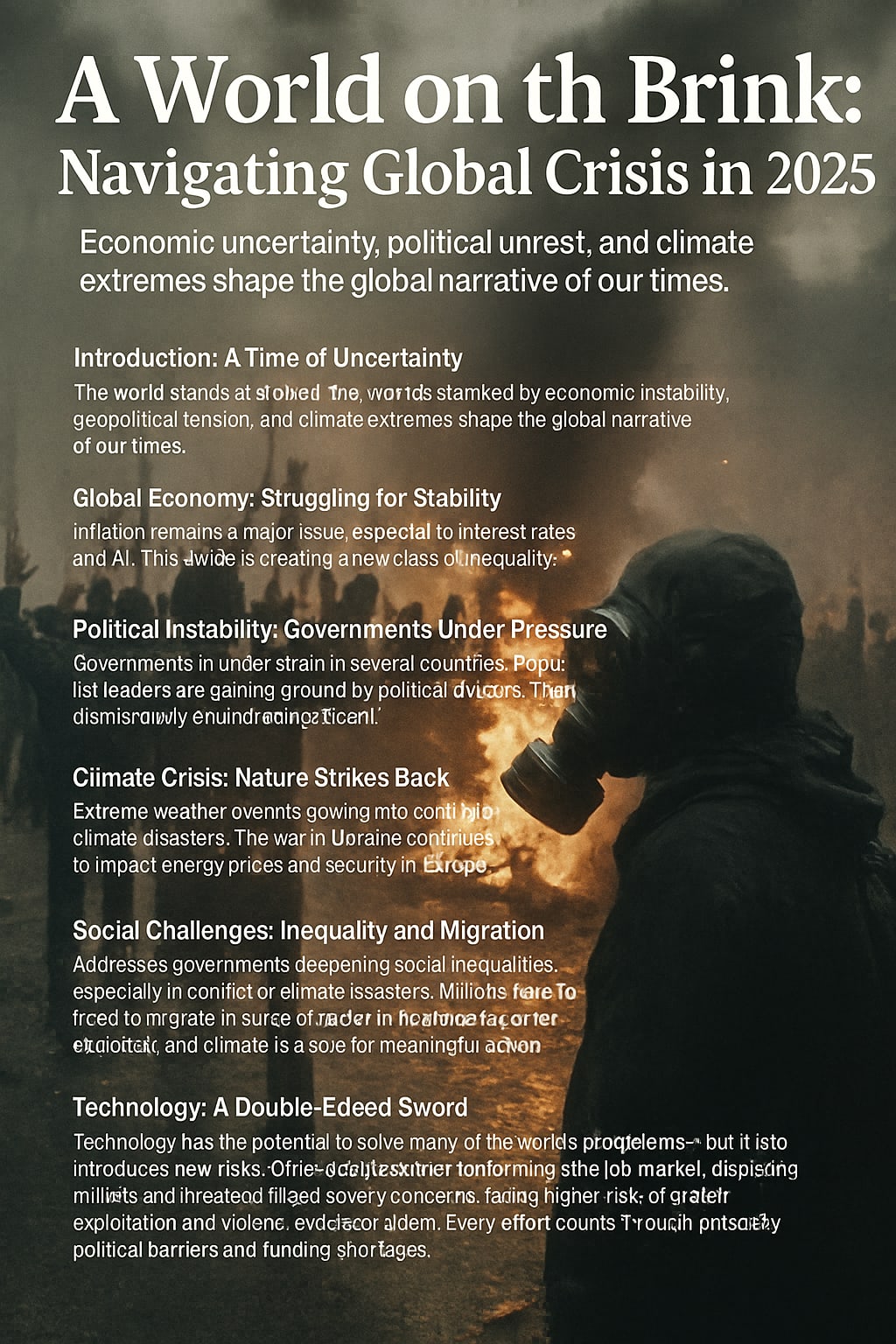
A World on the Brink: Navigating Global Crisis in 2025
Economic uncertainty, political unrest, and climate extremes shape the global narrative of our times.

Introduction: A Time of Uncertainty
As 2025 unfolds, the world stands at a crossroads marked by economic instability, geopolitical tension, and environmental crisis. Nations across the globe are grappling with the fallout from years of disrupted supply chains, energy shortages, and the lingering aftershocks of a pandemic that changed everything. With wars raging, inflation rising, and climate disasters increasing, humanity is being tested like never before.
---
Global Economy: Struggling for Stability
The global economy in 2025 is marked by volatility. Inflation remains a major issue, especially in developing countries where food and fuel prices have soared. Central banks, like the U.S. Federal Reserve and the European Central Bank, continue to hike interest rates in hopes of stabilizing markets. However, high borrowing costs are making it difficult for businesses and individuals to thrive.
Many small businesses have closed, and unemployment is rising in some regions. In contrast, tech companies are booming due to growing reliance on automation and AI. This divide is creating a new class of inequality, where access to digital resources and education determines one's economic future.
---
Political Instability: Governments Under Pressure
From Europe to Asia, governments are struggling to maintain order amid civil unrest and political divisions. The war in Ukraine continues to impact energy prices and security in Europe. Meanwhile, rising tensions in the South China Sea and ongoing instability in the Middle East threaten global peace.
Democracy is under strain in several countries. Populist leaders are gaining ground by capitalizing on public frustration. Misinformation and social media have amplified political divisions, making dialogue and compromise increasingly difficult.
---
Climate Crisis: Nature Strikes Back
Perhaps the most alarming issue facing the planet today is climate change. In 2025, extreme weather events have become the norm rather than the exception. Floods in South Asia, wildfires in North America, and droughts in Africa are displacing millions and threatening food security.
Governments and organizations have launched several initiatives aimed at reducing carbon emissions and promoting sustainable practices, but progress is slow. Scientists warn that we are approaching irreversible tipping points, and the window for meaningful action is closing.
---
Social Challenges: Inequality and Migration
Social inequalities continue to deepen, especially in regions affected by conflict or climate disaster. Millions have been forced to migrate in search of safety, jobs, or basic necessities. This has put pressure on border countries and created complex humanitarian crises.
Access to healthcare, clean water, and education remains out of reach for many. Women and children are especially vulnerable, facing higher risks of exploitation and violence. Efforts to provide aid are often hindered by political barriers and funding shortages.
---
Technology: A Double-Edged Sword
While technology has the potential to solve many of the world’s problems, it also introduces new risks. Artificial intelligence and automation are transforming the job market, displacing traditional roles while creating new opportunities for the tech-savvy.
Cybersecurity threats are growing, and data privacy is a major concern. There is also rising debate around the ethical use of AI, especially in warfare, surveillance, and social manipulation. Balancing innovation with responsibility has become one of the greatest challenges of our time.
---
Hope and Resilience: A Path Forward
Despite the many crises we face, there are reasons to remain hopeful. Communities around the world are showing remarkable resilience. Grassroots movements, environmental activism, and global cooperation offer glimmers of a better future.
The youth are particularly vocal, demanding action on climate change, human rights, and transparency. Technology is enabling new forms of education and communication, allowing people to organize and mobilize across borders.
International institutions, while imperfect, continue to play a crucial role in conflict resolution and humanitarian aid. Collaboration between governments, private sectors, and civil society is essential to creating a world that is more just and sustainable.
---
Conclusion: Facing the Future Together
The world in 2025 is undeniably troubled, but it is not beyond saving. The choices we make today will define the future for generations to come. We must act with urgency, compassion, and courage. Whether it’s fighting climate change, restoring democratic values, or embracing technological change responsibly, every effort counts.
The road ahead may be uncertain, but with unity and determination, we can navigate the storm—and emerge stronger than before.
About the Creator
The Silent Tragedy on the Highway
Introduction: A Sudden Turn of Fate It only takes a few seconds. A moment of distraction, a speeding vehicle, a missed signal—suddenly, lives are changed forever. Road accidents are among the leading causes of death and injury around the world. Every day, thousands of people leave their homes expecting to return safely, only to find their lives shattered by a crash. This article explores the causes of road accidents, their devastating consequences, and what we can do to prevent them.
By Faizan7 months ago in Confessions




Comments
There are no comments for this story
Be the first to respond and start the conversation.