
A Comprehensive Guide to Different Types of Compasses: Navigational Tools for Every Explorer
Compasses have been essential tools for navigation and orientation for centuries. These remarkable devices have guided explorers, sailors, hikers, and travelers across uncharted territories, ensuring their safe passage.

Compasses have been essential tools for navigation and orientation for centuries. These remarkable devices have guided explorers, sailors, hikers, and travelers across uncharted territories, ensuring their safe passage. In this article, we will delve into the fascinating world of compasses, exploring their history, principles of operation, and various types, including the use of online compasses as a modern navigation solution.

The History and Principles of Compasses
The origins of the compass can be traced back to ancient China during the Han Dynasty, around the 2nd century BC. The early compass, known as the "south-pointing fish," primarily used lodestones, natural magnets, to indicate directions. Over time, the compass evolved into a more sophisticated tool, eventually becoming a fundamental instrument for maritime exploration.
The principle behind the compass's operation lies in the Earth's magnetic field. A compass needle aligns itself with the magnetic lines of force, pointing towards the Earth's magnetic North Pole. The needle's end that points north is called the "north-seeking pole," while the other end is the "south-seeking pole."
Different Types of Compasses
2.1 Magnetic Compass
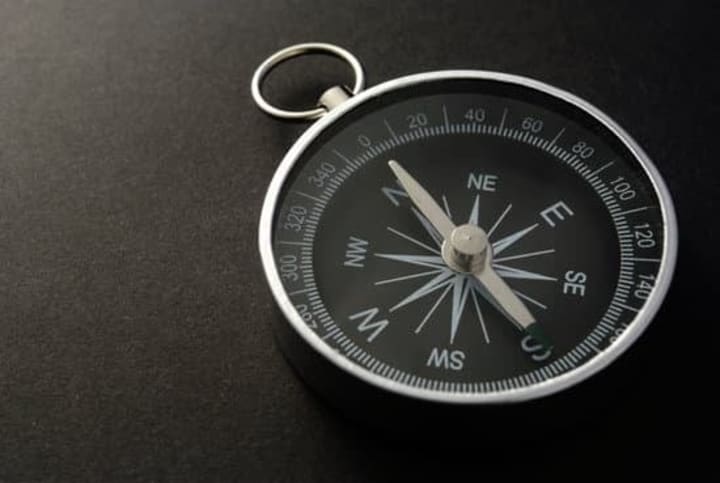
The magnetic compass is the most traditional and widely used type of compass. It consists of a magnetized needle mounted on a pivot, allowing it to move freely. The needle aligns itself with the Earth's magnetic field, pointing towards the magnetic North Pole. Magnetic compasses are reliable and durable, making them ideal for various outdoor activities.

2.2 Gyrocompass
A gyrocompass is a specialized compass commonly used in ships and aircraft. Unlike the magnetic compass, the gyrocompass relies on the Earth's rotation to indicate true north. It utilizes the principles of gyroscopic precession to maintain a stable reference direction, unaffected by magnetic interference. Gyrocompasses offer accurate readings and are crucial for navigating across vast oceans.
2.3 Lensatic Compass
The lensatic compass, also known as a military compass, is designed for precise land navigation. It features a sighting lens and a rotating bezel that allows users to take bearings of distant objects. This type of compass is extensively used by the military and outdoor enthusiasts for mapping and orienteering activities.
2.4 Baseplate Compass
The baseplate compass is a lightweight and compact compass commonly used by hikers, backpackers, and mountaineers. It features a transparent baseplate with a ruler, protractor, and a rotating bezel. Baseplate compasses are ideal for quick and simple navigation, especially when reading topographic maps.
2.5 Online Compass
With the advent of technology, digital compasses have become popular, and online compasses are readily accessible through smartphones and other electronic devices. Online compass uses the device's built-in magnetometer or GPS to provide real-time directional information. These digital compasses offer convenience and accuracy, making them useful for everyday navigation and urban exploration.

The Use of Online Compasses in Modern Navigation
Online compasses have revolutionized the way people navigate and explore their surroundings. With the widespread availability of smartphones and tablets, accessing an online compass has become incredibly convenient. Here are some key benefits and applications of using online compasses:
3.1 Urban Navigation
In urban areas, where traditional compass visibility may be limited due to surrounding structures or magnetic interference, online compasses provide a reliable alternative. They assist pedestrians in finding directions and navigating through city streets and neighborhoods.
3.2 Geocaching and Treasure Hunting
Geocaching, a modern-day treasure hunting game, involves finding hidden containers using GPS coordinates. Online compasses enable geocachers to follow precise headings and distances to locate these hidden caches in various terrains.

3.3 Outdoor Recreation
For outdoor enthusiasts engaged in activities like hiking, camping, and trail running, online compasses serve as valuable tools for route planning and navigation. They provide real-time information, helping users stay on track and avoid getting lost in unfamiliar territories.
3.4 Traveling and Exploring
While traveling to new destinations, online compasses assist tourists in navigating and finding points of interest. They help travelers explore cities, landmarks, and natural wonders with ease, enhancing the overall travel experience.
Conclusion
Compasses have evolved from ancient lodestones to modern digital tools, guiding adventurers and explorers through uncharted territories for centuries. Understanding the principles and different types of compasses is crucial for anyone who embarks on journeys, whether on land, sea, or air.
From the traditional magnetic compass to the advanced gyrocompass and the convenience of online compasses, these navigational tools continue to play a vital role in modern-day exploration. So, the next time you set out on an adventure, remember the trusty compass, a timeless companion that ensures you find your way back home.
About the Creator
Matteo
This might be considered a quick and painless method of putting your pet to sleep.
Keep reading
More stories from writers in Lifehack and other communities.
The dog everyone ignored became the reason I’m still alive.
No one noticed him at first. He crouched in the far corner of the shelter, half-hidden behind a metal food bowl, watching people walk past his cage as if he weren’t there. Families stopped to look at the dog with bright eyes and wagging tail. Volunteers smiled and laughed at the dogs who barked loudly for attention.
By Paw Planet 6 days ago in Lifehack
🅼🅸🅳🅽🅸🅶🅷🆃 🆂🅽🅰🅲🅺🆂
"It's 10 in Tuscon! We all know what that means... It's Time for Midnight Snacks with your man, Gerald Gee! Ready to spend the night together? Me too! I'm full of snacks and can't wait to regurgitate them all back into your hungry ears. Crack a brew! Pop some corn! Anything to get ready for one hell of a show where the talk maybe cheap but the words cut deep...
By Lamar Wiggins6 days ago in Fiction


Comments
There are no comments for this story
Be the first to respond and start the conversation.