
6 Factors When Selecting the Raw Materials for Wood Pellets
Raw Materials for Wood Pellets

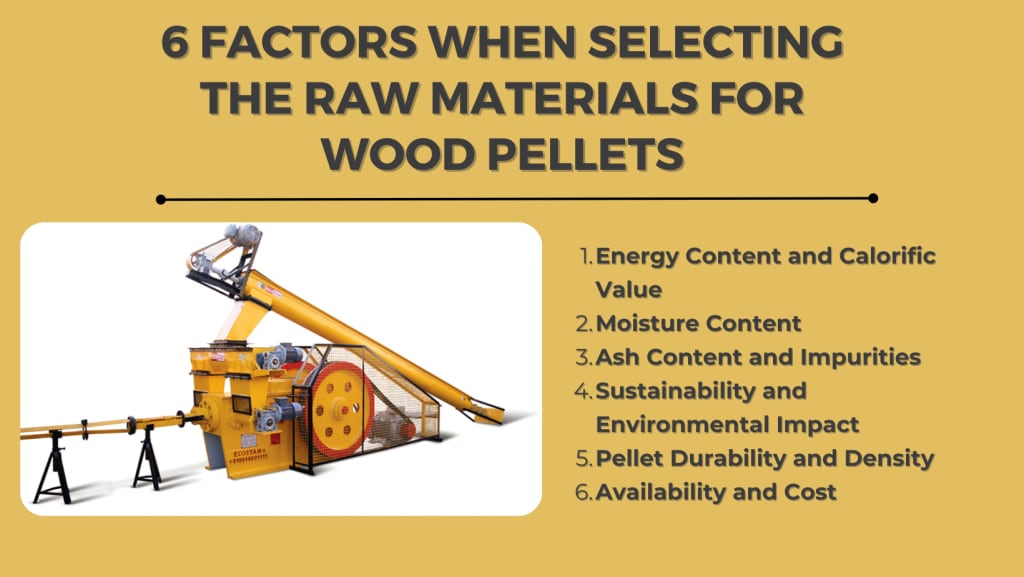
Wood pellets have emerged as a sustainable and eco-friendly alternative for heating and power generation, gaining popularity worldwide. The quality of wood pellets heavily relies on the raw materials used during their production. It is crucial to carefully select the right raw materials, to provide efficiency, cost-effectiveness, and environmental sustainability in the pellet production process.
In this post, we will explore six essential factors that production should consider when choosing raw materials for wood pellets. Also, it emphasizes the significance of making environmentally responsible choices.
1. Energy Content and Calorific Value
The energy content or calorific value of raw materials plays a vital role in the quality and efficiency of wood pellets. Pellets made from high-energy content raw materials provide optimal heat output and enhanced combustion efficiency. Hardwoods, such as oak and beech, generally possess higher calorific values than softwoods.
By selecting raw materials with higher energy content, pellet producers can ensure that their end product delivers efficient and reliable heating and power generation.
2. Moisture Content
Another critical factor when selecting raw materials is moisture content. Moisture content is a critical element that particularly impacts the pellet production process.
High moisture content in raw materials can lead to poor pellet quality, increased energy consumption during production, and even mold growth in the final product.
It is essential to use raw materials with an optimal moisture level, typically below 10%. Proper drying techniques must be employed to achieve the desired moisture content, ensuring the production of high-quality wood pellets.
3. Ash Content and Impurities
The ash content of wood pellets directly influences their combustion efficiency and environmental impact. Higher ash content in the pellets can ramify in increased emissions and reduced heating efficiency.
Moreover, impurities like sand and soil in the raw materials can negatively affect the pellet production process. Choosing raw materials with low ash content and minimal impurities is crucial to produce clean and efficient wood pellets. Careful sourcing and processing of raw materials can significantly impact the ash content and overall pellet quality.
4. Sustainability and Environmental Impact
As the world increasingly focuses on sustainable practices, the environmental impact of wood pellet production becomes a paramount concern. Selecting raw materials from well-managed and sustainably harvested forests ensures a positive environmental footprint. The implementation of responsible forest management practices, such as reforestation and regeneration, can promote ecological balance and biodiversity conservation. The production of wood pellets using eco-friendly raw materials can also contribute to mitigating climate change and preserving natural resources.
5. Pellet Durability and Density
The durability and density of wood pellets are initial factors that affect their transportation and handling. Raw materials with good binding properties and high lignin content contribute to better pellet durability and density. Durable pellets are less likely to break during transportation resulting in reduced wastage and improved overall efficiency. Higher pellet density also means more energy content per volume, making them more cost-effective and suitable for long-distance transport.
6. Availability and Cost
Raw materials' availability and cost-effectiveness are crucial factors in ensuring the sustainability of the pellet production process. For wood pellet manufacturers, a steady and dependable supply of raw materials is essential to maintain uninterrupted production.
Relying on the area and market demand, the cost of raw materials may fluctuate, directly influencing the overall production cost of the pellets. This is an important to strike a balance between the availability and the cost of raw materials, to maintain a stable and economic pellet production manufacture.
Conclusion
Selecting the appropriate raw materials is a crucial initial stage in manufacturing wood pellets. That is exceptional quality and environmentally friendly production. Evaluating aspects such as energy content, moisture level, ash content, and impurities ensures the efficiency and performance of the pellets.
Moreover, emphasizing sustainability and responsible sourcing of raw materials contributes to the environmental friendliness of the pellet production process. By prioritizing these crucial factors, wood pellet manufacturers can create a positive impact on the environment while offering efficient and sustainable energy solutions to customers.
At Ecostan, they are committed to providing top-quality pellet production solutions and promoting eco-friendly practices. With a focus on sustainable raw materials and creative technology, they aim to empower companies and individuals to contribute to a greener future.
About the Creator
Keep reading
More stories from writers in Lifehack and other communities.
Moving and Storage in Baltimore: Practical Tips for a Smoother Transition
Moving in Baltimore presents a unique set of challenges shaped by the city’s layout, historic neighborhoods, and active urban rhythm. From narrow streets and rowhouses to strict parking rules and seasonal traffic, relocating within or into Baltimore requires preparation and local awareness. Understanding how moving and storage work together can help residents manage transitions more efficiently and avoid common setbacks.
By House Doctor5 days ago in Lifehack
Choosing Moving Companies in Jupiter, Florida
Moving to or within Jupiter, Florida, is often associated with positive change. The area is known for its coastal environment, residential communities, and relaxed pace of life. However, even in a town that feels calm and welcoming, moving requires careful planning. Understanding local conditions and knowing what to expect can make the difference between a smooth transition and a stressful experience.
By House Doctor4 days ago in Lifehack




Comments
There are no comments for this story
Be the first to respond and start the conversation.