
5 Practical Kitchen Extension Ideas for UK Homes
Thinking about a kitchen extension? These five practical ideas can help you plan a space that’s easier to use, more comfortable, and better suited to everyday life.
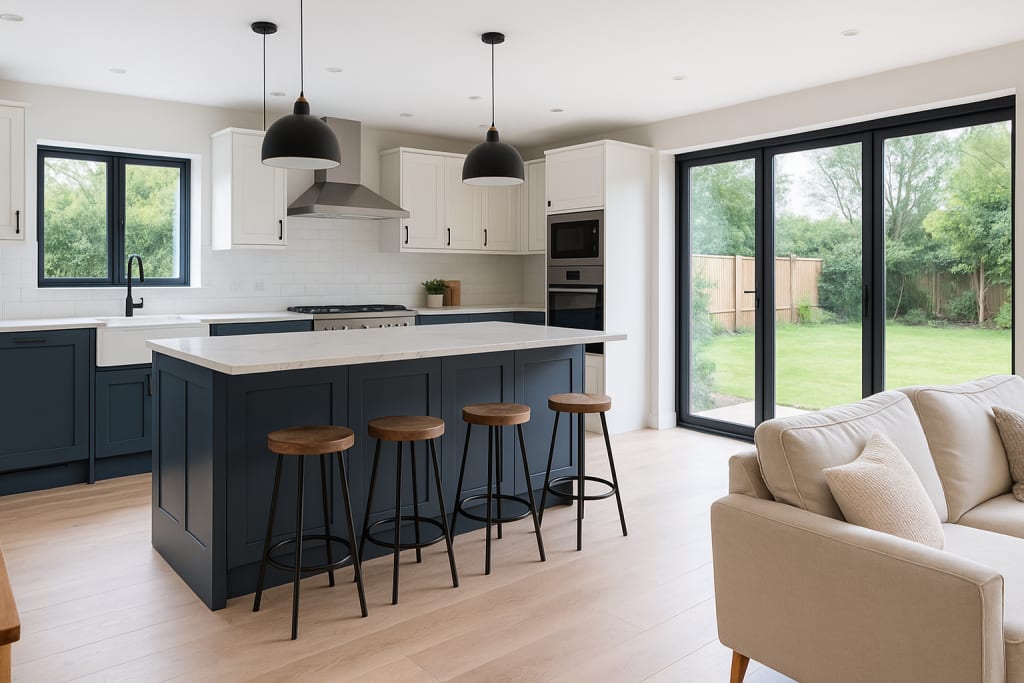
A kitchen extension is one of the most effective ways to improve a home’s layout, comfort, and long-term value. It offers more than just extra space — it helps create a better living environment for daily routines and social gatherings.
Whether the goal is more light, smarter storage, or a better flow between rooms, thoughtful design makes all the difference. Below are five practical ideas that work well for kitchen extensions across the UK.
1. Open-plan layouts that feel more connected
Open-plan kitchens are popular across the UK. Removing walls between your kitchen, dining, and lounge areas helps create one open space that feels brighter and easier to use.
Adding large glass doors, like bifolds or sliding panels, can also connect your kitchen to the garden. This brings in more light and makes your home feel bigger — perfect for family time or hosting guests.
2. A kitchen island that adds both style and function
A kitchen island can make a big difference to how your space works. It offers more worktop area, extra storage, and a place to sit for meals, coffee, or conversation.
To create a standout look, try using a different colour or material than the rest of the kitchen. Many homeowners also add pendant lights above the island for a modern finish.
3. Smart lighting that sets the right mood
Lighting affects how your kitchen looks and feels. A good mix of lighting types is best:
- Use ceiling spotlights for general brightness
- Add under-cabinet lights for cooking tasks
- Choose a central pendant for extra style
This setup helps keep your kitchen bright during the day and cosy in the evening.
4. Plan your storage from the start
Storage is one of the most important parts of a kitchen extension. Built-in larders, deep drawers, and open shelves can all help you stay organised and make the most of your space.
If your home is smaller — like a terraced house or flat — clever storage ideas are especially helpful. Planning for storage early can also help you avoid changes later in the project.
5. Use a splashback to show personality
The splashback is a small feature, but it can have a big impact. You can go for bright tiles, geometric patterns, or even simple clear glass. It’s a great way to bring in colour and texture without making the space feel too busy.
As well as adding style, a splashback protects your walls from spills and stains.
Do you need planning permission?
Some kitchen extensions in the UK fall under Permitted Development, which means they don’t require full planning permission. But this depends on the size, height, and design of the extension.
To avoid delays or planning issues, it’s helpful to start with clear, compliant drawings. Many homeowners now use trusted online services to get house extension drawings prepared by professionals — without needing a site visit.
Final Note
A well-planned kitchen extension can make your home feel more open, modern, and enjoyable every day. Whether you're looking to add more light, better flow, or just extra space, these ideas can help you get started the right way.
FAQs
How much does a kitchen extension cost in the UK?
Costs vary depending on size, location, and design choices. Most single-storey kitchen extensions start from around £20,000 to £50,000, but more complex builds or high-end finishes can cost more. Clear drawings and good planning can help avoid unexpected costs.
Will a kitchen extension add value to my home?
Yes — if done well. Many UK homeowners see a 10–20% increase in property value after a well-designed kitchen extension, especially if it improves layout and adds light.
How long does it take to complete a kitchen extension?
Most single-storey extensions take 8 to 12 weeks to build once work starts. But planning, design, and approvals can add several weeks before that. Getting drawings sorted early can speed things up.
What size extension requires planning permission?
In most cases, you’ll need planning permission if your extension is larger than what’s allowed under Permitted Development rules. For example, if the extension goes beyond 3 metres at the rear of a semi-detached or terraced house, or 4 metres for a detached house, you’ll likely need permission. You’ll also need it if the extension is taller than 4 metres, built at the front of the house, or takes up more than 50% of the garden area.
It’s always best to check your project against the latest rules or use professional drawings that meet local council standards.
About the Creator
Keep reading
More stories from writers in Lifehack and other communities.
The Pareto Principle (The 80/20 Rule)
In the late 19th century, an economist named Vilfredo Pareto noticed a strange pattern in his garden. He saw that 80 percent of his peas came from only 20 percent of the pods. When he expanded his view to the wealth of nations, he found the same lopsided reality. A tiny minority of actions almost always produces the vast majority of results. This isn't just a rule for math or money. It is a fundamental law of existence that we ignore at our own peril. We call it the Pareto Principle, and it is the ultimate argument for the power of the minimum.
By Nanu Nnabuife4 days ago in Lifehack
Lessons Learned in a Wheel Chair, Singing in the Sunshine 🥀
It starts with love. . . and life . . . Motivational Mantra: Living with Disabilities “To think in terms of either pessimism or optimism oversimplifies the truth. The problem is to see reality as it is.” — Thich Nhat Hạnh
By WILD WAYNE : The Dragon King4 days ago in Lifehack
The Duelist
The rays of a dying red sun flashed against the onrushing blade. The grey beards say the key to dueling lies in size, speed, reach, righteous fury, whatever the person in front of them pays them to say. Matteo knew better than any it was none of these and had an undefeated record on these sands to prove it.
By Matthew J. Fromma day ago in Fiction


Comments
There are no comments for this story
Be the first to respond and start the conversation.