
5 Essential Soccer Drills to Build Youth Skills and Confidence
5 essential soccer drills for youth players to build skills, improve confidence, and master fundamentals like dribbling, passing, and shooting.

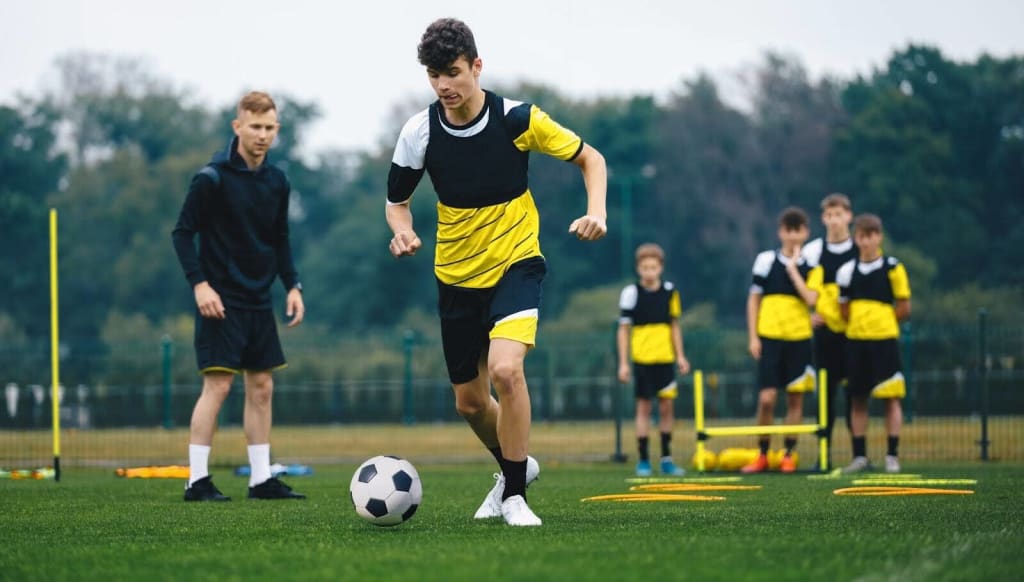
Watching young soccer players struggle with basic skills like dribbling, passing, and positioning can be tough for both the coach and the player. The frustration of constantly losing the ball or misjudging a pass can shake a beginner's confidence. That’s where the right training comes in training that simplifies the soccer game, keeps them engaged, and builds up their soccer skills one step at a time. With the right drills, players can learn to master the basics while staying motivated and having fun on the field.
The five soccer drill training exercises we’ll explore here are tailored specifically for youth players, focusing on foundational skills like ball control, passing, and shooting. These drills help develop coordination, quick footwork, and strategic positioning all key elements in soccer. Whether you're a coach or a parent, these exercises will provide young players with the tools they need to succeed.
Building Core Soccer Skills Through Dribbling, Passing, and Shooting
When starting out, every soccer player needs to develop a strong grasp of the basics. These soccer drill training exercises serve distinct purposes, such as helping players improve their dribbling control, mastering accurate passes, and sharpening their shooting. For example, the "Cone Weave" drill focuses on ball control, as players dribble through cones, learning to keep the ball close. Similarly, the "Pass and Move" drill teaches accurate passing and receiving techniques, while the "Shooting Challenge" aims to enhance goal-scoring ability with accuracy and confidence.
Developing Footwork and Coordination
Footwork and coordination drills are critical for beginner soccer players. Drills like "Ladder Agility" and "Jump Rope" push players to move quickly and efficiently. The "Ladder Agility" drill, in particular, encourages fast foot movements, improving reaction time and balance. These types of soccer drill training not only help players get faster but also improve their coordination, making them more nimble and aware of their body positioning during a game.
Keeping Practice Fun and Engaging
Motivating young players can sometimes be a challenge, especially when they’re learning new skills. That's why incorporating elements of competition and fun is essential. For example, the "Dribble Relay" adds a fun twist to the traditional dribbling drill by turning it into a race. This keeps the energy high, while still allowing players to practice essential skills like ball control and speed. Fun soccer drill training exercises help maintain engagement and make learning soccer enjoyable, which is key for young players who are still developing their love for the game.
Consistency and Muscle Memory Development
To ensure long-term success, consistent practice is essential. Ideally, young players should engage in these soccer drill training sessions 3-4 times a week for about 10-15 minutes per drill. This repetition helps to develop muscle memory, allowing skills to become second nature over time. Coaches can monitor progress by measuring improvements in areas like ball control, passing accuracy, and shooting precision. Setting targets, such as reducing the number of touches during dribbling or improving pass completion rates, provides clear goals for players to work toward.
Promoting Teamwork and Communication
Soccer is a team sport, and one of the best ways to teach young players about teamwork is through soccer passing drills. The "Pass and Move" drill emphasizes the importance of communicating with teammates while moving the ball effectively across the field. This helps players understand the need for clear communication and collaboration, which are crucial for success in a match. Teamwork soccer drill training not only builds technical skills but also fosters a strong team dynamic on and off the field.
Improving Spatial Awareness and Positioning
Spatial awareness is an often-overlooked but essential skill in soccer. The "Small-Sided Game" drill is designed to help beginners learn how to position themselves relative to their teammates and opponents on the field. With fewer players and a smaller playing area, this drill encourages young players to think strategically about where they are, helping them develop better field awareness and positioning.
Adjusting Drills for Different Skill Levels
Every young player learns at a different pace, so it’s important to adapt drills to fit their individual needs. For instance, faster players can add more cones or obstacles to the "Cone Weave" drill to make it more challenging, while beginners can space the cones further apart for easier maneuvering. This flexibility ensures that all players, regardless of their fitness or skill level, can benefit from the soccer drill training.
Making Do with Limited Equipment
The beauty of these drills is that they require minimal equipment. Cones, soccer balls, and agility ladders are the basics needed for most drills. In resource-limited environments, cones can be substituted with small objects like water bottles, and agility ladders can be drawn on the ground with chalk. This ensures that these soccer drill training exercises can be practiced almost anywhere, providing more opportunities for young players to hone their skills.
Building Confidence Through Repetition
Repetition is key to building confidence in soccer. These drills focus on repeating simple actions until they become second nature. Whether it’s dribbling through cones or passing the ball back and forth, the more players practice, the more confident they become in their abilities. For instance, the "Shooting Challenge" drill helps boost a player’s confidence in front of the goal by providing repeated opportunities to aim and score.
Developing Defensive Skills
While most drills focus on offense, it’s equally important for young players to develop their defensive skills. The "1v1 Defensive Drill" teaches players how to defend by focusing on body positioning and timing. This drill allows one player to practice attacking while the other focuses on maintaining a strong defensive stance, making it a perfect way to introduce defensive fundamentals to beginners.
Ensuring Safety During Drills
Safety should always be a top priority, especially for younger or less physically developed players. Coaches should ensure that all players wear the proper gear, such as shin guards and appropriate footwear. Additionally, the intensity of soccer drill training should be adjusted based on the physical abilities of the players, and stretching before and after practice is essential to prevent injuries.
Endurance and Stamina Building
Soccer is a physically demanding sport, and young players need to build endurance to last through a full game. Drills like the "Shuttle Run" not only improve footwork but also build cardiovascular stamina by requiring players to run back and forth continuously. Incorporating conditioning exercises into skill-based soccer drill training ensures that players are physically prepared for the demands of soccer.
Providing Constructive Feedback
For beginners, feedback is essential to improving. Coaches should provide immediate, constructive feedback during drills, pointing out mistakes and offering guidance on how to correct them. Positive reinforcement also plays a vital role in keeping young players motivated and focused on their improvement.
Decision-Making Under Pressure
Soccer is as much a mental game as a physical one, and decision-making under pressure is a crucial skill. The "Small-Sided Game" drill helps players learn to think quickly, decide whether to pass, dribble, or shoot, and then act on that decision—all while facing opposition. These quick decisions are what make or break a player’s performance during a match.
Adapting Drills for Solo Practice
These drills can easily be adapted for solo practice or small group sessions. For example, the "Cone Weave" drill can be done individually to improve ball control, and passing drills can be modified using a wall or rebounder instead of a teammate. This adaptability allows young players to continue improving their skills even when they’re not in a full team setting.
By incorporating these five essential soccer drill training exercises into your youth training sessions, you’ll be providing players with the skills and confidence they need to excel on the field. These drills are designed to not only teach the fundamentals of soccer but also to foster a love for the game, preparing them for long-term success. With consistent practice, young players will grow into more skilled, confident, and strategic athletes.
About the Creator
Charlotte Rise Fc
As a soccer expert and content specialist, I share easy tips on ball control, positioning, and tactics. My goal is to help players improve their game with practical advice at Charlotte Rise FC
Keep reading
More stories from Charlotte Rise Fc and writers in Lifehack and other communities.
How Soccer Builds Confidence, Coordination, and Social Skills
Soccer is more than a game — it’s a pathway to confidence and life skills. At a young age, children benefit from structured play that builds their body and mind. At Charlotte Rise FC, our soccer programs focus on helping kids grow through fun, movement, and teamwork. Parents often struggle to find activities that balance energy, social growth, and screen-free time. Soccer offers the perfect solution in a safe, positive, and development-focused environment.
By Charlotte Rise Fc8 months ago in Journal
Why Austin Businesses Overlook Long-Term App Maintenance Costs?
The launch party ends. The app is live. Metrics look promising. For many Austin businesses, that moment feels like the finish line. In reality, it is the starting point of the most expensive phase of the product’s life.
By Samantha Blake6 days ago in Lifehack
Center Stage with Paul Stewart
*** I'm keen to republish the interviews I did for my series with Vocal creators. It's been a few years and I thought it might be nice to revisit these wonderful conversations. I'll be releasing them one at a time for a few weeks/months.
By Heather Hubler6 days ago in Interview



Comments