
5 Boston Neighborhoods Where Rent Decreased The Most Since COVID
Here are the 5 neighborhoods where rent has decreased the most compared to January 2020.

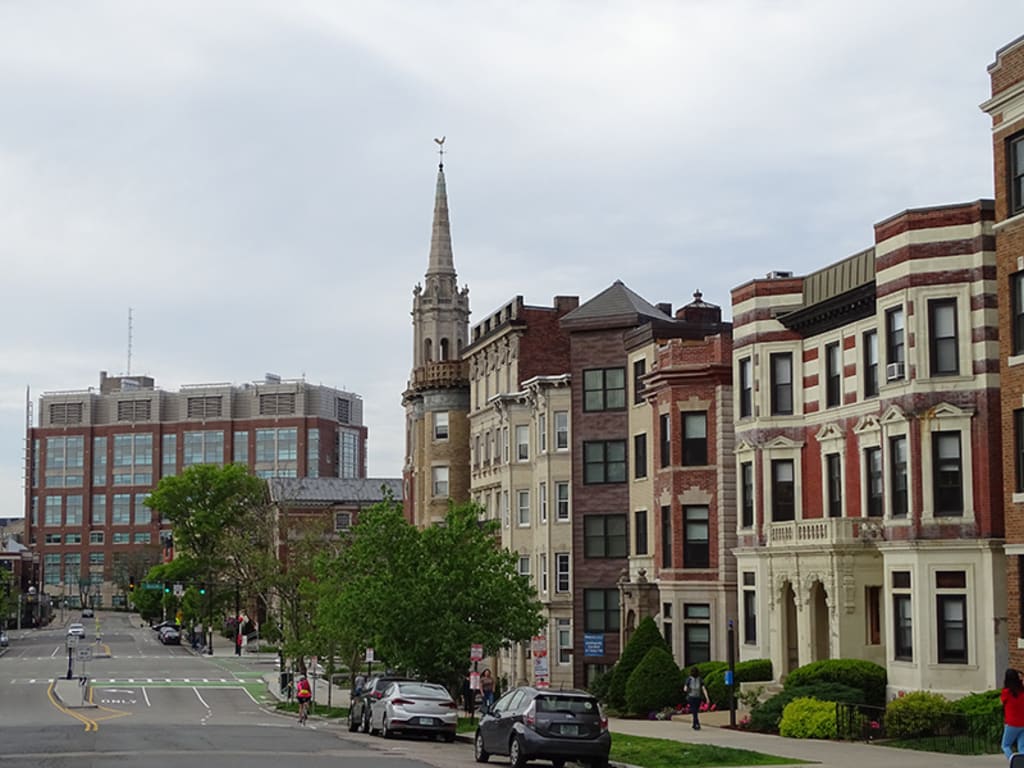
Boston’s apartment rental market troubles were well documented throughout the pandemic. The rental supply fallout that occurred as a result of remote learning was biblical, but not necessarily a surprise in a city where more than half of renters are college students. When campuses shuddered in Fall 2020, so did the off-campus housing market. Consequently, the availability rate for Boston apartments hit an unprecedented 13.4%.
Now that students in Boston have resumed in-class learning, the market has bounced back as if COVID never happened. Now apartment availability is even tighter than it was in January 2020, prior to the pandemic hitting us. Still, for a short while there, it was actually a renter’s market in Boston. During the carnage of 2020, landlords desperately slashed prices and offered incentives to try to spur demand in a market that was marked absent for the year. This was especially true in the neighborhoods that are closest to local universities.
So because apartment inventory has contracted back to its typical slim levels, renters can expect those incentives to dry up as we progress further into 2022. However, those who act early this year can still find some good deals on apartments. There are some neighborhoods where rents are down compared to pre-COVID levels. Here are the 5 neighborhoods where rent has decreased the most compared to January 2020.
1. Beacon Hill Rent: -15.31%
When the rental supply rapidly contracted in Boston during the final half of 2021, Beacon Hill was one of the neighborhoods left behind. As a result, Beacon Hill is one of the few neighborhoods along with Downtown where apartment availability is higher than it was in January 2020. As a result, the average rent price for Beacon Hill apartments ($2,658) has decreased more than any other neighborhood in Boston at -15.31%. Considering Beacon Hill and Downtown are less student enclaves than they are popular places for young professionals, this could be evidence that the remote work trend is here to stay.
2. Charlestown Rent: -14.35%
The average rent price for Charlestown apartments ($2,742) is down by -14.35% compared to January 2020. Perhaps, like Beacon Hill, Charlestown has been more affected by the remote work trend. Apartment vacancies are actually 8.18% higher now in Charlestown than they were prior to the pandemic, while most other neighborhoods are seeing lower vacancies compared to pre-COVID levels. This could explain the larger than average rent price decreases in Charlestown.
3. Mattapan Rent: -6.10%
Mattapan is an interesting case, and the only neighborhood on this list not considered among the “core areas” of Boston. Mattapan actually fared relatively well throughout the pandemic, as did most border towns and suburbs, when renter preference temporarily shifted towards places where social distancing was easier. Still, coming out of the pandemic, the average rent price for Mattapan apartments has dropped by -6.10% compared to January 2020.
4. Fenway Rent: -5.78%
Fenway was one of the neighborhoods that struggled the most with rental supply last year. Being home to Boston’s largest University (BU) and also home to the Colleges of the Fens, the remote learning trend wreaked havoc on Fenway’s rental market. As a result, landlords were swift to adjust pricing to try and spur demand. As a result, the average rent price for Fenway apartments ($3,028) has dropped by -5.78% compared to January 2020.
5. South End Rent: -5.53%
South End’s average rent price is and has been among the most expensive in Boston for a long time. South End apartments’ average rent of $3,385 per month is currently the second highest in Boston behind Back Bay ($3,631). So it makes sense that the most expensive areas would have the most to lose in terms of average rent price, especially if that area is known to be a favorite for students seeking off campus housing. South End’s average rent price is down -5.53% since January 2020.
In Conclusion
Just to reiterate, these prices are expected to be on the rise this year as apartment availability has already contracted well below pre-pandemic levels. This is a strong indication that inventory will be slim during the renting season, giving landlords the edge in the rental market. At least for the next 2-3 months, renters will have some opportunities to find apartments at pricing below their normal levels in these neighborhoods.
About the Creator
Keep reading
More stories from Zach Parker and writers in Lifehack and other communities.
Rent vs. Buy Analysis Allston MA
Allston has historically been one of Boston’s more modest housing markets. Located close to some of Boston Metro’s largest universities, the area is known to be a student enclave where coeds can escape the high rent prices that are typical of Fenway, Symphony, and South End. Still, average rents for Allston apartments have been on the rise in recent years as off-campus housing demand has increased along with student enrollment.
By Zach Parker4 years ago in Trader
What Your Grandmother Knew about Gold that Wall Street Forgot
My grandmother kept her gold bangles in a faded velvet pouch at the back of her wardrobe. Not in a safe, not in a bank vault, just tucked between old shawls and photographs. When I asked her once why she bothered keeping them, she looked at me like I'd asked why the sky was blue.
By Marcus Briggs6 days ago in Lifehack
Center Stage with Paul Stewart
*** I'm keen to republish the interviews I did for my series with Vocal creators. It's been a few years and I thought it might be nice to revisit these wonderful conversations. I'll be releasing them one at a time for a few weeks/months.
By Heather Hubler4 days ago in Interview




Comments
There are no comments for this story
Be the first to respond and start the conversation.