
30 Days Without the Internet: Living Like It’s 1995
What I Learned from Ditching My Smartphone, Embracing Analog Life, and Reconnecting with the Present


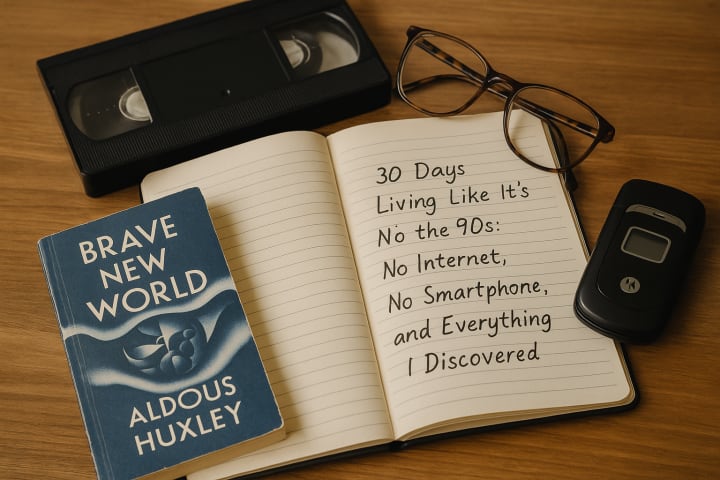
I didn’t think I was addicted. I told myself I was just “keeping up with the world.” Scrolling through TikTok at midnight, checking emails before brushing my teeth, Googling every minor curiosity that popped into my head. That was normal, right?
But something in me cracked when I realized I couldn’t sit through a movie without checking my phone. I missed the days when life moved slower—when you could spend a whole afternoon doing nothing and feel okay about it. So, I decided to try something radical: live like it was the 1990s for 30 days.
That meant no smartphone, no internet, no social media, no streaming, no food delivery apps—nothing invented after the year 2000. Just me, a flip phone (calls and SMS only), a stack of books, DVDs, handwritten notes, and real-world experiences.
---
Week 1: Withdrawal Is Real
The first few days were honestly rough. I kept reaching for a phone that wasn’t there. I felt weirdly anxious without checking notifications. I had no idea what my friends were up to. Even walking outside without a podcast in my ears felt... wrong.
I tried calling a friend to make plans—on my flip phone. It took three tries to get the message across. Apparently, we’ve all forgotten how to have real-time conversations. I even tried using a paper map to find a bookstore. Yes, I got lost.
I went to bed restless, not because I wasn’t tired, but because my brain was still wired to scroll.
---
Week 2: Silence Starts to Feel Okay
Around day eight, the silence stopped feeling empty. I began to read again—not just skim, but actually read. I finished two novels in one week. I journaled. I cleaned out my closet without turning it into content.
There was a strange peace in being unreachable. No pings, no alerts, no breaking news. My focus improved. My mornings slowed down. Meals felt fuller. I even wrote a letter to my grandma—like, with a pen and everything.
---
Week 3: I Found Time I Didn’t Know I Had
By week three, I started noticing how much time I had reclaimed. Hours that once vanished into screens were now spent walking, calling friends, painting, even daydreaming.
I ran into an old friend at a cafe and we ended up talking for three hours. Normally, I would’ve cut it short to get back to work or check emails. But now? I stayed. And it felt like real connection—not the kind with hearts and likes.
I also realized how much I relied on the internet to avoid being alone with my thoughts. Without it, I had to confront parts of myself I’d been avoiding. It wasn’t always fun—but it was necessary.
---
Week 4: What I’ll Keep, What I’ll Leave
By the end of 30 days, I wasn’t desperate to “plug back in.” I missed a few things—Spotify, Google Maps, and the ability to meme. But I didn’t miss the noise. The distractions. The artificial sense of urgency.
I’m not swearing off technology forever. I’m writing this on a laptop, after all. But I’ve decided to make a few permanent changes:
I keep my phone off during meals.
I dedicate the first hour of my day to not looking at a screen.
I read physical books more.
I write letters sometimes, just because.
---
What This Taught Me
Living like it was the 90s didn’t make me better. But it did make me more aware—of time, of presence, of what really matters.
It taught me that convenience isn’t always worth the cost. That being constantly connected doesn’t mean you’re connected to yourself. And that slowing down doesn’t mean you’re falling behind—it might mean you’re finally catching up.
So no, I’m not throwing away my phone. But now, I decide when it gets to have my attention. Not the other way around.
About the Creator
Keep reading
More stories from Santo Heryawan and writers in Lifehack and other communities.
Top 10 Questions to Ask Every Perth NDIS Service Before You Engage Them
Choosing the right National Disability Insurance Scheme (NDIS) provider shapes the quality of care, independence, and outcomes a participant experiences. In Perth, families and participants face a growing number of service options, which makes informed decision-making essential.
By Anshul Vijay3 days ago in Lifehack




Comments
There are no comments for this story
Be the first to respond and start the conversation.