
3D Walkthroughs: Bringing Your Floor Plan To Life
3D Walkthroughs: Bringing Your Floor Plan To Life
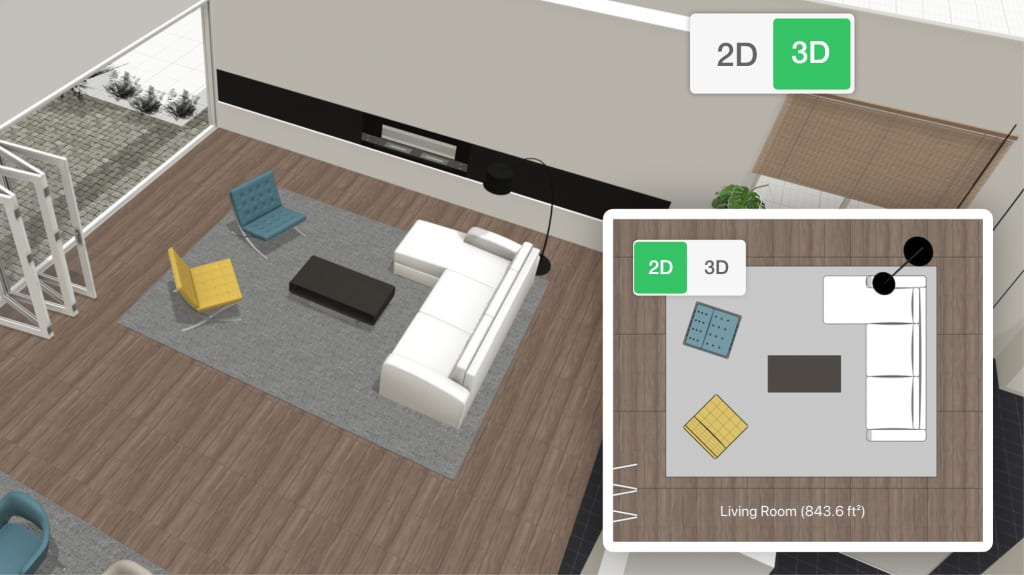
When it comes to visualising architectural designs, floor plans are essential. They provide a blueprint for a building's layout and help designers and clients understand the spatial arrangement. However, traditional 2D floor plans can often be challenging to comprehend fully. This is where 3D walkthrough house plans come into play, revolutionising how you perceive and experience architectural designs.
In this article, you will explore the concept of 3D walkthroughs and how they bring floor plans to life.
- What are 3D Walkthroughs?
A 3D walkthrough is a virtual tour of a building or space created using advanced 3D modelling and rendering techniques. It allows viewers to navigate through the virtual environment, experiencing it as if they were physically present. By incorporating realistic textures, lighting, and even sound effects, 3D walkthroughs provide an immersive and interactive experience that brings floor plans to life.
-The Power of Visualisation
The significant advantage of 3D walkthroughs is their ability to enhance visualisation. Traditional 2D floor plans can be challenging for many people to interpret accurately, especially those without a background in architecture or design. With 3D walkthroughs, anyone can visualise the final structure realistically and intuitively.
These virtual tours enable viewers to explore the building from various angles, move through different rooms, and get a sense of scale and proportion. Whether it's a residential property, commercial building, or even an entire cityscape, 3D walkthroughs provide a comprehensive understanding of the space before it is built.
- Client Engagement and Communication
In architectural projects, effective communication between designers and clients is crucial. 3D virtual tour house plans serve as an excellent tool to bridge this gap and facilitate better understanding. Instead of relying solely on technical drawings and verbal explanations, architects can showcase their vision through immersive virtual tours.
By taking clients on a virtual journey through their future property, architects can highlight key design features, showcase material choices, and demonstrate the functionality of different spaces. Clients can provide feedback and make informed decisions based on their experience within the 3D walkthrough. This level of engagement helps prevent misunderstandings and ensures that everyone involved is on the same page.
- Marketing and Sales Benefits
3D walkthroughs also offer significant advantages in marketing and sales efforts. Whether it's a real estate development, a new commercial project, or an interior design concept, a well-executed 3D walkthrough can captivate potential buyers or investors.
By showcasing the property in a visually appealing and interactive manner, developers can generate interest and excitement. Prospective clients can explore every nook and cranny, envision themselves living or working in the space, and develop an emotional connection with the design. This heightened engagement often leads to a higher conversion rate and more sales or leases.
- Time and Cost Efficiency
Another key advantage of 3D walkthroughs is their ability to save time and costs during the design and construction process. Traditional methods of architectural visualisation, such as physical scale models or elaborate renderings, can be time-consuming and expensive.
With 3D walkthroughs, changes can be made quickly and easily without requiring extensive redesigns or costly physical alterations. This flexibility allows architects and designers to iterate their designs more efficiently, ensuring that the final result meets the client's expectations. Additionally, stakeholders can quickly detect potential design flaws or conflicts, reducing the risk of costly rework during construction.
- The Future of Architectural Visualisation
As technology continues to advance, house plans with 3D walkthroughs are becoming even more immersive and realistic. With virtual reality (VR) and augmented reality (AR) integration, users can experience architectural designs in entirely new ways.
The key development is integrating virtual reality (VR) and augmented reality (AR) into architectural visualisation workflows. VR enables clients and stakeholders to immerse themselves in virtual environments, allowing them to explore and interact with spaces before they are built.
AR overlays virtual elements onto the real world, blending the physical and digital realms. This technology can potentially revolutionise how to perceive and experience architectural spaces. Imagine walking through a city and seeing virtual information, such as building designs, historical context, and real-time data, seamlessly integrated into your surroundings.
Advancements in rendering technologies, such as real-time ray tracing and global illumination, are also shaping the future of architectural visualisation. This level of realism not only enhances the design process but also aids in marketing and selling architectural projects.
Furthermore, artificial intelligence (AI) and machine learning are becoming integral to architectural visualisation. AI algorithms can generate and optimise design options based on specified parameters, helping architects explore a vast array of possibilities in a fraction of the time.
- Conclusion
The future of architectural visualisation is poised to revolutionise the real estate industry, offering architects, designers, and clients unprecedented tools and experiences. Integrating VR, AR, advanced rendering techniques, and AI in real estate floor plans will empower architects to create, communicate, and realise their visions in ways never before imagined, ultimately shaping the built environment for the better.
About the Creator
Keep reading
More stories from Olve Smith and writers in Lifehack and other communities.
The Ultimate Guide to Choosing the Best Pearl Jewelry for Any Occasion
Pearls are the most timeless and adaptable jewelry, making them ideal for any event. Pearls offer a level of elegance that is unmatched and can be worn by anyone, whether you want to make a fashion statement at a formal event or elevate your everyday look. There are plenty of options for finding the perfect pearl accessory, such as the traditional pearl necklace or the delicate pearl earrings.
By Olve Smithabout a year ago in Lifehack


Comments
There are no comments for this story
Be the first to respond and start the conversation.