
15 Lotus Flower Rangoli Design Ideas
Lotus flower rangoli designs

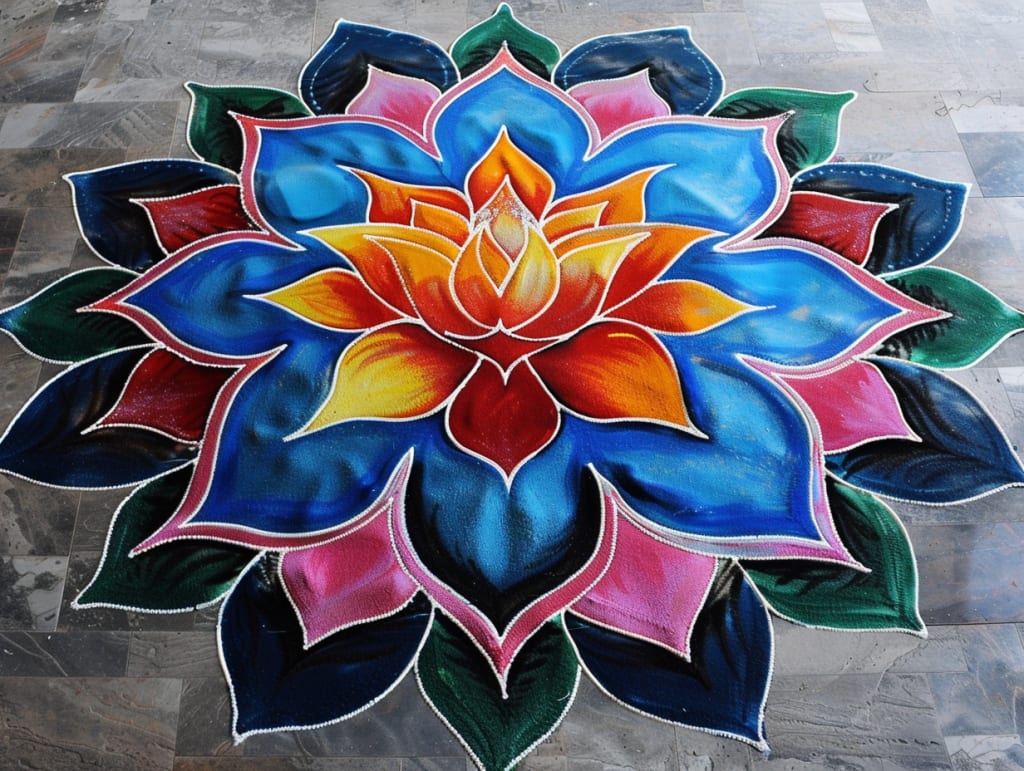
Lotus flower rangoli designs are a timeless symbol of beauty, purity, and tradition in Indian culture. The lotus, often associated with divinity and spirituality, is a popular motif in rangoli art, used to adorn homes during festivals, celebrations, and auspicious occasions. These intricate designs, crafted with vibrant colors and delicate patterns, not only enhance the aesthetic appeal of any space but also bring positive energy and joy. Whether made with dots or freehand, lotus rangoli patterns offer endless creative possibilities, blending cultural heritage with modern artistry. In this article, we explore various lotus flower rangoli designs, each offering a unique way to express creativity and devotion.
Check: Easy Rangoli Designs for Kids
Lotus flower rangoli Designs:
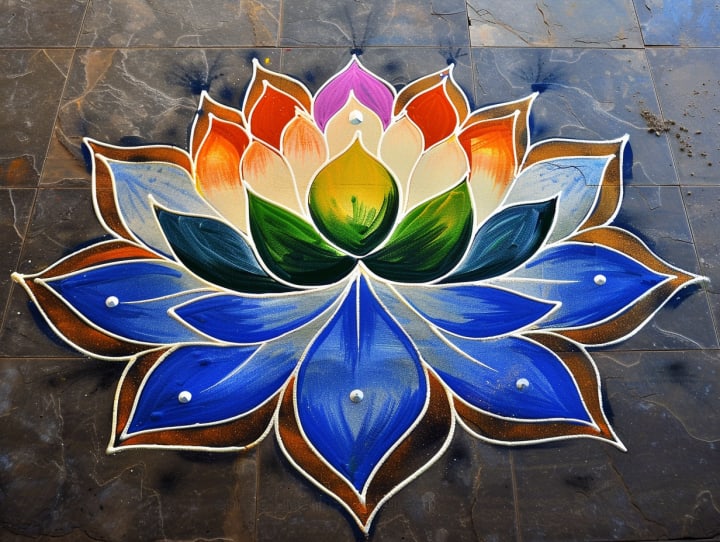


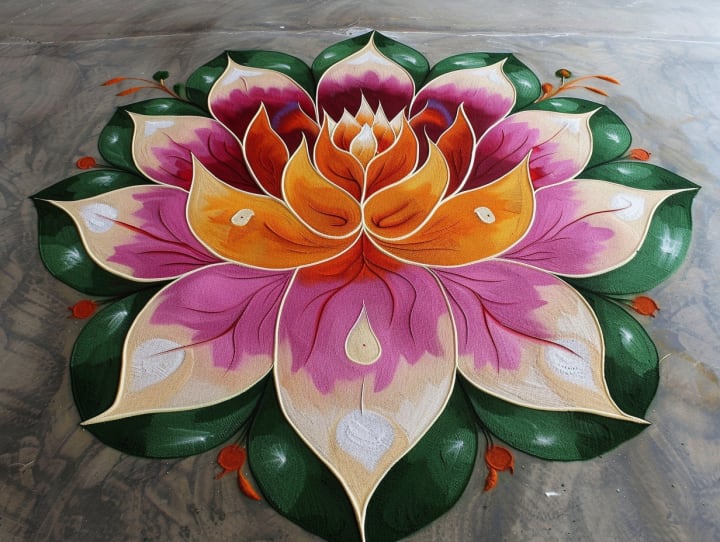


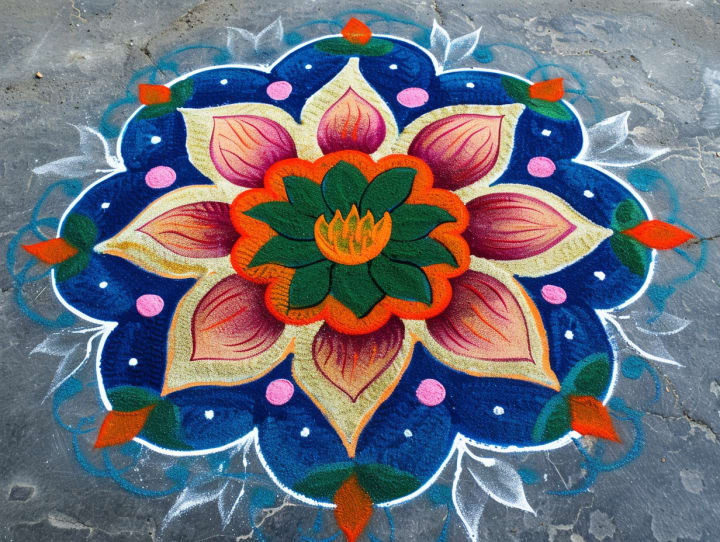


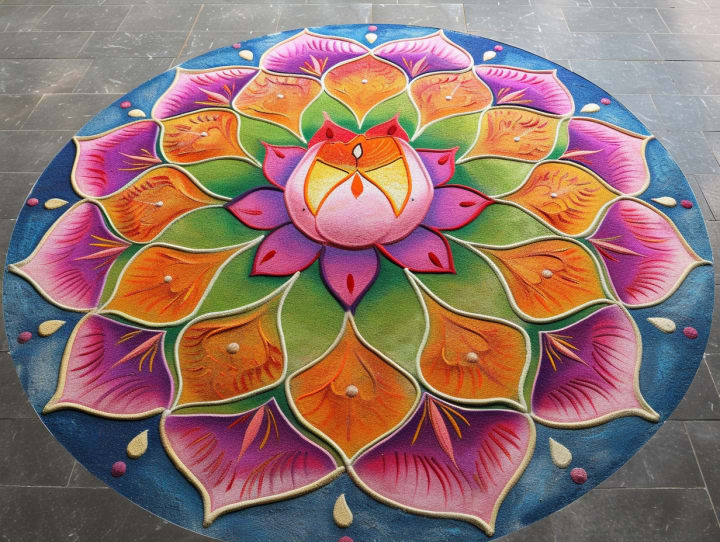


Here are some creative lotus flower rangoli design ideas:
1. Traditional Lotus Rangoli
Design: A large central lotus flower with wide petals, surrounded by intricate borders of geometric patterns.
Colors: Use soft pink, white, and green shades for the petals and leaves, with a golden yellow center.
Accents: Add small diya (oil lamp) patterns at the edges to enhance the festive vibe.
2. Lotus Mandala Rangoli
Design: Create a mandala with a lotus flower in the center, expanding into concentric circles of patterns.
Colors: Use vibrant colors like red, orange, and yellow to make the design stand out, with darker shades for the background.
Accents: Incorporate dots and delicate lines for more depth and detail.
3. Floating Lotus Rangoli
Design: Draw a floating lotus in the middle of a pool of water, surrounded by water ripples and smaller flowers.
Colors: Soft blues for water, pink or white for lotus petals, and green for the leaves.
Accents: Use glitter powder or flower petals to add a reflective touch to the water.
4. 3D Lotus Rangoli
Design: A 3D-effect lotus flower with layered petals that appear to rise from the floor.
Colors: Pastel colors like light pink, lavender, and peach to create a soft and delicate look.
Accents: Shade the petals and leaves to enhance the 3D effect, and add real flower petals for extra depth.
5. Lotus with Peacock Feathers
Design: A central lotus surrounded by peacock feathers forming a circular design.
Colors: Bright shades of blue, green, and gold for the feathers, and pink or red for the lotus.
Accents: Add detailing to the feathers using dots of white and dark blue to make them look more realistic.
6. Minimalistic Lotus Rangoli
Design: A simple lotus pattern with a few petals, surrounded by minimal geometric borders.
Colors: Stick to two or three colors like pink, white, and green for a clean and elegant design.
Accents: Keep the design subtle with minimal filling and focus on clean lines.
7. Floral Lotus Rangoli
Design: Use flower petals (marigold, rose, and jasmine) to create a large lotus flower on the ground.
Colors: Bright and natural shades like orange, red, yellow, and white.
Accents: Place tea lights or small candles around the design to give it a soft glow in the evening.
These designs can be customized to fit the occasion and space, and you can experiment with colors and patterns to suit your preferences!
Lotus rangoli designs with dots:
Creating a lotus rangoli design with dots is a simple yet elegant process, often seen in traditional South Indian kolam or rangoli art. Here's a step-by-step guide to help you make a beautiful lotus rangoli using a grid of dots:
Materials Needed:
- Rangoli powder (white and colored)
- Chalk or marker to mark dots
- A flat, clean surface
Step-by-Step Instructions:
1. Prepare the Dots Grid
Step 1: Start by drawing a grid of dots on the floor. You can use chalk or place small dots of white rangoli powder.
Dot pattern: For a basic lotus design, use a 5x5 dot grid (5 rows and 5 columns of dots).
Spacing: Make sure the dots are evenly spaced, as this will help maintain symmetry in your lotus design.
2. Outline the Lotus Petals
Step 2: From the center of the grid, draw curved lines connecting four dots in a circular pattern. This forms the base for the lotus flower.
Step 3: From the central dot, start drawing the first layer of petals. Connect two adjacent dots at the top and bottom with a smooth curve. Continue this for the remaining petals, ensuring they are evenly spaced.
Step 4: For the second layer of petals, create larger, slightly wider petals by connecting every second or third dot from the grid to the center, forming a second ring of petals.
3. Add the Lotus Leaves
Step 5: After completing the flower, extend the design by drawing leaves at the corners of the grid. Use the outermost dots to create the leaves, connecting dots in pairs with smooth, elongated curves.
Step 6: If you want to add more complexity, you can place small dots between the leaves and create additional decorative shapes like small circles or swirls.
4. Fill in the Design
Step 7: Once the outline is complete, fill in the petals with your choice of rangoli colors. Traditional lotus colors include pink for petals and yellow for the center.
Step 8: For the leaves, use green rangoli powder. Be careful while filling the colors to maintain clean edges and symmetry.
5. Final Touches
Step 9: After filling the lotus and leaves with color, you can add small dots of contrasting color at the center of each petal and leaf for added detail.
Step 10: Outline the entire rangoli with a thin line of white rangoli powder to give it a neat and finished look.
Conclusion:
Lotus flower rangoli designs capture the essence of Indian culture and tradition, offering a perfect balance of simplicity and elegance. From minimalistic patterns to intricate mandalas, these designs transform any space into a vibrant and welcoming environment, making them an essential part of festive décor. Whether you're a beginner or an experienced rangoli artist, creating a lotus flower rangoli allows you to experiment with colors, shapes, and patterns, turning each design into a personal masterpiece. Let the beauty of the lotus inspire your next rangoli creation, bringing peace, prosperity, and beauty into your home.
About the Creator
pestosol
Hi.
I am Hmimda 30 years old From Algeria. I am a blogger. I like to share articles about decoration and designs
Four Ways To Extend the Lifespan Of Your Natural-Materials Home
Homes made from natural materials have unique needs to support their longevity. Homes made from natural materials can have a long lifespan and use energy more efficiently than standard materials. You can extend the lifespan of those materials with certain products and practices.
By Andrew Lemieux4 days ago in Lifehack


Comments
There are no comments for this story
Be the first to respond and start the conversation.