
12 Revising Tips For The Writer Who Hates Revising
So, every writer?

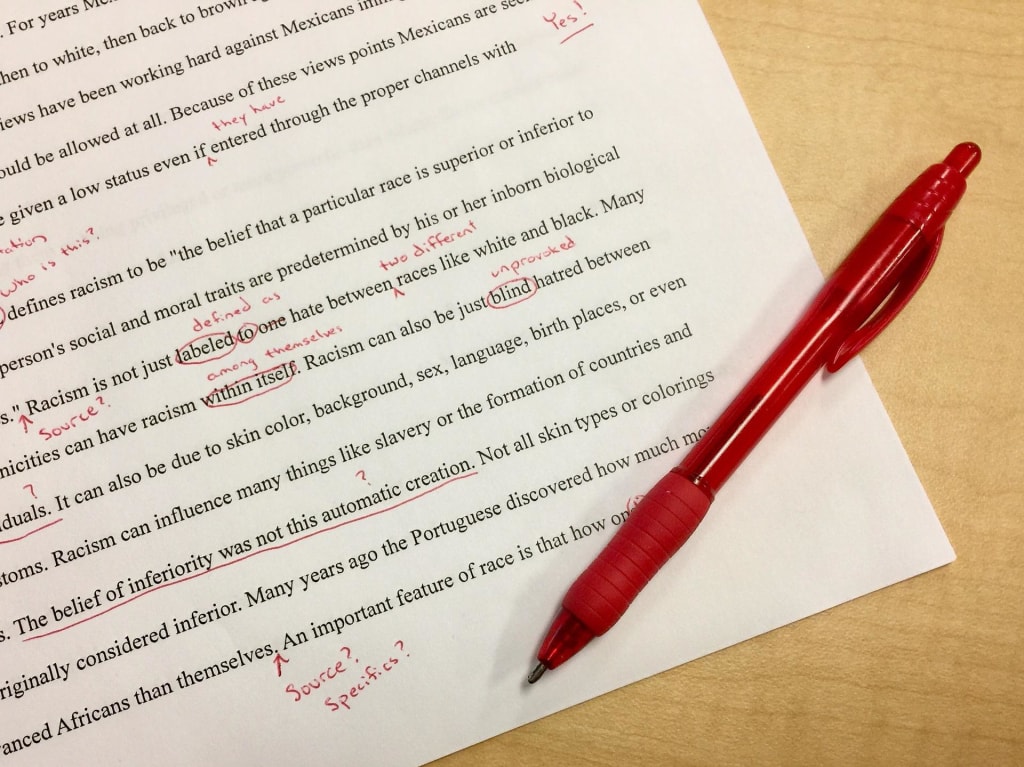
Congratulations! You managed to put the idea in your head on paper. Whether it's a 200-word flash fiction or a 100,000-word novel, your hard work has paid off.
But now, it's time for revision. The process that sounds easy but often takes just as long — if not longer — than the writing process. For anyone, this is a daunting task, but for those who hate the revising process, it can be even harder to find the motivation to read back over the story you already know so well. Here are 12 tips on making revision a little easier and go a little faster:
1. Start with the small stuff
Start out with small edits: spelling mistakes, awkward sentences, etc. This will allow you to get into revising the document with the least amount of work. Before you know it, you'll be re-writing an entire scene and not even realize it.
2. Make multiple documents
Looking at our work, it can often be hard to spot mistakes. However, copying and pasting portions (or even the entirety) of the work can help you see your writing differently and make the process more efficient. If you're making large revisions, making a new document and putting only the portions you want to keep can make the process of cutting out scenes much smoother.
Even though subtle, Google Docs, Microsoft Word, and other word processors do have slightly different interfaces. Therefore, copy and pasting sections of work into the one you did not write in can help you view it differently. Sometimes, just changing the font can help too.
3. Wait a few days
If possible, don't begin to revise or even make edits until you've let the work sit for a few days. This gives you time to reflect on the writing process and plan any major revisions. It also allows you to de-familiarize yourself with the work, making the mistakes more evident.
4. Read it aloud
Oftentimes, dialogue sounds a lot better in our heads than on the page. Most characters don't use transition words like 'however,' 'moreover,' or 'thus.' And most people won't use 'whom' correctly (or at all). Reading your dialogue (but also the entire piece) aloud can help you catch awkward phrasing and unrealistic dialogue. Even better if you can get a friend to read it to you as you'll hear it in someone else's voice.
5. Keep a file of all the things you cut
Sometimes we have to cut that witty side character we have a soft spot for because they don't contribute to the plot or the well-written but dull backstory. Keep a file of things you have to cut but still like (and could still use). Glance through this file when you're blocked to help inspire new ideas. For my novel writing friends, if you use Scrivener, I like using a specific file for this towards the bottom of the document.
6. Make a list of the changes you need to make
Once you've looked through and made note of the changes that need to be made, write them down. Not only will this keep you organized, but it will keep you focused on crossing each thing off the list. This works best for the large changes you cannot make right away.
7. Don't be afraid to try out ideas
Have a crazy plot twist in mind? Can't quite figure out a character's backstory? Open a new document and write the scene. If you like it, great! If not, no harm done, just delete it.
8. Color code
When making decisions on where to add detail and where to cut, use different colored highlighters to highlight each section and come back to it. This can be helpful when you haven't quite figured out what change you want to make yet. Just highlight it and glance at it later.
9. Leave notes
Make use of the comments feature on Word. Especially if you don't have time to fully write a scene or get started on it, leave yourself a few notes of ideas for changes. If you've been working on a different scene, you may forget your ideas for other parts of the story, but if you leave yourself a comment, you don't have to stress.
I particularly like leaving bullet pointed lists either in the document or in a comment where I left off. If in the document, I'll usually change the font color so that it does not get missed.
10. Get critiques
This can come anytime in the process. Whether you're almost done with revision or just starting, having a few people look it over is always a good idea. Often, other people will bring up things you never would've considered. They are also much better at catching your typos.
11. Do it little by little
Don't expect to sit down and revise in one sitting. Even short stories often require a few hours of revision. Once you know what your revisions are going to be, sit down knowing what you are going to get done that day. Not only will it make the process of revision feel a little less overwhelming, but it will also probably go faster too.
12. Put on some music
Who says you have to sit in silence while you revise? Put on some music! Just make sure not to distract yourself too much and stay on task.
About the Creator
Alisan Keesee
I am a 28-year-old who lives with my cat. Originally from a small, unincorporated Washington town, I have a penchant for boybands, black coffee, and true crime. Western Washington University & Emerson College alumna.
Keep reading
More stories from Alisan Keesee and writers in Lifehack and other communities.
25 Things To Put In Your Earthquake Go Bag
My earliest memory is the 6.8 Nisqually earthquake which famously cracked the dome of the Washington State Capitol Building. Since then, I've experienced several earthquakes, though none as strong as the Nisqually quake. However, with the West Coast—specifically the Pacific Northwest—due for "the big one" it has been part of my education to know what to do if an earthquake strikes and to be prepared to evacuate. Part of this includes having a "go bag" which includes supplies that you can quickly grab in order to leave as quickly as possible (this becomes even more important if you live in an area at high risk of a tsunami).
By Alisan Keesee2 years ago in Lifehack
I Learned How to “Read” a Book in Just One Hour—And Still Remember Everything
For years, I believed reading a book properly meant going through every single page, line by line, without skipping anything. It felt like a rule you weren’t allowed to break. If you skipped parts, you weren’t really reading—you were cheating.
By Lukáš Hrdlička4 days ago in Lifehack




Comments
There are no comments for this story
Be the first to respond and start the conversation.