Latest Stories
Most recently published stories on Vocal.
Understanding FSC 47 Pipe, Tubing, Hose, and Fittings in Aerospace Engineering. AI-Generated.
When I explore aerospace engineering supply systems, one category consistently stands out FSC 47 Pipe, Tubing, Hose, and Fittings. These components play a crucial role in aviation fluid transfer systems, hydraulic lines, fuel distribution, and aircraft safety mechanisms.
By Beckett Dowhan5 days ago in Education
Why the Right Rug Changes Everything
You know that feeling when you step into someone's place and it just feels... right? Like everything belongs there, including you? Sometimes it's your best friend's basement hangout. Other times it's walking into your aunt's kitchen. That cozy vibe you get? More often than not, there's a rug involved.
By Muhammad Hanzla5 days ago in Lifehack
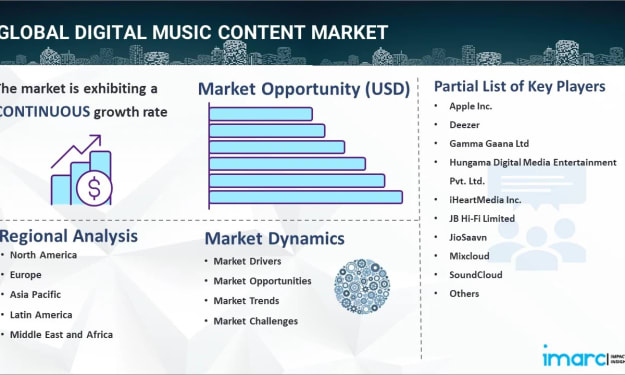
Digital Music Content Market Insights: Creator Economy, Licensing Dynamics & Forecast to 2033. AI-Generated.
The digital music revolution has fundamentally changed how people discover, consume, and share music worldwide. Streaming platforms, on-demand services, and innovative content delivery models are reshaping the industry, driven by evolving consumer preferences for convenience, personalization, and accessibility. According to IMARC Group's latest data, the global digital music content market size was valued at USD 23.7 Billion in 2024. Looking forward, IMARC Group estimates the market to reach USD 48.6 Billion by 2033, exhibiting a CAGR of 7.88% from 2025-2033.
By Andrew Sullivan5 days ago in Futurism
Sparrow on a Plank Chapter 16: On Not Becoming a Shrimp's Dinner
Sal and Hajime were walking down the pier as a group of merchants were running the other way. Some of them were covered in stew. They looked at each other and shrugged. As they came closer to the Hell’s Wrath they saw Rick putting away the catapult and a couple of boys from the mess rubbing the big pot down. Rick saw them, and bellowed, “Heave to!” They rushed up the gangplank, past splotches on the pier, and it was taken in just as they hit the deck. Hajime kept moving to his quarters, where he quickly secured the book and shucked off the more confining of his clothes. He was down to tunic and breeches and then up to the crow’s nest to help guide the ship out.
By Jamais Jochim5 days ago in Chapters
Incheon Emerges as Gateway to Southeast Asia for Alaska Airlines. AI-Generated.
Alaska Airlines is charting a new course for growth in Asia, positioning Incheon as a key hub for travelers heading to Southeast Asia. The move marks a significant strategic expansion for the carrier, which has traditionally focused on North American domestic routes and limited transpacific service. With Incheon International Airport serving as a modern, well-connected gateway, Alaska Airlines aims to tap into growing demand for travel between East Asia and Southeast Asia. Expanding the Network The airline recently announced plans to offer connecting flights through Incheon to destinations across Thailand, Vietnam, Indonesia, and Singapore. This expansion allows passengers from the United States to reach multiple Southeast Asian cities with fewer transfers and shorter layovers. By leveraging Incheon’s state-of-the-art infrastructure, Alaska Airlines can provide seamless connections while benefiting from the airport’s reputation for efficiency and service. “We see Incheon as a natural bridge between the U.S. and Southeast Asia,” said Sarah Reynolds, Alaska Airlines’ Vice President of International Operations. “It’s an airport that offers excellent connectivity, modern facilities, and a strong partnership network. This allows us to enhance the travel experience for our customers while growing our international footprint.” Why Incheon Incheon International Airport consistently ranks among the world’s top airports for service quality and operational efficiency. Its strategic location near Seoul and well-developed transit connections make it an ideal hub for airlines looking to expand regional operations. For Alaska Airlines, Incheon offers several advantages: Connectivity: With dozens of partner airlines and an extensive network, passengers can reach multiple Southeast Asian destinations with minimal hassle. Modern facilities: Incheon’s terminals provide state-of-the-art amenities, lounges, and transit services that improve passenger experience. Strategic partnerships: Alaska Airlines can leverage code-sharing agreements and alliances with Asian carriers to optimize routes and ticketing. By choosing Incheon as a hub, Alaska Airlines can bypass congestion at other major transpacific gateways, such as Tokyo or Hong Kong, and offer more competitive schedules and pricing for travelers. Benefits for Passengers Travelers from the United States will enjoy shorter travel times to destinations such as Bangkok, Ho Chi Minh City, Jakarta, and Singapore. The airline’s introduction of premium cabin services on select routes also aims to attract business travelers who prioritize comfort and convenience. Alaska Airlines plans to offer competitive pricing for economy passengers while providing loyalty program benefits, including mileage accrual and partner perks, for frequent flyers. Furthermore, travelers will benefit from smoother transit procedures at Incheon. The airport is known for efficient immigration and customs processing, extensive lounges, and amenities that cater to long-haul passengers. These features enhance the overall travel experience and make Incheon an attractive choice for connecting flights. Economic and Strategic Impact The move is also expected to strengthen economic ties between the U.S., South Korea, and Southeast Asia. Airlines play a crucial role in facilitating tourism, trade, and business travel, and Alaska Airlines’ expanded presence in Incheon could stimulate demand for goods and services in both regions. Local tourism authorities are optimistic that improved connectivity will attract more American travelers to Southeast Asia while also encouraging regional business exchanges. Industry analysts note that Alaska Airlines’ expansion into Southeast Asia reflects broader trends in aviation, where carriers are increasingly seeking hubs outside traditional gateways to capture emerging markets. Southeast Asia has seen steady growth in air travel demand, driven by rising middle-class populations, tourism growth, and increased business activity. By positioning Incheon as a central hub, Alaska Airlines can capitalize on this trend while differentiating itself from competitors. Challenges and Outlook While the expansion offers significant opportunities, there are also challenges. The airline must navigate complex regulatory environments, coordinate with multiple aviation authorities, and adapt to fluctuating demand influenced by geopolitical developments or public health concerns. Fuel costs, pilot availability, and competitive pressures from established carriers in the region are additional factors that will influence the success of the strategy. Nonetheless, Alaska Airlines appears committed to the long-term potential of this hub-and-spoke model. Executives highlight that strategic partnerships, strong operational planning, and a focus on customer experience are key to overcoming potential obstacles. Conclusion Incheon International Airport is emerging as a pivotal gateway for Alaska Airlines’ expansion into Southeast Asia. With enhanced connectivity, modern facilities, and strategic partnerships, the airline is poised to provide efficient, convenient travel options for U.S. passengers seeking to explore the region. As tourism and business travel continue to grow in Southeast Asia, Alaska Airlines’ investment in Incheon positions the carrier to capture market share and strengthen its international presence, signaling a new chapter in the airline’s transpacific strategy. Passengers, industry analysts, and regional stakeholders alike will be watching closely as Alaska Airlines navigates this ambitious expansion, demonstrating how a carefully chosen hub can transform an airline’s reach and influence in a competitive global market.
By Fiaz Ahmed 5 days ago in Journal
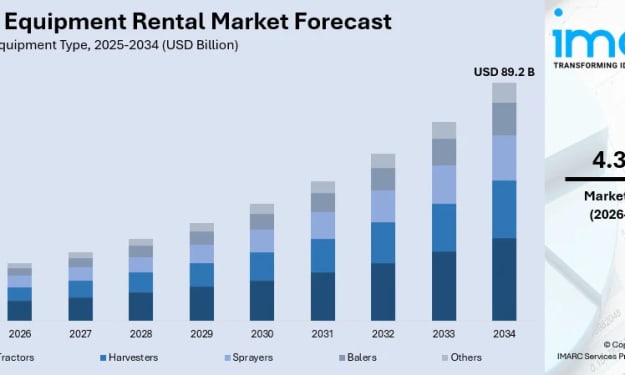
Farm Equipment Rental Market Trends: Mechanization Demand, Cost Efficiency & Forecast to 2034. AI-Generated.
Rising agricultural mechanization, improved access to advanced technology without heavy investment, increased demand for flexible farming solutions, rapid urbanization, rising sustainability concerns, the growing trend of precision agriculture, and increasing government support for mechanized farming are driving demand in the farm equipment rental market. According to IMARC Group's latest data, the global farm equipment rental market size was valued at USD 60.7 Billion in 2025. Looking forward, IMARC Group estimates the market to reach USD 89.2 Billion by 2034, exhibiting a CAGR of 4.37% from 2026-2034.
By Andrew Sullivan5 days ago in Futurism
Why the Consumer Credit Market Is Shaping Modern Financial Accessibility?
Access to credit is now a key feature of contemporary financial systems, with consumers taking out credit cards, mortgages, personal loans and other forms of borrowing to fund expenditures, invest in opportunities and develop financial flexibility. In the process, the consumer credit market has become a key sector of structured consumer finance.
By Akshay Kumar5 days ago in Futurism
Why Winter in the U.S. Is Crazy This Year, in Five Charts. AI-Generated.
This winter in the United States has been unusual, to say the least. From record-low temperatures in the Midwest to rapid snowstorms along the East Coast, weather patterns are breaking records and creating widespread disruption. Scientists, meteorologists, and climate experts have analyzed the phenomena and identified several key drivers behind the extreme conditions. Using five informative charts, this article examines the factors contributing to one of the most unpredictable winters in recent U.S. history. 1. Temperature Anomalies Across the Country The first chart illustrates temperature deviations from the 30-year average across the continental U.S. This year, states like Minnesota, North Dakota, and Wisconsin have experienced temperatures as much as 15 degrees Fahrenheit below average. Conversely, parts of the Southwest, including Texas and Arizona, have seen milder-than-usual conditions. Experts attribute these disparities to disruptions in the jet stream, which have allowed Arctic air to plunge south while warmer air remains trapped in other regions. Dr. Laura Thompson, a climatologist at the National Oceanic and Atmospheric Administration (NOAA), explains, “The jet stream is behaving erratically this year, which is why we are seeing such stark contrasts in temperature across the country. It’s a pattern that is becoming more frequent with climate change.” 2. Snowfall Extremes A second chart tracks snowfall accumulation, highlighting areas experiencing record or near-record totals. Cities like Buffalo, New York, and Duluth, Minnesota, have seen snow totals surpassing historical averages by 50 percent. These extreme snowfalls are exacerbated by the cold air mass from the Arctic, which combines with moisture from the Great Lakes or Atlantic Ocean to produce heavy, persistent snowstorms. 3. Ice Storms and Freezing Rain The third chart focuses on ice storms and incidents of freezing rain. Several southeastern states, including Georgia and Tennessee, have reported hazardous ice accumulation this winter. Freezing rain can cause dangerous travel conditions and widespread power outages as tree limbs snap under the weight of ice. Meteorologists note that warm, moist air riding over a layer of subfreezing air at the surface contributes to these dangerous conditions, which have become more common in recent years. 4. Record Energy Demand Extreme cold weather has created surges in energy demand, particularly for heating. The fourth chart tracks electricity and natural gas consumption across the U.S., showing spikes during periods of deep freeze. In some states, utilities have issued conservation warnings to prevent blackouts. Energy experts point out that aging infrastructure struggles to keep up with the intense demand during extreme cold spells, highlighting the intersection between weather events and energy security. 5. Economic Impact The final chart examines the economic consequences of extreme winter weather. From transportation delays to increased heating costs and storm-related damage, estimates suggest that this winter could cost the U.S. economy billions of dollars. Retailers, delivery services, and public transportation systems face significant disruptions, while insurance companies are already processing claims for weather-related damage. Factors Behind the Extremes Several scientific explanations help make sense of this unusual winter. The weakening of the polar vortex—a ring of strong winds around the Arctic—has allowed frigid air to spill into mid-latitude regions. At the same time, ocean surface temperatures, influenced by phenomena like La Niña, have affected the positioning of high- and low-pressure systems across North America. These interactions produce more frequent and intense snowstorms, ice events, and rapid temperature swings. Climate change also plays a subtle but important role. While no single storm can be attributed directly to global warming, the warming Arctic has contributed to destabilizing the jet stream, creating patterns that amplify cold air outbreaks in some regions while leaving others unusually warm. Experts warn that these types of extremes are likely to become more common in coming years. Preparing for the Unexpected Residents are advised to stay informed about weather conditions, stock up on emergency supplies, and prepare for potential disruptions to travel, power, and heating. Meteorologists continue to monitor patterns closely, issuing forecasts that reflect the volatility of this winter season. Ultimately, the U.S. is experiencing a winter unlike many in living memory. The combination of Arctic air surges, jet stream anomalies, ice storms, and heavy snowfall creates challenges for communities, utilities, and businesses alike. As climate patterns continue to shift, understanding these extreme events—and preparing for them—will be critical in safeguarding lives and infrastructure. By analyzing data and observing trends through charts, it becomes clear that this winter is not just “cold” or “snowy” but part of a broader pattern of increasingly unpredictable and severe weather events in the United States.
By Fiaz Ahmed 5 days ago in Longevity
Virtual Reality Gaming Market: Esports & Multiplayer Expansion, Competitive Play & Industry Growth. AI-Generated.
According to IMARC Group's latest research publication, global virtual reality gaming market size reached USD 58.8 Billion in 2025. Looking forward, IMARC Group expects the market to reach USD 401.8 Billion by 2034, exhibiting a growth rate (CAGR) of 23.80% during 2026-2034.
By sujeet. imarcgroup5 days ago in Futurism
Gold Rate Today (February 15, 2026): Yellow Metal Down Nearly Rs 24,500 From Peak; Check Prices Of 24K, 22K & 18K In Delhi, Mumbai, Chennai, Bangalore, Hyderabad & Other Major Cities. AI-Generated.
Gold has always held a special place in Indian households — not just as an investment, but as a symbol of security, culture, and prosperity. However, on February 15, 2026, the yellow metal is making headlines for a different reason. After reaching record-breaking highs earlier this year, gold prices have corrected sharply, falling by nearly Rs 24,500 from their peak levels.
By Sajida Sikandar5 days ago in Journal