
Zirconia Toughened Alumina (ZTA) Ceramics: Properties, Applications, and Future Prospects
Balancing Strength and Durability in Modern Engineering Ceramics

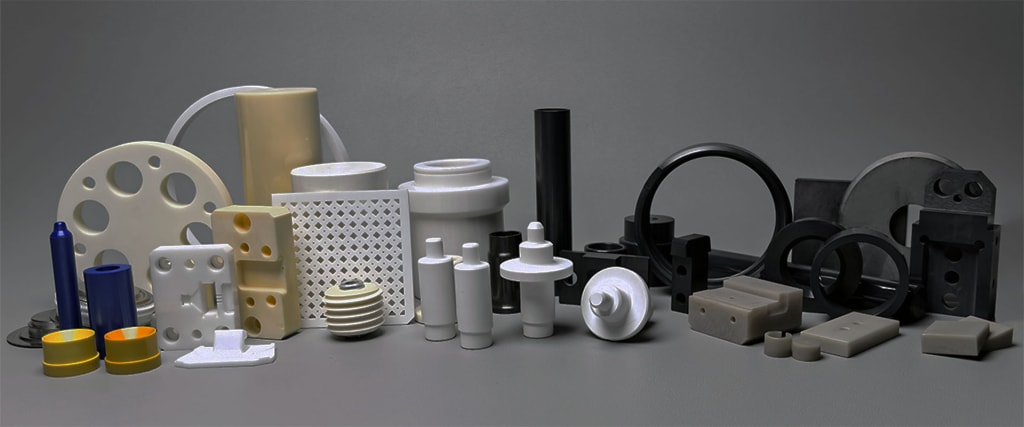
Ceramics have been a cornerstone of human innovation for thousands of years, evolving from simple clay vessels to highly engineered materials designed for demanding modern applications. Among the many varieties of advanced ceramics, Toughened Alumina—often referred to as zirconia toughened alumina (ZTA)—has emerged as a key material that bridges the gap between traditional ceramics and high-performance engineering components.
With its combination of hardness, wear resistance, and improved fracture toughness, ZTA offers solutions for industries that require both durability and reliability. Understanding what makes toughened alumina unique requires a closer look at its composition, manufacturing process, and the science behind its mechanical strength.
Understanding Toughened Alumina
Alumina (Al₂O₃) is one of the most widely used ceramic materials in both industrial and technical applications. It is valued for its excellent hardness, high melting point, chemical stability, and resistance to wear. However, like most ceramics, it is inherently brittle, making it susceptible to sudden fracture under high stress.
To address this limitation, engineers developed zirconia toughened alumina, which combines alumina with a small percentage of zirconia (ZrO₂). This addition enhances fracture toughness without sacrificing the desirable properties of alumina.
The Science Behind Toughening
The improvement in toughness comes from a mechanism known as transformation toughening. When zirconia particles within the alumina matrix are subjected to stress, they undergo a transformation from the tetragonal to the monoclinic crystal structure. This change in structure increases the local volume of the zirconia particles, creating a compressive stress zone around cracks and effectively stopping them from propagating.
This is a fundamental advantage that sets ZTA apart from standard alumina ceramics—it resists catastrophic failure even under challenging conditions.
Properties of Zirconia Toughened Alumina
The properties of advanced ceramics like ZTA are a result of both material composition and precise manufacturing techniques. Key characteristics include:
High Hardness
ZTA maintains a hardness level similar to high-purity alumina, making it ideal for abrasive and wear-intensive environments.
Improved Fracture Toughness
The addition of zirconia can double the fracture toughness compared to pure alumina, providing a significant improvement in reliability.
Wear Resistance
ZTA is widely used in sliding and grinding applications due to its ability to withstand friction without rapid degradation.
Corrosion and Chemical Resistance
Like other technical ceramics, it is inert to most acids and alkalis, making it suitable for chemical processing equipment.
High Temperature Stability
It retains its mechanical properties at elevated temperatures, often exceeding 1,000°C.
Manufacturing Process
The production of ZTA involves a carefully controlled sequence to ensure consistency and quality:
Powder Preparation
High-purity alumina and zirconia powders are mixed in precise ratios, often between 5–20% zirconia by volume.
Shaping
The mixture is shaped using methods such as dry pressing, isostatic pressing, or extrusion, depending on the intended application.
Sintering
The shaped parts are sintered at high temperatures, causing the particles to bond and form a dense, durable structure.
Finishing
Grinding, lapping, or polishing ensures the final product meets tight dimensional and surface finish requirements.
Applications of Toughened Alumina
Because of its combined hardness, toughness, and chemical stability, ZTA is used across a diverse range of industries.
1. Industrial Machinery
ZTA is often employed in ceramics manufacturers’ production of wear parts such as bearings, bushings, and pump seals. These components benefit from the material’s ability to operate reliably in abrasive and corrosive conditions.
2. Cutting and Grinding Tools
The high wear resistance of ZTA makes it an excellent choice for cutting tools and grinding media. Its durability extends tool life and reduces downtime.
3. Medical Implants
In orthopedic and dental applications, ZTA is used for joint replacement components and dental crowns due to its biocompatibility and mechanical strength.
4. Chemical Processing Equipment
Its resistance to acids, alkalis, and solvents makes it suitable for lining reactors, pipes, and vessels in chemical plants.
5. Electrical and Electronic Devices
ZTA serves as an insulating substrate in electrical systems, providing high dielectric strength while withstanding thermal and mechanical stress.
Comparison: ZTA vs. Other Ceramic Materials
While ZTA offers a balanced performance profile, it is important to compare it with other materials:
Pure Alumina
Lower fracture toughness but comparable hardness. More cost-effective for less demanding applications.
Pure Zirconia
Higher fracture toughness but slightly lower hardness and wear resistance. More expensive to produce.
Silicon Nitride
Excellent thermal shock resistance but generally more costly and challenging to process.
The choice often comes down to the specific application’s mechanical, thermal, and cost requirements.
Advantages and Limitations
Advantages:
- Balanced combination of hardness and toughness
- High wear and corrosion resistance
- Biocompatibility for medical use
- Good high-temperature performance
Limitations:
- Higher cost compared to standard alumina
- Processing requires precise control to prevent flaws
- Slightly lower hardness than the highest-grade aluminas
Future Outlook for ZTA Ceramics
The demand for ceramic materials like zirconia toughened alumina is expected to grow as industries push for higher performance and longer-lasting components. Emerging technologies such as additive manufacturing (3D printing) of ceramics may make ZTA more accessible and customizable, reducing waste and improving design flexibility.
Research is also underway to improve the zirconia particle distribution within the alumina matrix, further enhancing the material’s mechanical properties. This could lead to next-generation ZTA products capable of outperforming even the best current offerings.
Environmental Considerations
While ceramics are generally inert and long-lasting, their production can be energy-intensive due to high sintering temperatures. Future sustainability initiatives may focus on:
- Lower-temperature sintering aids
- Recycling of ceramic waste into new products
- Renewable energy integration in manufacturing facilities
Conclusion
Toughened Alumina represents a major step forward in the evolution of engineering ceramics. By combining the hardness of alumina with the fracture resistance of zirconia, ZTA provides a material that meets the needs of industries requiring both durability and reliability.
From advanced ceramics applications in heavy machinery to technical ceramics in medical devices, its versatility is matched by few other materials. As research and manufacturing technologies advance, ZTA is poised to play an even greater role in the development of high-performance ceramic materials for the future.
About the Creator
Keep reading
More stories from charliesamuel and writers in Journal and other communities.
Macor Ceramic and Glass Ceramic: Properties, Applications, and Manufacturing Insights
Introduction In the field of Advanced Ceramics, few materials combine machinability and thermal stability as effectively as Macor Ceramic. Classified as a type of glass ceramic, this material bridges the gap between the versatility of metals and the high-performance characteristics of ceramics. Known for its ability to be machined with conventional tools while maintaining excellent thermal and electrical properties, Macor has become a material of choice for industries ranging from aerospace to medical devices.
By charliesamuel7 months ago in Journal
Author’s Advice
If you would’ve asked me 20 years ago did I know I’d become a writer and an author, I would’ve said “nope, ain’t happening”. As fate would have it I did become an author and I can honestly say I’m loving it so far. It really does feel good to be a writer. I’ve learned a lot on this journey and I feel like with even me being as new to this world as I am, there’s some wisdom I need to share with every other aspiring author.
By Joe Patterson5 days ago in Journal



Comments
There are no comments for this story
Be the first to respond and start the conversation.