
Women’s Rights Are on a Sharp Decline in Israel: Advocates Blame Netanyahu’s Far-Right Government
How Policy Shifts, Religious Influence, and Political Alliances Are Reshaping Gender Equality

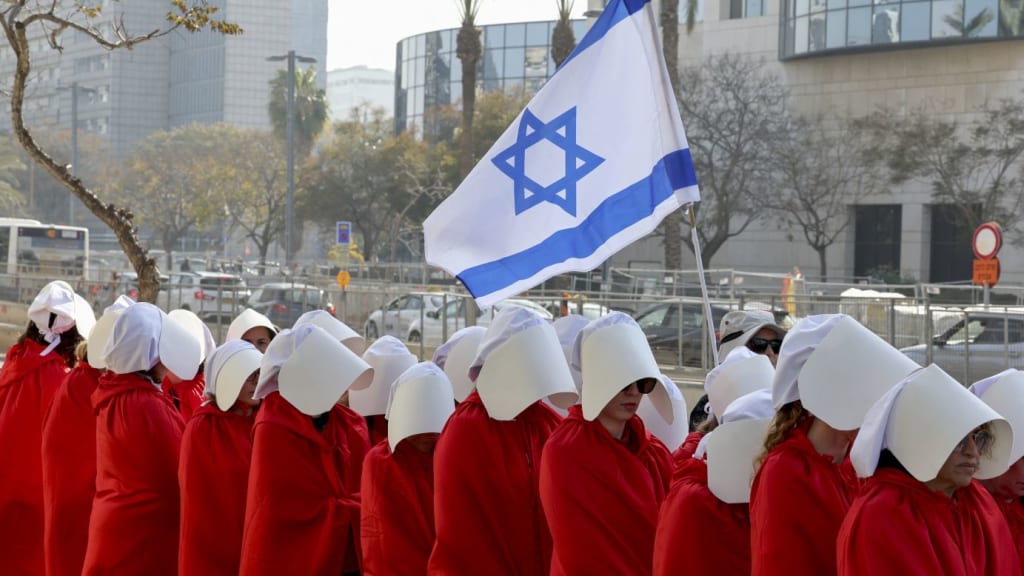
Israel has long presented itself as a democracy that champions equality and progressive values in the Middle East. Women have served in its military, held high political office, and played visible roles in public life. Yet in recent years, women’s rights advocates warn that these gains are being steadily eroded. At the center of their concerns is Prime Minister Benjamin Netanyahu’s far-right governing coalition, which critics say is reshaping Israeli society in ways that disproportionately harm women.
A Coalition That Changed the Balance of Power
Netanyahu’s current government relies heavily on ultra-Orthodox and far-right nationalist parties to remain in power. These groups hold deeply conservative views on gender roles, family life, and religious authority. In exchange for political support, they have gained influence over key ministries, legislation, and public policy.
Women’s rights groups argue that this shift has tipped the balance away from secular and liberal principles toward a system where religious norms increasingly shape daily life. While these changes may appear incremental, activists say their cumulative effect is profound.
Rolling Back Legal Protections
One of the most alarming trends for advocates is the weakening of legal protections for women. Proposed judicial reforms, which aim to reduce the power of Israel’s Supreme Court, have raised fears that women could lose a critical safeguard against discriminatory laws.
Historically, the court has acted as a check on religious and conservative legislation, particularly in cases involving gender equality, reproductive rights, and workplace discrimination. If judicial oversight is weakened, critics warn that women may have fewer avenues to challenge unfair laws or policies.
Domestic violence protections are another area of concern. Advocacy organizations report underfunding of shelters, delayed reforms, and a lack of urgency in addressing gender-based violence — even as reported cases continue to rise.
Religious Influence in Public Spaces
Women’s presence in public life is also being reshaped. In some communities, increased gender segregation has become normalized, particularly in public transport, cultural events, and religious spaces funded by the state.
Advocates argue that this segregation, often justified on religious grounds, restricts women’s freedom of movement and participation. While framed as “voluntary,” critics say social pressure makes it difficult for women to resist without facing harassment or exclusion.
In government-funded events, reports of women being asked to sit separately or dress modestly according to religious standards have sparked outrage among secular Israelis.
Political Representation Under Threat
Despite Israel having once elected a female prime minister, women’s representation in the current government is limited. Far-right and ultra-Orthodox parties rarely include women in leadership roles, and some exclude them entirely from candidate lists.
This lack of representation means women’s voices are often absent from decisions that directly affect them — from education and healthcare to family law and employment rights. Activists argue that policy outcomes reflect this imbalance, reinforcing traditional gender roles rather than expanding opportunities.
Impact on Reproductive and Family Rights
Family law in Israel is heavily influenced by religious courts, which govern marriage and divorce. Women’s rights advocates say the current government has shown little interest in reforming a system that often disadvantages women, particularly in divorce proceedings.
Restrictions on reproductive healthcare access have also drawn criticism. While Israel remains relatively liberal compared to some neighboring countries, advocates fear that growing religious influence could lead to tighter controls, reduced funding, or increased stigma around reproductive choices.
Resistance From Civil Society
Despite these challenges, resistance is growing. Women’s organizations, legal groups, and grassroots activists have mobilized through protests, court challenges, and international advocacy. Large demonstrations against judicial reforms have featured women prominently, signaling that many Israelis view gender equality as inseparable from democracy itself.
Younger generations, in particular, are pushing back against what they see
About the Creator
Fiaz Ahmed Brohi
I am a passionate writer with a love for exploring and creating content on trending topics. Always curious, always sharing stories that engage and inspire.
Keep reading
More stories from Fiaz Ahmed Brohi and writers in Journal and other communities.
Bondi gunmen 'meticulously' planned attack for months, police allege
The horrifying Bondi shooting has sent shockwaves through Australia and beyond, as authorities allege that the gunmen responsible meticulously planned the attack for months. Law enforcement officials, speaking under strict confidentiality, have described the incident as the culmination of a carefully orchestrated scheme, highlighting the chilling level of premeditation involved.
By Fiaz Ahmed Brohi28 days ago in Journal
The goals I did not achieve
Every writing goal I made for the year is a wash. It has been this way for a while, but I think it's important to be open about my failures and the reality of how life can get in the way. This is especially true considering the several times I have posted on Vocal about my writing goals, how I was changing my approach, and where I was hoping to be for the upcoming year. I will probably do that again in a couple months, but for now, it is time to acknowledge where I am today.
By Kay Husnick24 days ago in Journal
Why Catholics Believe Faith and Works Go Together
Why Catholics Believe Faith and Works Go Together A question often asked by non-Catholics is how faith and works relate in the Catholic understanding of salvation. Some believe that Catholics rely on “good works” to earn salvation, while others think faith alone is sufficient. The truth in Catholic teaching is that faith and works are inseparably connected, and both are essential for a living, authentic Christian life. Understanding this balance begins with Scripture, is explained through Church teaching, and is supported by centuries of theological reflection.
By Sound and Spirit6 days ago in Journal



Comments
There are no comments for this story
Be the first to respond and start the conversation.