
Will LLMs Make Traditional NLP Obsolete? Let’s Find Out
LLMs vs traditional NLP

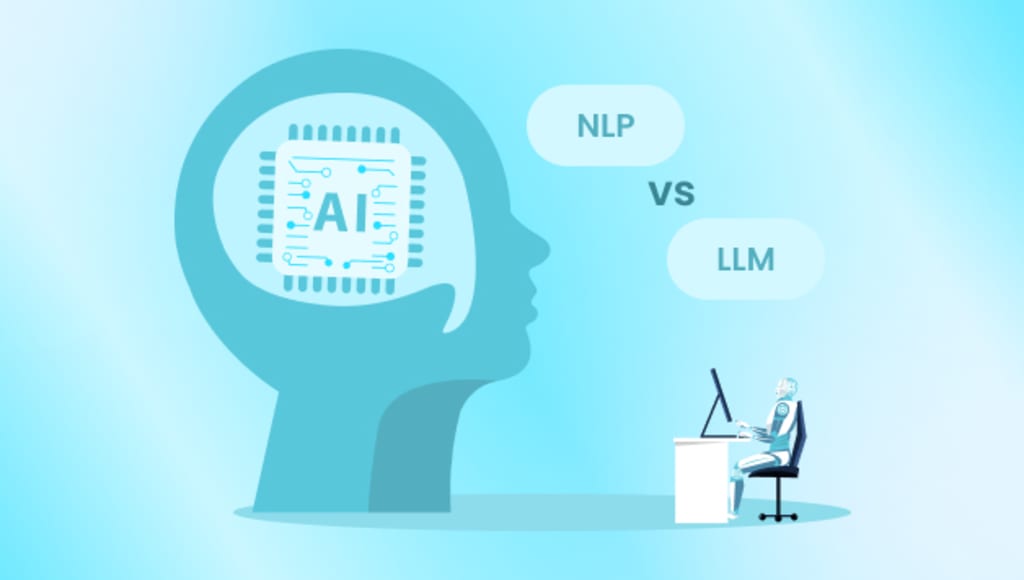
In the debate of llm vs nlp, organizations face a pivotal choice: embrace the power of LLMs vs traditional NLP or stick with established rule‑based pipelines. As Generative AI in NLP reshapes text generation, it’s crucial to weigh the pros and cons of each approach and understand where each excels.
What Are Traditional NLP Techniques?
Traditional NLP techniques rely on handcrafted rules, lexicons, and statistical models to process language. Common methods include:
- Tokenization & Part‑of‑Speech Tagging: Breaking text into words and identifying their grammatical roles.
- Named Entity Recognition (NER): Extracting names, dates, and locations.
- Dependency Parsing: Mapping grammatical dependencies between words.
These methods require careful feature engineering and domain expertise but offer predictable, explainable results for specific tasks.
The Rise of Large Language Models
By contrast, LLMs vs traditional NLP usher in a new era of AI language understanding. Large Language Models learn patterns from massive datasets, allowing them to:
- Generate coherent text in multiple styles
- Answer questions with contextual awareness
- Perform zero‑shot and few‑shot learning without manual rule setting
This flexibility makes LLMs ideal for tasks like content creation, code generation, and conversational agents.
Key Differences: LLMs vs Traditional NLP
When you compare LLMs vs traditional NLP, consider:
1. Data & Training
- Traditional NLP techniques work well with small, curated datasets.
- LLMs require large-scale corpora and extensive computation.
2. Customization & Control
- Rule‑based pipelines allow granular control over output.
- Generative AI in NLP models offer versatility but less predictability.
3. Performance & Scalability
- Traditional models are lightweight and fast.
- LLMs deliver richer results but demand more resources.
Use Cases: Where Each Approach Shines
When to Choose Traditional NLP
- Regulatory or compliance tasks requiring transparency
- Keyword extraction and sentiment analysis on small corpora
- Scenarios where infrastructure is limited
When to Embrace LLMs
- Automating content generation at scale
- Building chatbots with nuanced, human‑like dialogue
- Rapid prototyping and exploratory research
Many businesses partner with an AI Development Services firm to integrate both methods into a hybrid solution, ensuring the right tool for each task.
Challenges of Relying Solely on LLMs
While powerful, LLMs face hurdles:
- Bias & Hallucinations: They can reflect training data biases or invent facts.
- Cost & Infrastructure: Running large models requires specialized hardware.
- Explainability: Outputs are less transparent compared to rule‑based systems.
These factors mean that LLMs vs traditional NLP is not a zero‑sum game; each has a distinct role.
Future Outlook: LLMs vs Traditional NLP
Looking ahead, a symbiotic relationship is emerging:
- Hybrid Pipelines: Use rule‑based checks to validate LLM outputs.
- Domain‑Specific Fine‑Tuning: Train LLMs on industry data for improved accuracy.
- Tooling & Best Practices: Develop frameworks that let teams switch between methods seamlessly.
By combining the precision of Traditional NLP techniques with the adaptability of LLMs, organizations can optimize performance while mitigating risks.
Conclusion
The llm vs nlp debate highlights that LLMs vs traditional NLP each have unique strengths. While LLMs push the boundaries of what’s possible thanks to Generative AI in NLP rule‑based methods remain invaluable for critical, explainable tasks. In the evolving landscape of language technology, savvy teams will adopt a hybrid approach. Leveraging AI Development Services to blend both paradigms can ensure robust, scalable, and trustworthy NLP solutions. As you plan your next AI project, remember that the future of language processing lies not in obsolescence, but in integration marrying the best of traditional and modern techniques to drive innovation.
About the Creator
Anil Parmar
I’m Anil Parmar, co-founder of Glorywebs. I enjoy blogging about business growth, technology, and marketing insights to help others succeed in the digital world.
Keep reading
More stories from Anil Parmar and writers in Journal and other communities.
The Future of RPA Development: Trends to Watch in 2025
Robotic Process Automation (RPA) has already made a significant impact on industries worldwide by automating repetitive tasks, improving efficiency, and reducing human error. As we look to 2025, the future of RPA development promises even more transformative changes, thanks to advancements in artificial intelligence (AI), machine learning (ML), and intelligent automation.
By Anil Parmar11 months ago in Journal
Product Management
Professionals working at the intersection of healthcare innovation and product strategy, including leaders like Onyekachi Chidiadi, often emphasize an important reality: scientific breakthroughs only matter when they successfully reach the people who need them. In industries driven by research and complex technology, product management plays a critical role in transforming discovery into real-world impact.
By Onyekachi Chidiadi5 days ago in Journal
Guard Your Battery
Why are some people so attractive just by standing there? It’s not because they are "likable," but because they don’t need everyone to like them. I realized later that truly charismatic people allow themselves to be criticized, but they never criticize themselves. They never try to please the world; instead, the world stops to watch them.
By Emily Chan - Life and love sharing6 days ago in Poets




Comments
There are no comments for this story
Be the first to respond and start the conversation.