
Why Your Startup Needs an MVP: The Fast Track to Validation
Startup Needs an MVP

90% of startups fail. That’s a staggering statistic, and one of the biggest reasons is that they build the wrong product. How does this happen? Often, startup teams get too far ahead of themselves, investing time and money into full-scale development without first understanding what their customers actually need or want.
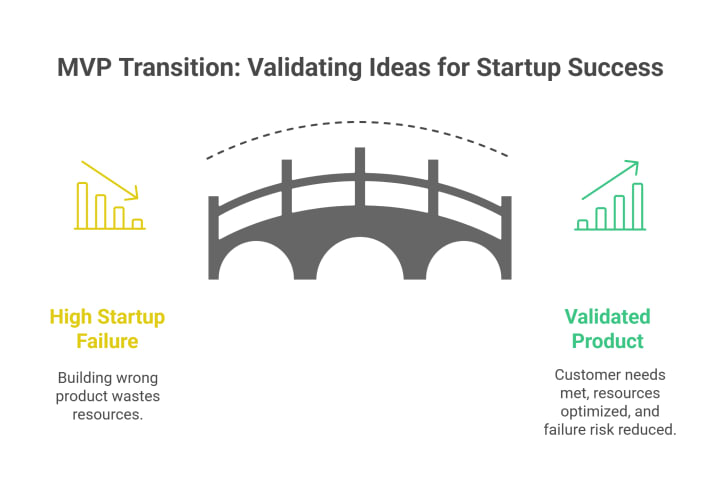
Enter the MVP, or Minimum Viable Product. An MVP allows you to validate your idea and identify potential problems early, before you've spent thousands on unnecessary features or gone too far to pivot. Building an MVP is like dipping your toes in the pool before cannonballing in—it’s a deliberate, smart step toward success.
This blog will cover exactly why an MVP is an essential tool for any startup and how you can build one that makes a difference. We’ll dig into what an MVP is, common mistakes to avoid, and how to go from MVP to fully-scaling product.
What Is an MVP? (And What It’s Not)
At its core, a Minimum Viable Product is the simplest, most basic version of your product that solves a core problem for your early users. It’s not your dream product, packed with every feature you’ve imagined or every bell and whistle that competitors might offer. Instead, it’s a functional starting point to test your idea in the real world.
Common Misconceptions About MVPs
“It’s just a prototype.”
A prototype is a non-functional model designed to demonstrate a product concept. An MVP, on the other hand, is fully operational and ready to be tested by actual users.
“It’s just a half-baked product.”
Far from it! While an MVP might be simple, it should still offer value. That value is the minimal solution to the problem you’re tackling.
“It’s only for tech startups.”
Nope. MVPs are valuable across industries, from SaaS and e-commerce to health and retail. Any business testing a concept can benefit from an MVP.
Successful MVP Examples
If you’re wondering whether MVPs work, consider these success stories:
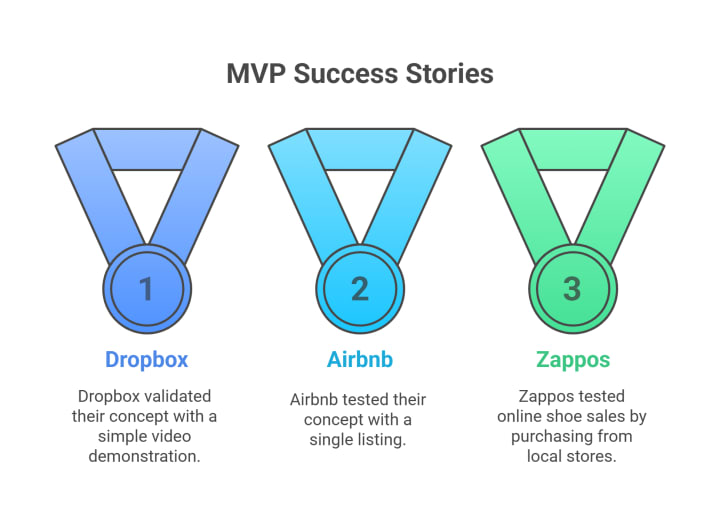
- Dropbox started with a simple video demonstration of their concept, gaining user interest before a single line of code was written.
- Airbnb began with just one listing to test whether strangers would pay to stay in someone’s home.
- Zappos tested the concept of selling shoes online by listing products, purchasing them from local stores, and shipping them directly to customers.
Why Startups Fail Without an MVP
Many startups fall into the "build it and they’ll come" trap, assuming that a fully-developed product will automatically attract users. The reality isn’t so forgiving.
Risks of Skipping an MVP

Wasting Resources: Without validation, you could spend months (and your entire budget) developing features no one needs.
Missed Market Fit: Without early user feedback, it’s easy to misjudge what the market really wants, leading to a product no one buys.
Difficulty Pivoting: It’s far harder to change course when you’ve already invested in a near-final product.
Real-World Example of Failure
Consider the ill-fated startup Lesson Learned, which built a comprehensive learning platform fully loaded with features. They assumed schools would immediately recognize its value and adopt it. Unfortunately, educators found the platform overly complex, and the company eventually ran out of funding before they could simplify or adjust to feedback.
Key Benefits of Building an MVP
Now that we’ve seen the risks, here are the rewards of developing an MVP for your startup.
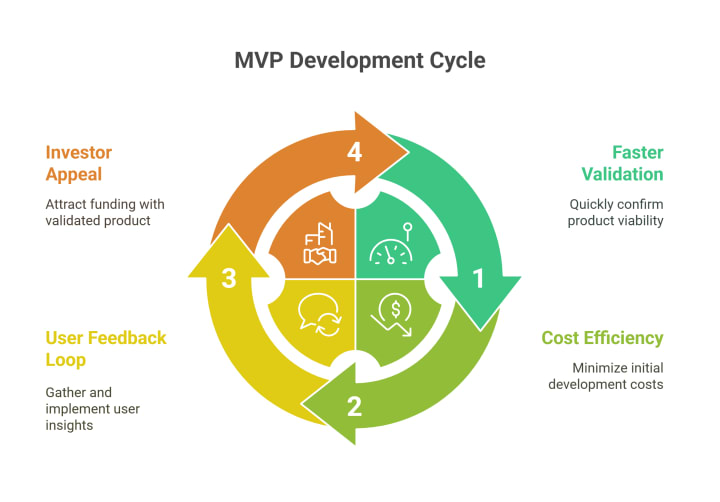
1. Faster Validation
Get your product into users' hands quickly to test your assumptions. Is your solution solving their problem? Do they see enough value to pay for it?
2. Cost Efficiency
Limiting your initial feature set keeps development costs under control, sparing your budget for future iterations.
3. User Feedback Loop
An MVP opens the door to comments, criticism, and suggestions from actual users. This helps shape your product to better meet their needs.
4. Investor Appeal
Investors are far more interested in startups that show traction with real users than those with hypothetical promises.
How to Build an MVP the Right Way
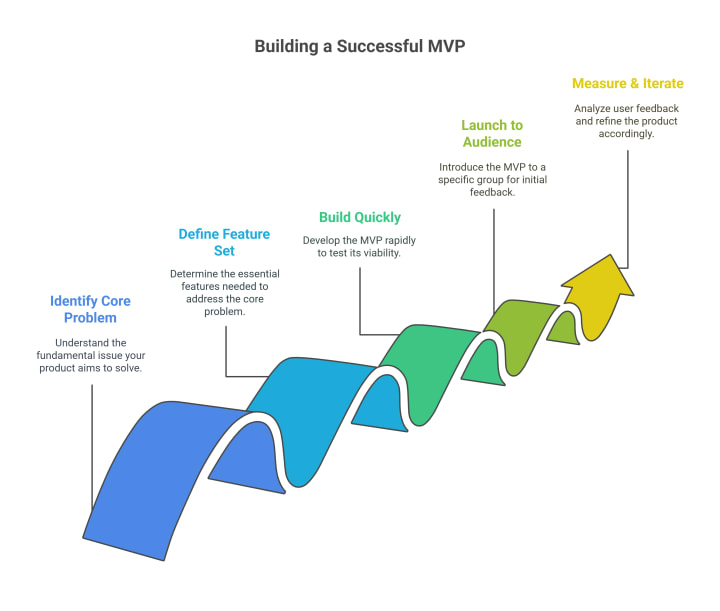
1. Identify the Core Problem
What problem are you solving? Be specific and make sure it’s a real pain point for your target audience.
2. Define the Simplest Feature Set
What’s the minimum functionality required to solve the problem? Strip your product down to its essentials and resist the urge to add extra features.
3. Build Quickly
Use lean development principles or no-code tools to create your MVP fast. Platforms like Webflow, Bubble, or even WordPress can help you save both time and money.
4. Launch to a Targeted Audience
Focus on a small, specific group of early adopters. This could be a Facebook group, a niche subreddit, or a professional association.
5. Measure, Learn, Iterate
Collect data relentlessly. Use analytics tools like Mixpanel or Google Analytics to monitor user behavior, then refine your product based on what you learn.
Common MVP Mistakes to Avoid
1. Overcomplicating the First Version
Don’t aim for perfection. The “minimum viable” part of MVP is key.
2. Ignoring Feedback
Your users are telling you what they want. Listen to them!
3. Pivoting Too Late (or Too Early)
Be strategic about when (and why) you pivot. Not every early hiccup requires a full change in direction.
4. Skipping Analytics
If you don’t collect and analyze data, you won’t know if your MVP is succeeding.
Scaling Up From MVP
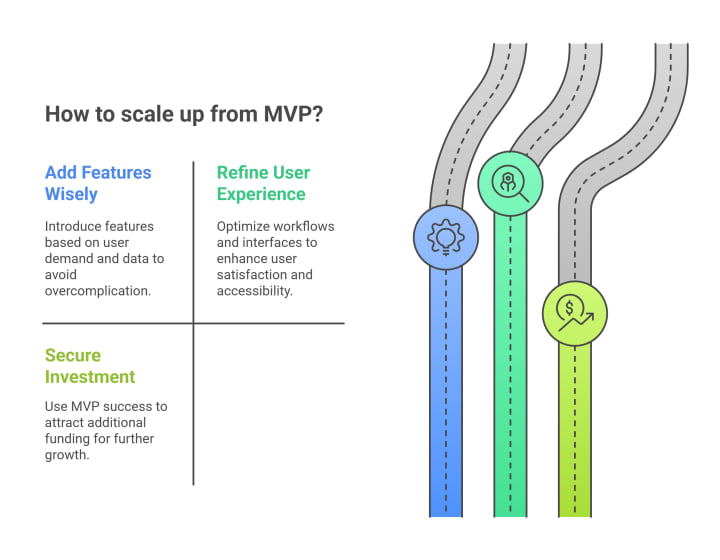
Once your MVP proves its value, it’s time to build out your product and scale.
Add Features Wisely: Only introduce features based on user demand and data.
Refine User Experience: Optimize workflows, interfaces, and accessibility as you grow.
Secure Investment: Use your MVP success story to attract additional funding.
Startup Success Story
One inspiring case is Slack, which began as an internal communication tool for its development team. After an overwhelmingly positive response, they scaled the MVP into the comprehensive and beloved software it is today.
Build What Users Actually Want
An MVP isn’t just a step on the path to your startup’s success. It’s your survival strategy. It’s how you validate your ideas without wasting resources. It’s how you turn risky assumptions into proven facts.
Starting your MVP doesn’t have to be daunting. Identify your core problem, simplify your feature set, and launch quickly. Most importantly, keep learning and iterating.
Have you built an MVP? What challenges did you face? Share your story in the comments below!
About the Creator
Metizsoft Inc
Metizsoft Inc. – Product engineering & MVP development service experts. We turn ideas into scalable, market-ready solutions with agile tech & innovation. From concept to deployment, we engineer success. 🚀 Let’s build the future!
Keep reading
More stories from Metizsoft Inc and writers in Journal and other communities.
Technographic Data Enrichment: A Practical GDPR Compliance Guide
B2B sales and marketing teams have long relied on knowing who their prospects are. But increasingly, the sharper competitive edge comes from knowing what those prospects use—the software, platforms, and technologies running inside their organizations. That intelligence is technographic data, and it has become a cornerstone of modern go-to-market strategy.
By Metizsoft Inc6 days ago in Journal
Author’s Advice
If you would’ve asked me 20 years ago did I know I’d become a writer and an author, I would’ve said “nope, ain’t happening”. As fate would have it I did become an author and I can honestly say I’m loving it so far. It really does feel good to be a writer. I’ve learned a lot on this journey and I feel like with even me being as new to this world as I am, there’s some wisdom I need to share with every other aspiring author.
By Joe Patterson4 days ago in Journal




Comments
There are no comments for this story
Be the first to respond and start the conversation.