
Why Your “Perfect Hire” Keeps Leaving
Burnout, ghosting, and quick quits are plaguing companies, but a simple hiring shift could be the solution.

You’ve probably been there before: after weeks of sourcing, screening, and interviewing, you finally make a hire who checks all the boxes. They’re qualified, enthusiastic, and ready to hit the ground running. But just a few months later, they’re gone. No warning. No exit interview. Just a polite email (or worse—radio silence).
If this feels like a familiar pain point, you’re not alone. In today’s workforce, turnover isn’t just a frustration—it’s a costly, culture-disrupting, morale-crushing challenge.
The Real Cost of Constant Turnover
According to the Work Institute’s 2025 Retention Report, employers are hemorrhaging talent at an alarming rate, with 35 to 40 million employees projected to voluntarily leave their jobs this year. And the average cost of turnover? Over 33% of an employee's base salary. That means if you’re hiring someone at $60,000, expect to lose about $20,000 every time they walk out the door. Multiply that by multiple exits, and you’re quickly looking at a serious drain on your resources.
So why are employees leaving so quickly? In many cases, the answer isn’t poor management or a bad company culture—it’s that the employee never truly fit the role or environment in the first place.
The Resume Can’t Tell You Everything
One of the biggest myths in hiring is that a polished resume and strong interview mean someone will be a long-term success. But humans aren’t machines. We’re complex. Sometimes what looks perfect on paper doesn't align with real-world performance or personality fit.
That’s where traditional hiring models fall short—and where many companies are now turning to a smarter solution.
The Power of “Try Before You Buy” in Hiring
Enter: temp-to-perm roles.
Think of it like dating before marriage. Instead of rushing into a long-term commitment, both the employer and the employee get a chance to test the waters. It’s a period of mutual evaluation, where expectations meet reality. And the results? Impressive.
In fact, temp-to-perm roles reduce turnover by helping both sides ensure alignment before making a permanent move. This hiring model gives candidates a chance to prove their value while giving employers time to assess fit without the risks of immediate onboarding costs.
Beyond Hiring—Building a Resilient Workforce
Temp-to-perm roles don’t just benefit HR—they build better teams. Employees who transition from temp to perm often feel more invested in their role, more confident in their capabilities, and more connected to the company’s mission. And employers? They gain a clearer view of a candidate’s strengths, work ethic, and culture fit before extending a full-time offer.
It’s a win-win that’s redefining how smart companies think about recruitment.
Ready to Rethink Your Hiring Strategy?
If your team is feeling stuck in the hiring hamster wheel, it might be time to pivot. Explore flexible hiring models, invest in evaluating candidates more thoroughly, and consider working with staffing partners that specialize in long-term solutions—not just quick fills.
Because the truth is, great hiring isn’t about finding the perfect resume—it’s about building real relationships that last.
If you're not sure where to begin, partnering with a staffing agency can streamline the process. Agencies that specialize in temp-to-perm placements understand the nuances of hiring and retention. They can help you find the right talent faster—while giving both sides the chance to grow into long-term success.In a market where employee expectations are evolving, flexibility and fit matter more than ever. Temp-to-perm roles offer a strategic approach to hiring that balances speed with sustainability. Instead of gambling on a full-time hire, you can build a team thoughtfully—one that stays, thrives, and contributes to your company’s long-term success.
Don’t just fill positions—build a workforce. The right hiring strategy today can shape your company’s success for years.
About the Creator
Keep reading
More stories from Zachary Gagnon and writers in Journal and other communities.
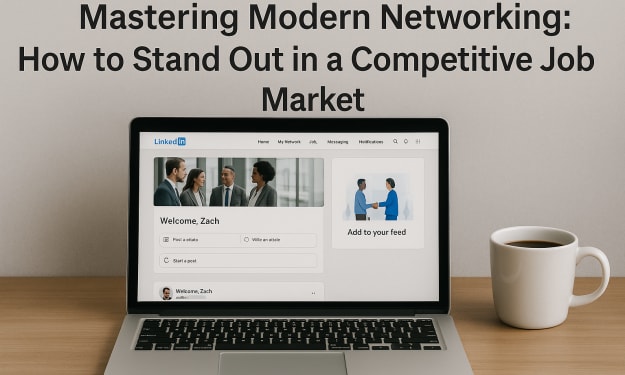
Mastering Modern Networking: How to Stand Out in a Competitive Job Market
In today’s competitive job market, networking is no longer just about shaking hands at conferences or passing out business cards. With so much of our professional presence existing online, success now depends on how effectively we present ourselves digitally while still cultivating meaningful human connections offline.
By Zachary Gagnon6 months ago in Journal
Author’s Advice
If you would’ve asked me 20 years ago did I know I’d become a writer and an author, I would’ve said “nope, ain’t happening”. As fate would have it I did become an author and I can honestly say I’m loving it so far. It really does feel good to be a writer. I’ve learned a lot on this journey and I feel like with even me being as new to this world as I am, there’s some wisdom I need to share with every other aspiring author.
By Joe Patterson4 days ago in Journal
A Transparent Look at Vocal Challenges and Top Stories
Almost three years ago, we shared a resource article that served as a place for people to suggest new challenge prompts. We thought it would be a good idea to refresh that thread, and take the opportunity to answer a few common questions about top stories, how challenges are judged and how submissions are reviewed.
By Vocal Curation Team4 days ago in Resources



Comments
There are no comments for this story
Be the first to respond and start the conversation.