
Why We’re Rooting For Punch The Monkey
Why Punch’s Determination Resonates Far Beyond the Wild
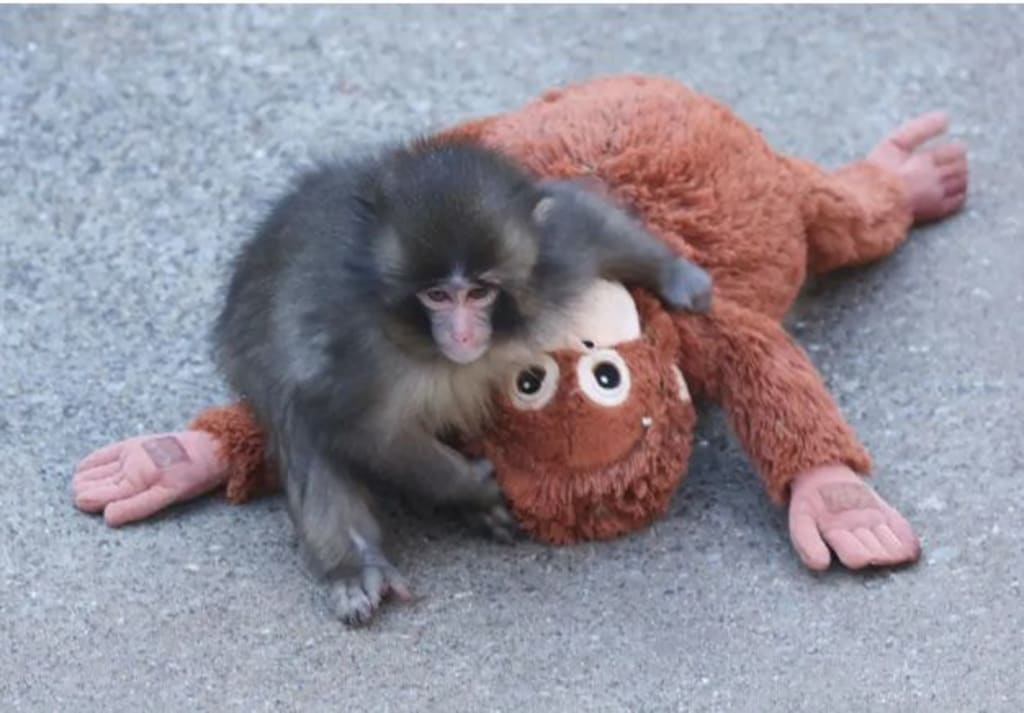
A Story That Feels Personal
Punch’s journey resonates because it mirrors human experiences. Observers noticed that Punch often faced scolding or disciplinary behavior from other troop members when he tried to interact. At first glance, these moments looked harsh. But rather than withdraw, Punch repeatedly attempted to reconnect. He approached again, communicated again, and stayed present.
That persistence is powerful. Anyone who has felt excluded, corrected, or misunderstood can recognize that emotional pattern. Punch isn’t simply a subject of scientific observation—he becomes a symbol of determination in the face of social challenges.
The Complexity of Monkey Social Life
Monkey troops operate within intricate social hierarchies. Behavior that appears cruel to human viewers is often part of communication, boundary-setting, and group structure. Discipline can signal rank, teach limits, and maintain order.
Punch’s situation highlights how difficult social navigation can be, especially for younger or lower-ranking individuals. Every attempt to interact carries risk. A wrong approach can result in rejection, but avoiding interaction altogether leads to isolation. Punch’s willingness to keep trying shows adaptability and learning in real time.
Instead of seeing him as weak, many viewers see courage. He participates in a demanding social environment rather than withdrawing from it.
Why We Connect Emotionally
Humans are wired for storytelling. We instinctively identify protagonists, conflicts, and growth arcs—even in wildlife footage. Punch fits that narrative perfectly: a character facing obstacles, learning from experience, and continuing forward.
There is also something disarming about vulnerability. When Punch hesitates, reaches out, or reacts to correction, viewers interpret emotional states through a human lens. While scientists caution against excessive anthropomorphism, empathy itself is not misguided. It can foster curiosity, compassion, and respect for animal lives.
People root for Punch because they see effort. Effort is universally admirable.
Resilience as the Central Theme
What defines Punch most is resilience. Resilience is not dramatic triumph; it is quiet persistence. It’s showing up again after a setback. It’s adjusting behavior, reading cues, and continuing to engage.
In animal behavior studies, resilience often appears as flexibility. Individuals that adapt socially tend to survive and integrate more successfully. Punch demonstrates this through repeated attempts to communicate differently—approaching carefully, observing reactions, and learning boundaries.
That process reflects growth. Viewers sense that Punch is not stuck; he is evolving.
The Power of Observation
Punch’s story also reveals how modern audiences engage with wildlife. Cameras, social media, and documentary storytelling allow people to witness moments that previously went unseen. These glimpses turn distant ecosystems into emotional experiences.
When people watch Punch, they are not just watching a monkey. They are witnessing social learning, emotional expression, and the realities of group living in the wild. That visibility encourages deeper appreciation for animal intelligence and complexity.
Rooting for Punch becomes a way of rooting for understanding itself.
Lessons About Belonging
At its core, Punch’s narrative revolves around belonging. Every social species faces the same question: how do individuals fit within a group? Belonging requires communication, patience, and resilience after mistakes.
Punch’s repeated efforts highlight that belonging is rarely effortless. It is negotiated over time. Missteps are part of the process. Observers recognize that truth because it mirrors human friendships, workplaces, and families.
Watching Punch reminds us that connection is built, not granted.
A Mirror for Human Empathy
The emotional response to Punch says as much about humans as it does about monkeys. People gravitate toward stories where perseverance outweighs rejection. These narratives reinforce values society admires: patience, growth, kindness, and second chances.
By caring about Punch, viewers practice empathy beyond their own species. That shift matters. Research shows that empathy toward animals often correlates with broader compassion—toward people, environments, and social issues.
Punch becomes a bridge between observation and feeling.
Hope in Small Moments
What makes Punch’s story compelling is that progress appears in subtle ways. A calmer interaction. A tolerated approach. A shared moment of proximity. These small wins carry emotional weight because they signal possibility.
Unlike dramatic rescue stories, Punch’s journey unfolds gradually. It reflects real life, where change is incremental. Viewers stay invested because the outcome is uncertain, and every improvement feels earned.
Hope thrives in those details.
Why We Keep Watching
People continue to follow Punch because his story is unfinished. Growth narratives invite attention; they promise transformation. Each new interaction raises questions: Will he integrate more fully? Will relationships stabilize? What will he learn next?
This ongoing uncertainty creates engagement, but it also reflects reality. Social development—human or animal—is never static. Punch embodies that living process.
Rooting for him becomes an act of patience.
More Than a Viral Moment
Punch the monkey is not just an internet phenomenon. His story highlights the emotional depth of animal societies and the universal struggle for connection. It encourages viewers to look beyond surface interpretations and appreciate behavior as communication rather than conflict.
Most importantly, Punch represents resilience without spectacle. He doesn’t conquer obstacles dramatically; he navigates them steadily. That quiet determination resonates more deeply than any sudden triumph.
We root for Punch because he tries. He learns. He returns after setbacks. In a world that often celebrates instant success, Punch reminds us that persistence is its own kind of victory.
And sometimes, the most meaningful stories are not about winning—they’re about continuing to reach out, again and again, until connection finally takes hold.
About the Creator
~ Fired ~
— Ai Intrusion ~ Are you Next ~ Is Ai Evolution after your job? — Few workplaces haven't been affected. Ai is in supermarkets, at doctors' offices, and even monitoring farms. I just can't think of anything this machine is not getting into, can you? For instance: Education ~ Law and Tech jobs will one day have a major influence or be taken over by these inanimate machines, with accuracy and vigor. From mechanics' diagnoses to a wide variety of everyday jobs, including fast food workers, with this input having the ability to cut their unnecessary work hours. I'm certain all of us have been touched by this with our short stories and colorful headings, have you? Even comments are very questionable 'Non-Robot' insertions.
By Jay Kantor22 days ago in Journal
New Forms of Collaboration in the Modern Workplace
In today's competitive world, the definition of success has completely changed. Previously, it was believed that achieving greatness was possible by working alone; however, in the current era, there is no alternative to the collective effort of a group of skilled individuals to reach a significant goal.
By MD.Asikul islam6 days ago in Journal
At My Wits’ End
Life is about taking out the trash and calling it trash because you have every reason to. It wasn't meant to be linear, they say. But the times you tried to make it straight led to problems, and you didn’t have the tools to put any of it to use. You don't put your right shoes on the right feet; you put the left shoes on the left feet. The grey hardened slab will trip you up anyway.
By Caitlin Charlton3 days ago in Humans




Comments
There are no comments for this story
Be the first to respond and start the conversation.