
Why Is Customer Data Crucial for Business Growth?
What is the Importance of Customer Data in a Business?


A couple of decades ago, customers were hard-pressed for choices pertaining to the market. With their demands being limited, and each company holding the roost in a particular sector, delving into customer data and analysis was not given much thought.
Fast forward to the present, and consumer emotions data, consumer behavior data, and so much more now makes up for an important part of marketing strategies.
This is primarily because of the increase in competition, customer awareness, the intervention of social media, a plethora of options to choose from, and the rising demand for something different. Organizations have to figure out the answer to an important question- What do the customers want?
Also, it is important that we look into what makes customer data so critical for businesses to achieve and maintain that growth trajectory.
Customer Data = Superior Customer Experience
As per PWC, a whopping 86 percent of consumers are willing to pay for an improved service that dishes out better customer experience. The proof is in the pudding!
Customers are always looking at elements they can relate to. They look out for personalization and prioritize brands that hit the nail right on the head.
Thanks to the data, companies can make customers feel like they matter. Their opinions and feedback, in the form of surveys, help build a two-way communication bridge, which is much more inclined towards the concept of selling and buying.
Brands can also invest in customer profiling, allowing them to peek inside their lifestyles, their likes and dislikes, and habits. As Bill Gates says, "Your most unhappy customers are your greatest source of learning."
However, it is not always easy to comply with these demands since the graph of customer preferences is always changing. But the good news is that data is a great trend follower and will keep marketers in sync with respect to what their customers are looking for.

Customer Data = Better Business Decision
Since customer data is imperative to track customer behavior, it plays a vital role in shaping business decisions and approaches.
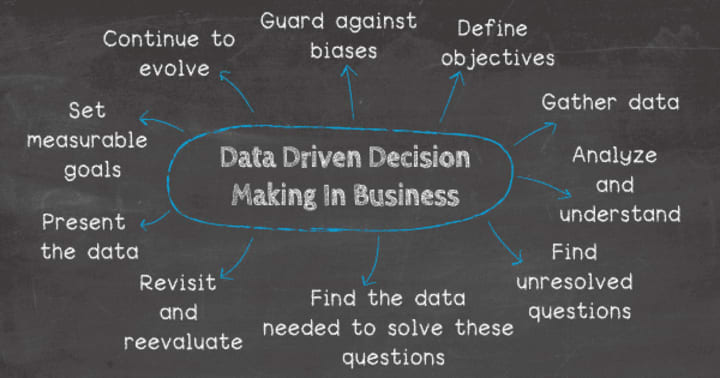
Data-driven business decisions are based on facts, KPIs, patterns, and insights. By deploying these, marketers can tweak their existing game plans to become more acceptable to the customers and their demands. They no longer have to rely on their 'gut feeling,' and hence, are more confident when aiming for a profit surge.
By relying on customer data, companies can zero in on the products and inventories that are working for them as well as the ones collecting dust. This breaks the clutter and helps understand precisely what is required and what the customers want.
Instead of shooting in the dark, companies can now cherry-pick ideas that work for them, enabling them to create new business opportunities, predict future trends, align with the volatile customer psychology, optimize their resources, and produce actionable insights.
In addition to the large and established players, even the SMBs can leverage the data benefit. They can:
- Increase customer retention
- Predict customer demands and trends
- Predict the upcoming sales scenario
- Optimise the resources expended on marketing and inventory
- Keep an eye on the social media pulse
Customer Data = Effective Marketing Strategies
Customer data is the elixir of marketing.
It helps companies narrow down their strategy and focus on target marketing. The accuracy imparted will allow brands to focus their time and energy in molding their image as per the customer's (fluctuating) preference and be flexible enough to integrate niches that will encourage them to engage and possibly, convert into a loyal buyer.
In the case of small businesses and enterprises, it also empowers the small sales and marketing team to take confident strides towards business development.
This gold mine can also help weed out the unwanted expenses and downsize on the resources they will be investing in reaching out to those consumers. By relying on their customer's data, organizations can:
- Save money: There is minimal wastage since the data negates the non-relative sources and leads.
- Simplifies communication between customers and marketers: No more hiding behind the figures and calls. Marketers can now engage in meaningful interactions that will be open to scrutiny and yet will give a lot of insight into the customer attitude.
- Flexibility: As mentioned, the customer's mind is a fickle thing. Data can help bring agility to brands that rely on their buyer's perception and demand.

Conclusion
There are many companies that lack the digital resources required for utilising the benefits of analysing their customer's data. They can start with free tools available online to assess their clientele and steer their business in the right direction.
In a nutshell, data helps solve problems. It is the all-seeing eye that is aware of the past, can see into the future, and with the combined knowledge, help improve the present.
It helps track performance, opens up scope for improvement, and, most importantly, builds a human connect with the customer.
We are at the cusp of an intelligent way of marketing, and it is evident that customer data will lead the way.
About the Creator
Keep reading
More stories from Evan Morris and writers in Journal and other communities.
The goals I did not achieve
Every writing goal I made for the year is a wash. It has been this way for a while, but I think it's important to be open about my failures and the reality of how life can get in the way. This is especially true considering the several times I have posted on Vocal about my writing goals, how I was changing my approach, and where I was hoping to be for the upcoming year. I will probably do that again in a couple months, but for now, it is time to acknowledge where I am today.
By Kay Husnick21 days ago in Journal
How the Bible Was Formed and Why the Catholic Church Matters in That Process
The Bible is central to Christian life, but many people are unaware that the Catholic Church played an essential role in its formation. The Catholic Church did not simply adopt a pre-existing collection of books; it preserved, discerned, and recognized the canon of Scripture through careful guidance, prayer, and tradition. Understanding this process helps Catholics and non-Catholics alike appreciate the authority, consistency, and reliability of the Bible as we have it today.
By Sound and Spirit3 days ago in Journal



Comments
There are no comments for this story
Be the first to respond and start the conversation.