
Why IIoT or Industrial Internet of Things has emerged as a boon for Businesses?
Learn how IIoT is transforming the businesses across industries and enhancing processes.

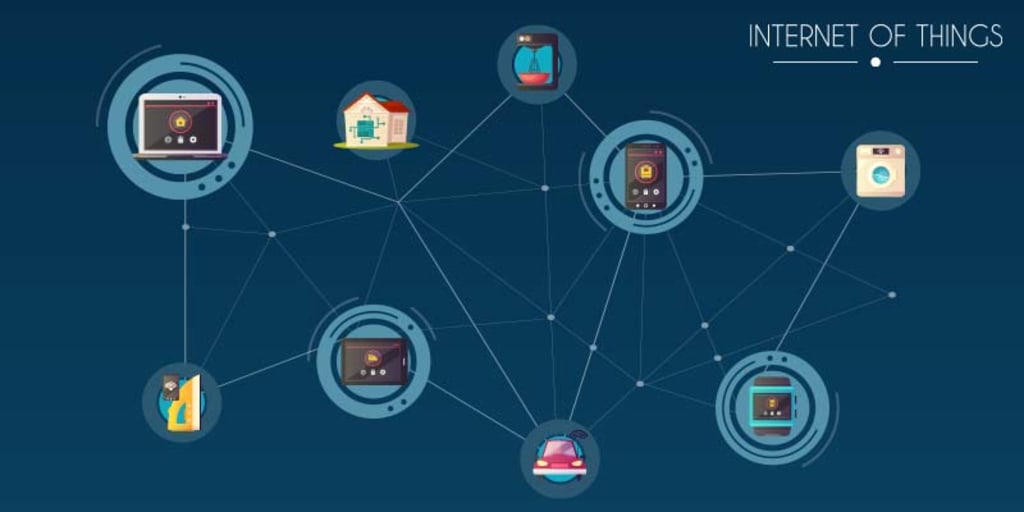
The saying is now getting common – Data is the new oil. Nowadays, businesses need to keep close track of their data, just like valuable assets. Earlier, when technology was a fictitious thing – data was gathered from devices/machines manually and analyzed for areas of optimization.
Nowadays, the Internet of Things (IoT) has transformed how we think about technology and put it into practice. Due to digital disruption, every sphere, including our daily lives, has seen substantial changes.
As the technology evolved, the process of collecting information became easier. A gadget that is the size of our fingertip can now be connected with the machines or equipment that allows them to monitor, track, and communicate with other devices. Thanks to the invention of small affordable sensors and high-bandwidth wireless networks. All of this information can now be gathered and analyzed to improve business processes.
How is IIoT different from IoT?
To improve manufacturing and industrial processes by linking smart interconnected sensors and actuators to the industrial application is referred to as the Industrial Internet of things or IIoT.
IIoT, also known as the industrial internet or Industry 4.0, takes advantage of the data that machines have produced in industrial settings for years using the power of smart devices/sensors and real-time analytics.
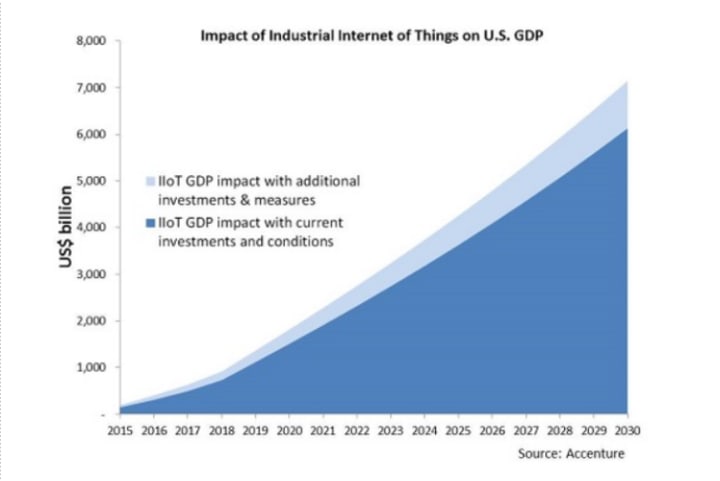
Accenture’s report says that IIoT could add $14.2 trillion to the global economy by 2030. The Industrial Internet of Things (IIoT) allows new business models and digital services based on intelligent linked devices and equipment to support advanced economies.
The major difference between IIoT and IoT is the IT and OT communication applications. Physical processes (machines, drives) and industrial control systems such as DCS (distributed control systems), PLCs, SCADA (supervisory control and data acquisition systems), and HMI (human-machine interface) are all examples of OT (operational technology).
While IT (information technology) comprises an enterprise system that processes, stores, and delivers data to business management.
How do IIoT works?
In a traditional IIoT system, data needs to be transferred between various devices and across multiple networks – from the edge (remote devices, sensors, and computers) to the cloud (centralized computer systems). This is a complex task because the sheer volume of data –without compromising on safety and security requirements – may instantly overwhelm a network, especially one that spans multiple localities.
These networked systems necessitate new approaches to managing rising data volumes, security risks, performance demands, and safety certifications.
Managing IIoT data flow is essential for ensuring that IIoT applications function properly. The databus is basically a tried-and-tested architecture suggested by the Industrial Internet Consortium. The databus, in contrast to a database, manages historical data in motion.
In the IIoT, a databus is a data-centric software framework that distributes and handles real-time data, enabling devices and applications to operate as a single system. The databus makes application and integration logic easier to understand. Software components interconnect via shared and filtered data objects instead of swapping messages.
Examples of IIoT in the real-world application
IoT applications can be utilized in a variety of ways to assist businesses in simplifying, improving, automating, and controlling processes while also delivering important data, activity performance, and even environmental conditions that need to be monitored and controlled remotely.
The advantages of applying IIoT techniques to industrial business problems are enormous, as even a slight increase in efficiency, time, capital expenditure, or asset allocation translates into large cost reductions and/or revenue enhancement.
The IIoT improves process automation by transferring sensor and control data to a secure cloud storage location where it can be analyzed using machine learning and statistical analysis methods. The ability to monitor remotely is an instant benefit.
Additionally, because the data is consolidated, it is possible to analyze information from numerous machines, work cells, and locations. Predictive maintenance, process improvement, and performance benchmarking between workcells and plants are all possible with the findings of this aggregated data analysis.
What’s the Future of IIoT?
The first Industrial Revolution began in the late 1700s, when corporations began to use water- or steam-powered equipment to manufacture goods. The arrival of electricity and assembly lines ushered in Industry 2.0 at the beginning of the twentieth century. Industry 3.0 arose in the second half of the twentieth century, and it was linked to the use of computers in manufacturing. Currently, we’re in Industry 4.0 – where industries are using the potential of connected devices.
The concept of utilizing sensors to track items or monitor machines isn’t very novel. Because of the low cost of sensors, pervasive wireless networking options, and the introduction of big-data analytics, IOT in Manufacturing mass adoption of the IIoT is now a possibility.
Enterprise-level manufacturing companies are willing to invest in IIoT implementation because of the practical benefits and returns. Businesses are even leveraging the IoT development services to deploy a full-fledged working model that reduces manual processes.
The future of IIoT is beyond any prediction. Smart devices, along with digital intelligence, will play an essential part in transforming businesses digitally. IIoT can immensely help manufacturing companies digitize their supply chains and production lines.
Business Benefits of IIoT
Businesses across the globe understand that IIoT technologies are critical to their success. The industries that have adopted IIoT solutions are growing at a constant pace. This showcases the reliableness and efficiency of implementing IIoT solutions. Let’s have a look at some of the IIoT benefits for businesses:
Asset Tracking:
Manufacturers, suppliers, and end-users can easily check the product’s status throughout the supply chain to track the location and condition. Stakeholders gets real-time information if the goods are damaged or at risk, so they can take preventive action.
Improved Customer Satisfaction
IIoT also helps businesses to analyze and study how people are interacting with their products. Thus giving them a chance to enhance customer experience by developing the solutions based on their usage.
Predictive Maintenance
Field service technicians can quickly identify potential devices or equipment before that small problem become critical. Advanced IIoT solutions even notify which parts need to be checked or repair. This way, they can save much time and utilize their resources on other business development tasks.
Remote Monitoring
Operators get effective control over the IIoT adopted devices during their functioning. They even receive signals beforehand if any malfunctions are about to happen to take necessary steps on the spot.
Wrapping Up
IoT in manufacturing is transforming the way the supply chain system operates. With digital transformation, businesses are experiencing new ways to enhance and optimize their overall processes. To achieve unprecedented efficiency, IIoT is driving industries in oil and gas, aviation, power generation, utilities, retail, and much more towards its solution.
So IIoT has surely risen as a boon for many businesses. Every niche data that people or machines interact with can be analyzed, visualized, and optimized for better results.
About the Creator
Pratik Mistry
Pratik Mistry is a rare mix of technologist and senior business head at Radixweb.
His passion lies is in helping companies to grow revenues by delivering top notch software development services and build value-based partnerships.
Keep reading
More stories from Pratik Mistry and writers in Journal and other communities.
The goals I did not achieve
Every writing goal I made for the year is a wash. It has been this way for a while, but I think it's important to be open about my failures and the reality of how life can get in the way. This is especially true considering the several times I have posted on Vocal about my writing goals, how I was changing my approach, and where I was hoping to be for the upcoming year. I will probably do that again in a couple months, but for now, it is time to acknowledge where I am today.
By Kay Husnick24 days ago in Journal
From Ralph Fiennes to Jeffrey Wright: The Most Overlooked Performances This Awards Season
Awards season is always a whirlwind of glittering premieres, red carpets, and the inevitable debates over who deserves recognition. While the spotlight tends to shine on familiar faces and blockbuster roles, each year a set of performances quietly steals the show without earning the accolades they truly deserve. This season, several actors have delivered compelling, nuanced, and emotionally resonant performances that somehow flew under the radar. From veterans like Ralph Fiennes to the consistently brilliant Jeffrey Wright, here’s a look at some of the most overlooked performances this awards season. Ralph Fiennes – Subtlety at Its Finest Ralph Fiennes has long been celebrated for his versatility, from chilling villains to vulnerable characters, but this season his performance in a quietly powerful drama deserves more attention. Fiennes brought a rare restraint to his role, portraying a character navigating personal grief and moral dilemmas with understated intensity. While the film itself didn’t dominate box office headlines, his ability to convey complex emotions through small gestures and fleeting glances is a masterclass in acting subtlety. Fiennes reminds us that not every award-worthy performance needs loud monologues or bombastic scenes; sometimes, it’s the quiet ones that linger. Jeffrey Wright – Commanding Presence and Emotional Depth Jeffrey Wright, known for his commanding presence, delivered a performance that was both riveting and heartbreakingly human. Playing a figure caught in a web of political intrigue and personal loss, Wright’s portrayal balanced authority and vulnerability seamlessly. Every scene he occupies feels fully realized, yet he remains overshadowed by flashier co-stars. Critics have praised his consistency across the decades, but this season, his work deserved the top-tier attention that often goes to leads in more commercial films. Wright proves once again that great acting often hides in plain sight. Jessica Chastain – Emotion Without Excess Jessica Chastain has built a career on delivering raw, emotionally rich performances, and this season is no exception. In a film exploring the complexities of family and trauma, Chastain’s subtle shifts in tone and posture convey a depth of experience that is both believable and moving. The lack of mainstream recognition for her work this year is surprising, given her ability to inhabit her characters so completely. Chastain reminds audiences that understated performances, when executed with precision, often have a lasting impact long after the credits roll. John Boyega – Breaking Away From Typecasting John Boyega, widely known for his action-packed roles, surprised viewers this season by delivering a nuanced, emotionally grounded performance in a small indie film. His character grapples with issues of identity, loyalty, and moral compromise, all of which Boyega conveys with authenticity and depth. This turn showcases his range as an actor, defying the typecasting that often accompanies young, rising stars. It’s a testament to Boyega’s craft that he can command attention without relying on spectacle or action sequences. Octavia Spencer – Masterful Understatement Octavia Spencer continues to demonstrate why she is one of Hollywood’s most reliable and emotionally intelligent actors. In a role exploring the quiet struggles of everyday life, Spencer imbues her character with warmth, resilience, and dignity. The performance is not showy, but it resonates deeply, a reminder that awards buzz often overlooks subtlety in favor of theatrics. Spencer’s work this season proves that true talent shines through even without flashiness or over-the-top scenes. Why These Performances Matter What unites these overlooked performances is the actors’ commitment to truthfulness and nuance. While awards often favor spectacle or highly dramatized portrayals, these performances show that subtlety, emotional honesty, and consistency can be equally compelling. They challenge the notion that recognition always equates to quality, highlighting how industry buzz, marketing, and star power sometimes overshadow genuine craft. The Broader Implications Recognizing overlooked performances is more than a matter of fairness—it’s a celebration of the artistry that sustains the film industry. These actors contribute layers of depth, empathy, and realism that enrich storytelling in ways that blockbuster moments cannot replicate. When overlooked performances receive attention, it encourages filmmakers and audiences alike to appreciate the quieter, more intricate aspects of cinema. Conclusion From Ralph Fiennes’ quietly devastating performance to Jeffrey Wright’s commanding subtlety, this awards season has offered more than its fair share of underappreciated brilliance. Jessica Chastain, John Boyega, and Octavia Spencer also remind us that true talent often operates below the radar, leaving a profound impact on those who pay attention. While awards are meaningful, the ultimate recognition comes from audiences who notice the nuance, the restraint, and the craft. These performances may not dominate headlines, but they are what make cinema truly unforgettable.
By Fiaz Ahmed Brohi5 days ago in Journal




Comments
There are no comments for this story
Be the first to respond and start the conversation.