
Why Gaza Peace Plan May Prove Tough Nut to Crack
Complex politics, entrenched grievances, and regional dynamics make achieving peace in Gaza a daunting challenge.

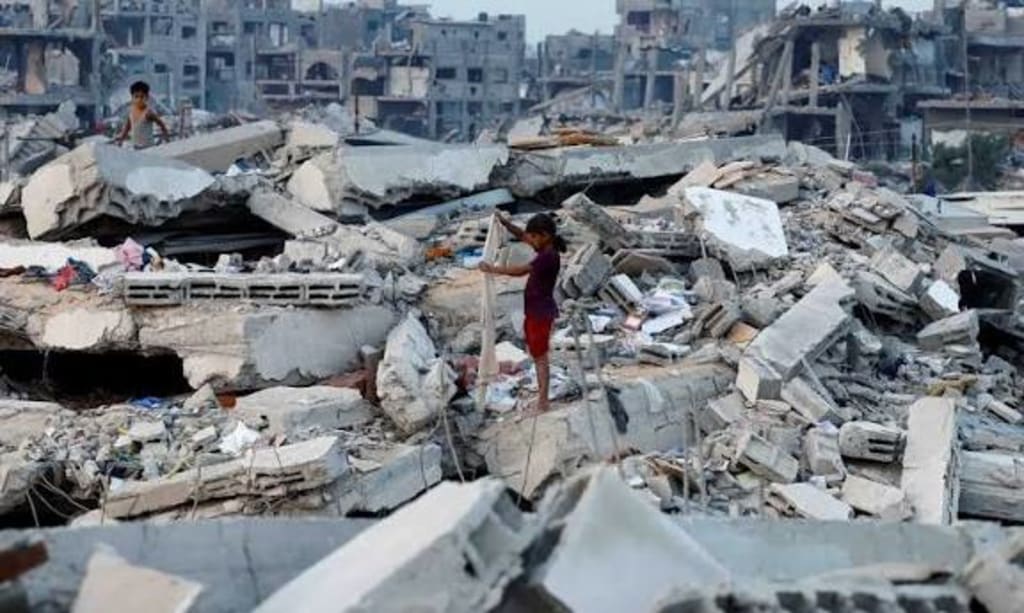
---
A Fragile Path to Peace
The ongoing conflict in Gaza has prompted international efforts to negotiate a lasting peace plan, but experts warn that achieving meaningful progress may be extremely difficult. Despite numerous proposals over the years, the region remains volatile, with cycles of violence and political deadlock complicating diplomacy.
The latest peace initiative, spearheaded by a coalition of Middle Eastern and Western diplomats, aims to address humanitarian needs, security concerns, and political reconciliation between Israel and Palestinian factions, including Hamas. While the plan has drawn cautious optimism, analysts say multiple obstacles could prevent its success.
> “Peace in Gaza is not impossible, but it is complicated,” said Dr. Leila Mansour, a Middle East policy analyst. “Decades of mistrust, political fragmentation, and external influences make every proposal fragile.”
---
Deep-Seated Political Divisions
One of the biggest challenges is the political fragmentation within the Palestinian territories. Hamas governs Gaza, while the Palestinian Authority (PA) controls parts of the West Bank. This division has created competing agendas and priorities, complicating negotiations with Israel and international mediators.
Hamas has repeatedly emphasized resistance and security guarantees, whereas the PA often focuses on international recognition and economic development. Bridging these differences is essential for any peace plan to gain credibility and enforceability.
> “You cannot negotiate peace with a single voice,” said Dr. Mansour. “Both Palestinian factions must find common ground internally before meaningful talks with Israel can move forward.”
---
Security Concerns and Hostilities
Security is another major obstacle. Israel cites concerns over rocket attacks, militant operations, and border infiltration as reasons for strict control over Gaza. On the other hand, Palestinians in Gaza face military operations, blockades, and restricted movement, fueling anger and frustration.
Any peace plan must address these mutual security concerns. However, achieving trust is challenging when decades of conflict have hardened perceptions on both sides. Analysts suggest that without strong security guarantees, both parties may hesitate to fully commit to agreements.
> “Security is not just about weapons or borders,” said Dr. Omar Khalidi, a conflict resolution expert. “It’s about trust, verification, and the assurance that parties will uphold their commitments.”
---
Humanitarian and Economic Challenges
Gaza faces severe humanitarian and economic crises, which also complicate peace efforts. The region has high unemployment, limited access to clean water, electricity shortages, and inadequate medical services.
A sustainable peace plan must include economic recovery, humanitarian aid, and infrastructure investment. However, funding such initiatives is difficult, especially given political disputes among donor countries and regional actors.
> “Even if a ceasefire is achieved, lasting peace requires improving living conditions for the people,” said Khalidi. “Otherwise, the cycle of frustration and violence continues.”
---
Regional and International Dynamics
The Gaza conflict is influenced not only by local politics but also by regional and international actors. Countries like Egypt, Qatar, Turkey, and the United States have played roles in mediating past agreements, providing aid, or influencing negotiations.
However, geopolitical rivalries often complicate coordination. Different countries have varying priorities, alliances, and strategies for the region, which can slow down negotiations and create conflicting pressures on local actors.
> “International involvement is essential, but it can also make the process more complex,” said Dr. Mansour. “Mediators must balance competing interests while keeping the focus on peace.”
---
Lessons from Past Initiatives
Previous peace efforts, including ceasefires and negotiation frameworks, have repeatedly stalled. Key lessons suggest that successful peace requires:
1. Mutual recognition and respect – Both Israel and Palestinian factions must acknowledge each other’s security and political concerns.
2. Inclusive negotiations – Excluding key stakeholders, especially Palestinian factions, undermines legitimacy.
3. Long-term commitment – Temporary agreements often collapse without sustained monitoring and enforcement.
4. Humanitarian and economic investment – Peace cannot survive if daily life for civilians remains unbearable.
Experts emphasize that ignoring these factors risks repeating past failures.
---
Why It Remains a Tough Nut to Crack
Despite diplomatic efforts, the Gaza peace plan faces structural challenges:
Deep-rooted historical grievances on both sides.
Persistent militant activity undermining trust.
Political fragmentation among Palestinians.
Complex regional dynamics influencing negotiations.
Long-standing economic and humanitarian crises in Gaza.
> “All these factors make the plan a tough nut to crack,” said Khalidi. “But it is precisely why continued effort, patience, and creative diplomacy are essential.”
---
Conclusion
The Gaza peace plan, though promising on paper, confronts numerous political, security, and humanitarian hurdles. Achieving lasting peace will require compromise, trust-building, and sustained international support.
While skeptics may question its feasibility, experts argue that ongoing dialogue and incremental progress remain crucial. Even small agreements—such as temporary ceasefires or humanitarian access—can lay the groundwork for broader reconciliation.
Ultimately, the path to peace in Gaza is long and complex, but the pursuit remains essential for the stability of the region and the well-being of its people.
About the Creator
Fiaz Ahmed
I am Fiaz Ahmed. I am a passionate writer. I love covering trending topics and breaking news. With a sharp eye for what’s happening around the world, and crafts timely and engaging stories that keep readers informed and updated.
Keep reading
More stories from Fiaz Ahmed and writers in Journal and other communities.
Trump Says Kazakhstan to Join Abraham Accords
--- A Surprising Announcement Former U.S. President Donald Trump made headlines this week by claiming that Kazakhstan is set to join the Abraham Accords, the historic agreements that have normalized relations between Israel and several Arab nations. Speaking at a rally in Florida, Trump described the potential inclusion of the Central Asian nation as a “tremendous step for peace and stability in the region.”
By Fiaz Ahmed 2 months ago in Journal
The goals I did not achieve
Every writing goal I made for the year is a wash. It has been this way for a while, but I think it's important to be open about my failures and the reality of how life can get in the way. This is especially true considering the several times I have posted on Vocal about my writing goals, how I was changing my approach, and where I was hoping to be for the upcoming year. I will probably do that again in a couple months, but for now, it is time to acknowledge where I am today.
By Kay Husnick22 days ago in Journal
Indian weapons must on all 114 Rafale jets, govt tells Dassault
India’s defense modernization plans received a strategic boost as the government officially directed Dassault Aviation, the French manufacturer of Rafale fighter jets, to equip all 114 aircraft with Indian-made weapons. This move underlines India’s commitment to self-reliance in defense technology while strengthening the combat readiness of its air force. The Rafale jets, considered among the most advanced multi-role fighters globally, are now set to carry the nation’s indigenous missile systems, bombs, and electronic warfare packages, blending cutting-edge French airframe technology with homegrown armaments. The Rafale Program and Indigenous Weapons India’s Rafale acquisition, initially contracted in 2016, brought 36 jets into the Air Force inventory, with an additional 114 aircraft to be delivered in subsequent batches. While Dassault’s jets are equipped with state-of-the-art French systems, the Indian government has long emphasized the integration of locally produced weapons. These include BrahMos supersonic cruise missiles, Astra beyond-visual-range air-to-air missiles, and indigenous precision-guided bombs. By mandating the use of Indian weapons across all 114 Rafales, the government aims to reduce dependency on foreign arms supplies and ensure that India’s air force maintains operational flexibility in critical combat scenarios. A senior defense official stated, “Our aim is to ensure that the Rafale platform not only brings in technological superiority but also becomes a force multiplier for our indigenous weapons programs.” Strategic Implications The integration of Indian weapons on Rafale jets carries both operational and strategic significance. From an operational perspective, using indigenous weapons allows for standardized maintenance and training protocols across the fleet. It simplifies logistics, reduces costs, and ensures that India is not constrained by export restrictions or supply chain uncertainties from foreign manufacturers. Strategically, the decision sends a strong signal to both allies and adversaries. India demonstrates its growing capability in defense production and its intention to assert technological independence in critical military domains. Given the geopolitical tensions in the Indo-Pacific, particularly with China and Pakistan, equipping the Rafales with locally produced weapons enhances India’s deterrence posture. Challenges in Integration Integrating indigenous weapons with Rafale aircraft, however, is not without technical challenges. Aircraft and weapons systems must be seamlessly compatible, including software integration, aerodynamics, and avionics. The Air Force’s testing and evaluation teams, along with Dassault engineers, will have to ensure that Indian missiles, bombs, and sensors work flawlessly with French-designed flight systems. Past collaborations, such as integrating the BrahMos missile on Su-30MKI aircraft, offer a blueprint for success, but the Rafale’s advanced avionics and fly-by-wire systems necessitate meticulous engineering and rigorous testing. Officials assure that phased testing and gradual integration will ensure minimal disruption to the aircraft’s delivery schedules. Boosting India’s Defense Industry This directive aligns closely with India’s “Make in India” initiative, which aims to build a robust domestic defense manufacturing ecosystem. By mandating the use of Indian weapons, the government hopes to create opportunities for local defense firms, enhance research and development capabilities, and encourage private sector participation in high-tech defense projects. According to industry experts, this approach will provide a significant boost to companies involved in missile development, precision-guided munitions, and electronic warfare systems. It also signals potential for future export opportunities, as Rafale jets equipped with Indian weapons could be offered to other countries, increasing India’s global defense footprint. Diplomatic and Industrial Balance While this move strengthens India’s self-reliance, it also requires careful diplomatic balancing. Dassault Aviation, which must now adapt its jets to accommodate Indian weapons, plays a critical role in maintaining delivery timelines and contractual obligations. Successful collaboration will require constant communication and technical coordination between French and Indian engineers. In the long term, this partnership could evolve into a model for international collaboration, where global platforms are paired with indigenous systems to create hybrid solutions tailored to specific national needs. Looking Ahead India’s decision to equip all Rafale jets with local weapons is a bold step toward achieving strategic autonomy in defense. It demonstrates the country’s commitment to blending cutting-edge technology with self-reliance, ensuring that the Air Force is equipped with a versatile, powerful, and locally sustainable arsenal. As the delivery of Rafale jets continues, the coming years will likely see a seamless integration of India’s missiles, bombs, and electronic warfare systems into the fleet, creating a formidable air power platform that combines the best of French aeronautical engineering with India’s indigenous defense innovation. This initiative not only strengthens India’s air defense capabilities but also reinforces its position as a rising power in global defense technology. It’s a reminder that modern warfare increasingly depends on the ability to combine advanced platforms with locally developed systems—a strategy India is now executing with clarity and purpose.
By Fiaz Ahmed Brohiabout 22 hours ago in Journal


Comments
There are no comments for this story
Be the first to respond and start the conversation.