
Why Choosing a Digital Marketing Agency in the USA Takes Longer Than Expected?
Why uncertainty, trust, and internal alignment quietly shape one of the most important marketing decisions businesses make.


I didn’t expect the decision to take months.
At the start, it felt simple. The business needed marketing help. Traffic was uneven. Leads were inconsistent. Everyone agreed something had to change. I assumed the hardest part would be finding the right agency. What I didn’t anticipate was how long it would take just to feel confident enough to say yes to one.
The delay wasn’t because of a lack of options. If anything, there were too many.
The illusion of quick comparisons
At first, I approached the search logically. I made a list. Websites were opened in tabs. Services were compared. Case studies were skimmed. Everything looked polished. Everyone promised growth, clarity, and results.
That’s when the confusion started.
On the surface, most agencies sounded similar. The language blurred together. Bold claims sat next to vague explanations. Testimonials felt interchangeable. It became harder, not easier, to tell who actually understood businesses like mine.
The more I researched, the less decisive I felt.
When information stops being helpful
I remember reaching a point where every new call added noise instead of clarity. One agency emphasized creativity. Another focused on data. A third highlighted process. None of them were wrong, but none of them answered the question I was quietly asking.
What will this actually feel like after the contract is signed?
That question rarely gets addressed directly. Most conversations stay at the surface level. Timelines. Tools. Deliverables. Reports. What’s missing is the day-to-day reality. The communication rhythm. The problem-solving style. The way challenges are handled when things don’t go as planned.
Those details matter more than decks.
The weight of long-term commitment
Marketing partnerships aren’t small decisions. They shape how a brand speaks, where money flows, and how success is measured. A wrong choice doesn’t just cost budget. It costs time and momentum.
That pressure slows everything down.
Every “almost yes” came with hesitation. What if expectations didn’t align? What if the team felt distant? What if results were framed in metrics that didn’t connect to actual business outcomes?
The longer I sat with those questions, the harder it became to rush the decision.
Trust isn’t built in discovery calls
Discovery calls are efficient, but they’re also controlled environments. Everyone shows their best side. Slides are clean. Processes are smooth. It’s easy to nod along and imagine things working perfectly.
Real trust builds differently.
It builds when someone admits uncertainty. When limitations are acknowledged. When answers don’t sound rehearsed. Those moments are rare, but when they happen, they stand out immediately.
Until that trust appears, hesitation feels responsible rather than risky.
The fear of repeating past mistakes
For many businesses, this isn’t the first attempt at outside help. Previous experiences linger in the background. Promises that didn’t materialize. Reports that looked good but led nowhere. Campaigns that felt busy but ineffective.
Those memories slow decisions more than any pricing discussion ever could.
I noticed how often conversations drifted backward. Not toward excitement, but toward caution. Toward protecting against disappointment rather than chasing growth.
That mindset doesn’t mean people don’t want change. It means they’ve learned to be careful.
The paradox of choice
The U.S. market is crowded. Agencies specialize, generalize, niche down, scale up, and rebrand constantly. Each one positions itself as different, yet from a distance, they often feel interchangeable.
More choice should make decisions easier. In reality, it does the opposite.
Every option introduces another comparison. Another doubt. Another reason to wait just a little longer. The decision stretches not because no one is good enough, but because too many seem good in similar ways.
Eventually, the process becomes emotionally tiring.
Internal alignment slows everything
Choosing an agency is rarely a solo decision. Stakeholders weigh in. Opinions differ. One person wants speed. Another wants safety. Someone else wants innovation.
I’ve watched decisions stall not because of agencies, but because internal clarity wasn’t there yet. Goals weren’t fully aligned. Success wasn’t defined the same way across teams. Without that foundation, every agency conversation felt premature.
The delay wasn’t external. It was internal.
When clarity finally appears
What changed wasn’t a new proposal or a better price. It was a shift in perspective.
Instead of asking which agency was the best, the focus moved to which agency felt compatible. Which one communicated in a way that made sense. Which one asked better questions than they answered.
That reframing shortened the list quickly.
At that point, the term Digital Marketing Services in USA stopped feeling like a category and started feeling like a relationship choice. Something contextual, not generic.
Why the waiting is often necessary
Looking back, the long decision wasn’t wasted time. It filtered out misalignment before it became expensive. It forced uncomfortable but useful conversations internally. It clarified expectations that would have caused friction later.
Speed would have felt efficient. Patience turned out to be effective.
Many businesses rush this choice because they feel pressure to act. What they really need is space to think.
The quiet confidence of a slower yes
The moment of decision didn’t feel dramatic. There was no rush of excitement. Instead, there was calm.
The questions had mostly been answered. The risks were understood. The expectations were realistic. That calm was the signal.
Choosing an agency took longer than expected not because the process was broken, but because the decision mattered more than it seemed at the start.
Sometimes, the delay is the work.
About the Creator
Jane Smith
Jane Smith is a content writer and strategist with 10+ years of experience in tech, lifestyle, and business. She specializes in digital marketing, SEO, HubSpot, Salesforce, web development, and marketing automation.
Keep reading
More stories from Jane Smith and writers in Journal and other communities.
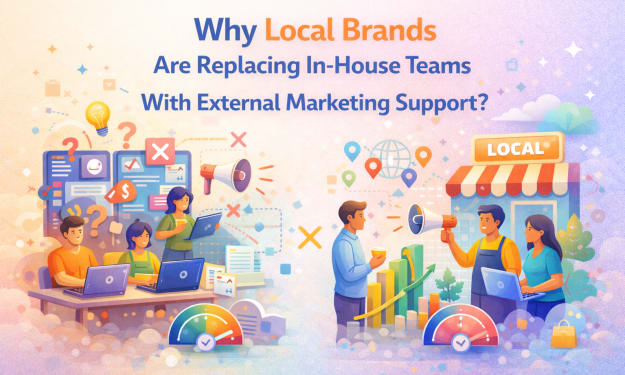
Why Local Brands Are Replacing In-House Teams With External Marketing Support
I still remember the first time I noticed the change. I was sitting in a small conference room above a retail store that had been around longer than I had. The owner had built the brand locally through word of mouth, a loyal customer base, and a tight in-house team that handled everything from flyers to social posts. Marketing lived inside the building. It always had.
By Jane Smith2 months ago in Journal
Robert Mugabe Jr Detained by Police — What It Means for South Africa-Zimbabwe Relations and the Mugabe Legacy
When your surname is Mugabe, privacy becomes a luxury you rarely enjoy. Every movement, every decision, and every controversy attracts attention far beyond ordinary scrutiny. That reality came sharply into focus again as news broke of the arrest of Robert Mugabe Jr., son of Zimbabwe’s late strongman leader.
By Omasanjuwa Ogharandukun6 days ago in Journal


Comments
There are no comments for this story
Be the first to respond and start the conversation.