
Who Will Be California’s Next Governor?
The Wide-Open Race That Could Reshape the State

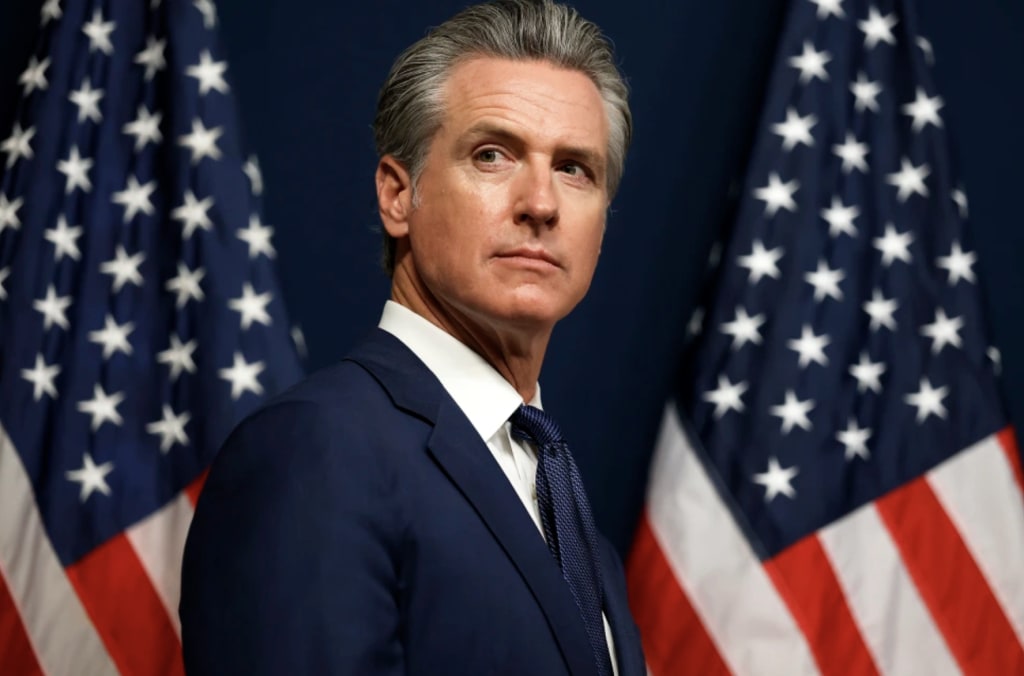
California is heading toward one of the most unpredictable elections in decades.
In 2026, voters will choose a new governor to replace Gavin Newsom, who cannot run again because California limits governors to two four-year terms.
Normally, when a governor steps down, a clear successor emerges. Not this time.
Instead, California’s upcoming election looks like a political free-for-all — with multiple Democrats, several Republicans, and no obvious frontrunner.
Some analysts are calling it the most open gubernatorial race in the state in more than 25 years.
So who could actually become the next leader of the world’s fourth-largest economy?
Let’s look at the contenders — and the possibilities.
The Leading Democratic Contenders
California is a deeply Democratic state, so many political observers assume the next governor will likely come from the Democratic Party.
One of the most recognizable candidates is Katie Porter.
Porter became famous for grilling corporate executives during congressional hearings while using a whiteboard to break down financial data for the public. Her campaign centers on economic fairness and affordability — a major issue for California voters.
Another contender is Eric Swalwell, a Bay Area congressman who built a national profile through his vocal opposition to former President Donald Trump.
Then there’s billionaire environmentalist Tom Steyer, who has previously run for president and has the financial resources to fund a massive campaign.
Other Democrats include:
- Xavier Becerra
- Antonio Villaraigosa
- Betty Yee
- Tony Thurmond
- Matt Mahan
In fact, so many Democrats are running that party leaders are worried they might split the vote, potentially allowing two Republicans to advance to the general election under California’s “top-two primary” system.
The Republican Wildcards
Although Democrats dominate statewide elections in California, Republicans still see opportunity in this chaotic race.
Two Republican candidates polling competitively are:
- Steve Hilton, a former Fox News host and adviser to the UK government
- Chad Bianco
Hilton has built his campaign around the idea that California has lost its “Golden State” promise due to high housing costs, taxes, and regulations.
Bianco, a sheriff known for outspoken criticism of state leadership, is appealing to voters concerned about crime and public safety.
While Republicans haven’t won statewide office in California since 2006, a fractured Democratic field could make this race more competitive than usual.
The Issues That Could Decide the Election
Polling suggests that cost of living will dominate the campaign.
California voters are especially worried about:
- Housing affordability
- Homelessness
- Taxes and energy costs
- Public safety
- Infrastructure and climate policy
In recent surveys, affordability was the most important issue shaping how voters choose a candidate.
Whoever convinces voters they can make California more affordable could have the edge.
The Most Likely Scenarios
Because California uses a nonpartisan primary system, the top two vote-getters — regardless of party — move on to the November election.
That creates several possible outcomes:
Scenario 1: Democrat vs Democrat
The most common outcome in recent elections. Two Democrats advance and Republicans are shut out.
Scenario 2: Democrat vs Republican
The classic matchup — and potentially the most competitive general election.
Scenario 3: Republican vs Republican
The least likely scenario — but theoretically possible if Democratic voters split among many candidates.
Why This Election Matters Beyond California
California is not just another state.
If it were its own country, it would have the fourth-largest economy in the world.
The next governor will influence:
- AI regulation
- Climate policy
- Housing reform
- Tech industry oversight
- National Democratic Party strategy
In many ways, California acts as a policy testing ground for the rest of the United States.
The Bottom Line
Right now, the race to replace Governor Newsom is unusually unpredictable.
There’s no clear frontrunner, the field is crowded, and voter frustration with affordability is rising.
That combination makes this election one of the most consequential — and uncertain — in California’s modern political history.
One thing is certain:
The person who wins in 2026 won’t just lead California.
They may shape the future direction of American politics.
About the Creator
Navigating the World
News, commentary on entertainment, music, influencers, and modern culture, upcoming artists, politics, and more. Everything you need to know — all in one place.
Keep reading
More stories from Navigating the World and writers in Journal and other communities.
Truck Ramming and Gunfire at Michigan Synagogue
West Bloomfield, Michigan — March 12, 2026 Authorities in suburban Detroit responded to a dramatic and frightening incident Thursday afternoon after an armed suspect drove a vehicle into a synagogue and opened fire, triggering what police initially described as an “active shooter situation.” The attack occurred at Temple Israel, one of the largest Reform synagogues in the United States, located in West Bloomfield Township, Michigan.
By Navigating the Worldabout 8 hours ago in Journal
Circadian Rhythm Doesn’t End When You Walk Indoors
Most people think of circadian rhythm as something connected primarily to daylight and nighttime. The rising sun signals the body to wake up. The darkness of evening encourages rest. For thousands of years, this natural cycle regulated how humans slept, worked, and recovered.
By illumipure3 days ago in Journal


Comments
There are no comments for this story
Be the first to respond and start the conversation.