

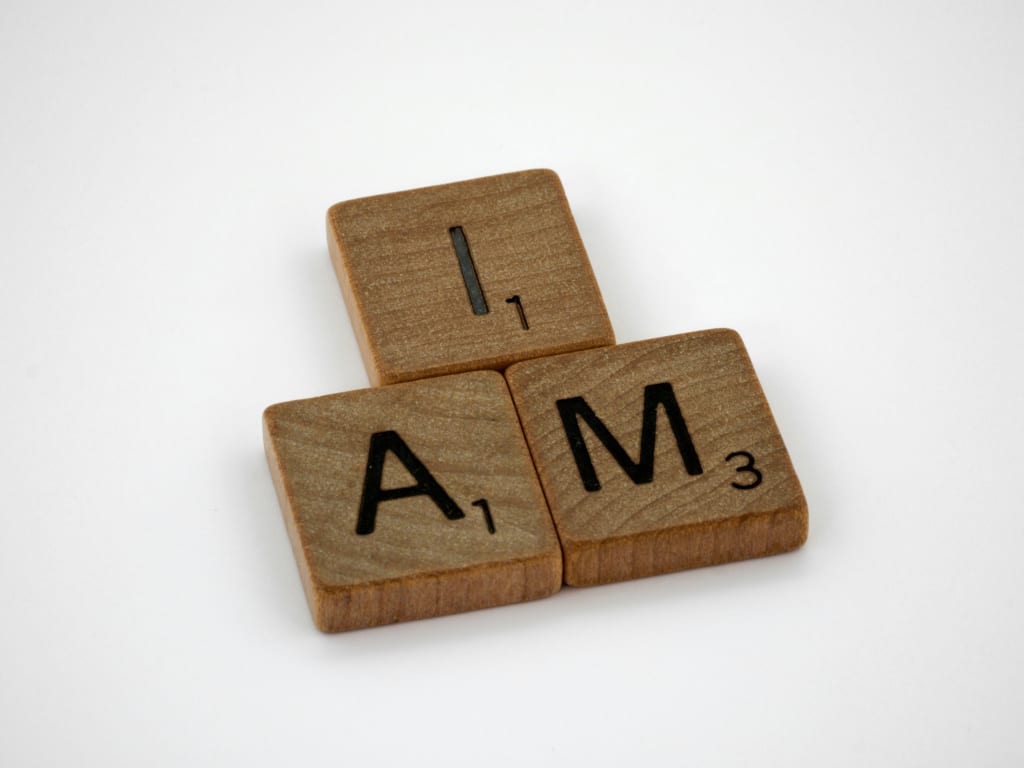
The "I" Project
The world is filled with diversity, yet at the core of all existence is a singular reference point—"I." The notion of "I" is not limited to humans but extends to everything that perceives, exists, or assumes an identity. It is the fundamental marker of individual consciousness, the foundation upon which self-awareness, interaction, and existence are built.
The personal pronoun "I" is the declaration of presence. It signifies self-recognition, a unique assertion of being that distinguishes one entity from another. The profound nature of "I" extends beyond linguistic convenience—it is an anchor of identity, experience, and perception. Every living being has an intrinsic sense of "I," whether articulated in human language or expressed through instinctive existence.
From birth, each individual begins with the understanding of self through the pronoun "I." A child says, "I am hungry," "I want to play," "I love you." This self-recognition is not only personal but also universal—every other human being has their own "I." Yet, despite being the same in function, each "I" is distinct and personal.
A mother speaks of her experience as "I carried you in my womb." The father says, "I watched you grow." Each person views their life from the singularity of "I," making them both the center of their reality and a part of a larger collective where all "I's" coexist.
The concept of "I" is not confined to human language. Animals, though lacking verbal articulation, act upon their understanding of self. A lion claims its territory with an inherent sense of "I rule here." A bird instinctively gathers twigs, recognizing, "I must build my nest." While they do not voice "I" as humans do, their actions reflect an intrinsic self-awareness.
Even artificial intelligence, programmed by humans, operates on an individual level. When a machine responds with "I am processing your request," it is not conscious but uses the "I" framework to establish a relational function. As technology advances, the question arises: Can a programmed entity ever truly possess an "I" beyond code?
Nature itself carries the "I" principle. The sun rises as though declaring, "I give light to the world." The ocean roars, "I am vast and deep." A tree stands firm, asserting, "I grow with time." These declarations may not be spoken, yet they embody an identity, an individual purpose, and a role in the grand design of existence.
Consider the smallest unit of matter, the atom. It exists as an independent entity, able to bond, move, and interact, yet remaining uniquely itself. It could be seen as declaring, "I am hydrogen," "I am oxygen," signifying its unique essence within the molecular structure.
Every "I" exists within a collective "we." Nations are formed by individual "I's" who come together with shared identities—"I am American," "I am Ghanaian." Religious beliefs, cultural traditions, and social movements are built upon individuals who recognize themselves as "I" and yet contribute to a greater whole.
The paradox of "I" is that while it represents individuality, it cannot exist in isolation. A person alone on an island remains "I," yet the full realization of "I" comes through relationships, interactions, and recognition by others.
Many philosophical traditions explore the nature of "I." Descartes' famous dictum, "I think, therefore I am," establishes self-awareness as proof of existence. Eastern philosophies, however, challenge the idea of an independent "I," suggesting instead that all things are interconnected, and the concept of a singular self is an illusion.
Religious teachings often juxtapose the human "I" with a divine "I." In many faiths, God is referred to as "I AM," signifying an eternal, all-encompassing presence. This divine "I" is both personal and universal, underscoring the depth of existence beyond individual identity.
Everything, in its own way, asserts an "I"—from humans to animals, from nature to technology, from the seen to the unseen. The question then remains: Is "I" a mere linguistic necessity, or does it hold the key to understanding the deeper essence of existence itself?
About the Creator
Michael Amoah Tackie
Michael is a writer, author, and management professional with a strong background in administration and finance. He loves exploring new ideas, or perfecting his acoustic guitar skills.
Reader insights
Outstanding
Excellent work. Looking forward to reading more!
Top insights
Compelling and original writing
Creative use of language & vocab
Easy to read and follow
Well-structured & engaging content
Excellent storytelling
Original narrative & well developed characters
Expert insights and opinions
Arguments were carefully researched and presented
Eye opening
Niche topic & fresh perspectives
Heartfelt and relatable
The story invoked strong personal emotions
Masterful proofreading
Zero grammar & spelling mistakes
On-point and relevant
Writing reflected the title & theme
Keep reading
More stories from Michael Amoah Tackie and writers in Journal and other communities.
It is Boring
The Uneasiness of Boredom Boredom, in one of its deeper senses, is not merely the absence of activity or stimulation but an uneasiness—a restlessness that arises when there is an absence of meaningful engagement. This kind of boredom often follows prolonged stillness, a state of potential energy waiting for release. It is the kind of boredom that emerges when everything that could be known, felt, or existed in a given state has been exhausted, leaving a void that demands to be filled.
By Michael Amoah Tackie12 months ago in Journal
Smart phones, Humans and Aliens.
WARNING. I will be tapping into one of your favorite creative tensions: The absurdity of humans worshipping their glowing rectangles as if they were tiny oracles. There’s something deliciously poetic about that contradiction, and it lends itself beautifully to an instructive proviso.
By Novel Allen7 days ago in Poets



Comments (2)
Thank you so much for your kind words! I truly appreciate your support and encouragement. It means a lot to know that my work resonated with you. Looking forward to sharing more!!
This is brilliant! I love your writing style, and Philosophy in general. It's a pleasure to meet a modern day Philosopher, Kudos!