
When Your TV Becomes Wall Art
How LG’s New Gallery TV Takes Aim at Samsung’s The Frame—and What It Says About the Future of Living Rooms
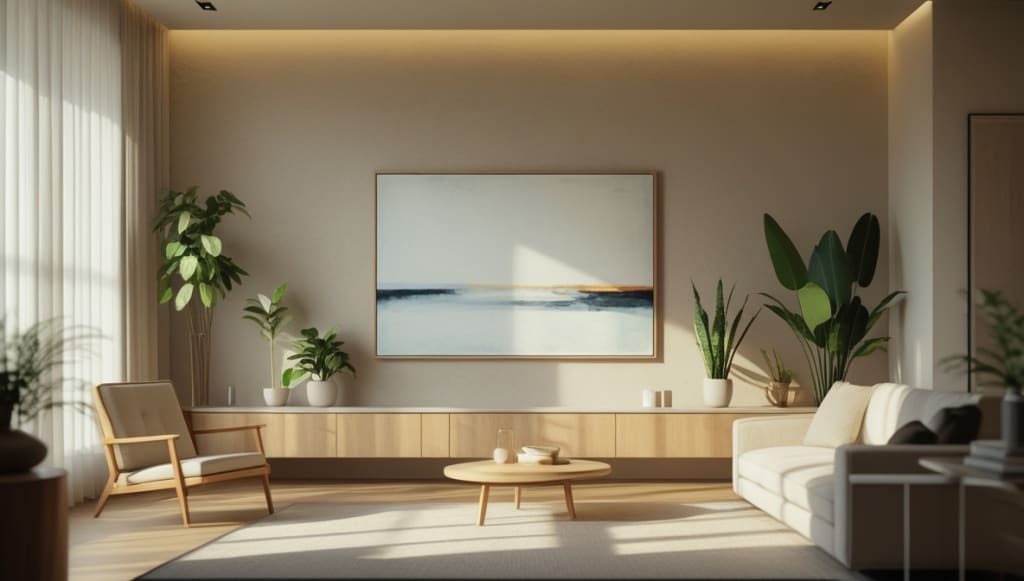
For years, televisions have been the largest, blackest, most awkward rectangles in our homes. Even as screens became thinner and sharper, they still screamed technology—a glowing slab dominating the wall, whether you were watching it or not.
Samsung was the first major brand to challenge that idea in a meaningful way. With The Frame, it asked a simple but powerful question: What if your TV didn’t look like a TV at all? Instead, it looked like art.
Now, LG is stepping into that same aesthetic battlefield with its newly announced Gallery TV—and this isn’t just a copycat move. It’s a signal that the future of televisions isn’t only about picture quality anymore. It’s about how technology fits into our lives when it’s turned off.
Why Design Suddenly Matters More Than Specs
For decades, TV marketing revolved around numbers: resolution, refresh rates, brightness levels, contrast ratios. Those things still matter—but for most people, the differences have become increasingly invisible.
A modern mid-range TV already looks excellent. The leap from “great” to “slightly better” no longer excites the average buyer.
What excites them?
How a TV makes their home feel.
Living rooms are no longer just entertainment spaces. They’re workspaces, social spaces, family spaces—and increasingly, carefully curated spaces. A massive black screen hanging on the wall can feel out of place in an otherwise thoughtfully designed room.
That’s the emotional gap Samsung’s The Frame exploited brilliantly. And now LG wants a piece of that same emotional connection.
LG’s Gallery TV: More Than a Pretty Screen
LG’s Gallery TV is designed to blend seamlessly into your wall, mimicking framed artwork rather than a traditional television. When not in use, it displays artwork, photography, or ambient visuals that transform it into décor rather than dead space.
But LG brings its own strengths to the table.
As a long-time OLED leader, LG is betting that superior contrast, deeper blacks, and more natural color reproduction can elevate the “art TV” concept beyond novelty. Where Samsung leaned heavily on lifestyle marketing, LG is combining design aesthetics with display pedigree.
In other words, LG isn’t just saying, “Our TV looks good when it’s off.”
It’s saying, “And it still looks better when it’s on.”
Samsung vs. LG: Two Philosophies, One Wall
This rivalry isn’t just about which TV looks better on your wall—it’s about how each company understands modern consumers.
Samsung’s The Frame succeeded because it prioritized emotion over engineering. It made people feel smarter about buying a TV that didn’t dominate their space.
LG’s Gallery TV feels like a refinement of that idea. It’s quieter. More minimal. Less about making a statement and more about disappearing into the room.
If Samsung’s The Frame says, “Look at this beautiful thing on my wall,”
LG’s Gallery TV says, “You barely notice it’s there—and that’s the point.”
Neither approach is wrong. They’re simply targeting slightly different lifestyles.
The Real Shift: TVs Are No Longer the Star
What’s most interesting about LG entering this space isn’t the product itself—it’s what it represents.
Televisions are no longer the centerpiece of the living room. Our phones, tablets, and laptops have taken over that role. The TV is now a shared screen, used for specific moments rather than constant engagement.
That means when it’s not in use, it shouldn’t demand attention.
Gallery TVs acknowledge a reality many tech companies resisted for years: technology should adapt to our environment, not the other way around.
This is the same philosophy behind invisible speakers, wireless charging furniture, and smart lighting that blends into architecture. Tech that knows when to step back.
Will LG Actually Win Over The Frame Crowd?
Samsung has a head start. The Frame is already a recognizable category, not just a product. It has built partnerships with artists, museums, and content platforms that reinforce its art-first identity.
LG will need to do more than match the look. It will need to:
- Curate compelling artwork experiences
- Make customization effortless
- Price the Gallery TV competitively
- Educate buyers that OLED art displays offer tangible visual benefits
If LG leans too heavily on specs, it risks missing the point. People don’t buy art TVs because they care about nit levels. They buy them because they care about how their home feels.
What This Means for Buyers
For consumers, this competition is excellent news.
It means:
- More choice in design-focused TVs
- Better displays disguised as décor
- Falling prices as brands compete
- Faster innovation in lifestyle technology
Most importantly, it means the industry is finally acknowledging something many buyers have felt for years: great technology shouldn’t interrupt good design.
The Quiet Future of Screens
LG’s Gallery TV isn’t trying to redefine television. It’s trying to make it disappear—and that might be the most modern idea of all.
As screens become sharper and smarter, their next evolution isn’t about standing out. It’s about blending in.
And in that silent competition between LG and Samsung, the real winner may not be one brand over the other—but the living rooms that no longer have to choose between technology and taste.
#LG #Samsung #GalleryTV #TheFrame #HomeTechnology #OLED #InteriorDesign #ConsumerTech
About the Creator
Keep reading
More stories from Shahjahan Kabir Khan and writers in Journal and other communities.
The Year Tech Stopped Feeling Exciting — And Started Feeling Necessary
Technology looked for one main sense—exhilaration—for most of the last twenty years. Product debuts were huge events. Gadgets spoke for status. Advances could be seen, snapped in photographs, and proudly displayed. Larger displays, more elegant designs, quicker processors; development was dramatic, clear, and impossible to ignore.
By Shahjahan Kabir Khan2 months ago in Journal
~ Fired ~
— Ai Intrusion ~ Are you Next ~ Is Ai Evolution after your job? — Few workplaces haven't been affected. Ai is in supermarkets, at doctors' offices, and even monitoring farms. I just can't think of anything this machine is not getting into, can you? For instance: Education ~ Law and Tech jobs will one day have a major influence or be taken over by these inanimate machines, with accuracy and vigor. From mechanics' diagnoses to a wide variety of everyday jobs, including fast food workers, with this input having the ability to cut their unnecessary work hours. I'm certain all of us have been touched by this with our short stories and colorful headings, have you? Even comments are very questionable 'Non-Robot' insertions.
By Jay Kantor28 days ago in Journal
Echoes
I stepped carefully around the corner, the familiar sights and sounds hitting me like a brick to the face. My eyes watered. I could practically see us, all of us, back then, clustered around the outdoor tables in front of the pizza shop, the bar, the coffee shop. I could smell the various stalls from the events we’d been to on this street. I could taste the churros and nachos.
By Phoenixica247 days ago in Fiction


Comments
There are no comments for this story
Be the first to respond and start the conversation.