
What is the Golden Circle Effect and How to Use it for Effective Leadership
Why: The innermost circle represents the core belief or purpose of an organization. This is not about what the organization does or how it does it, but rather why it exists in the first place.

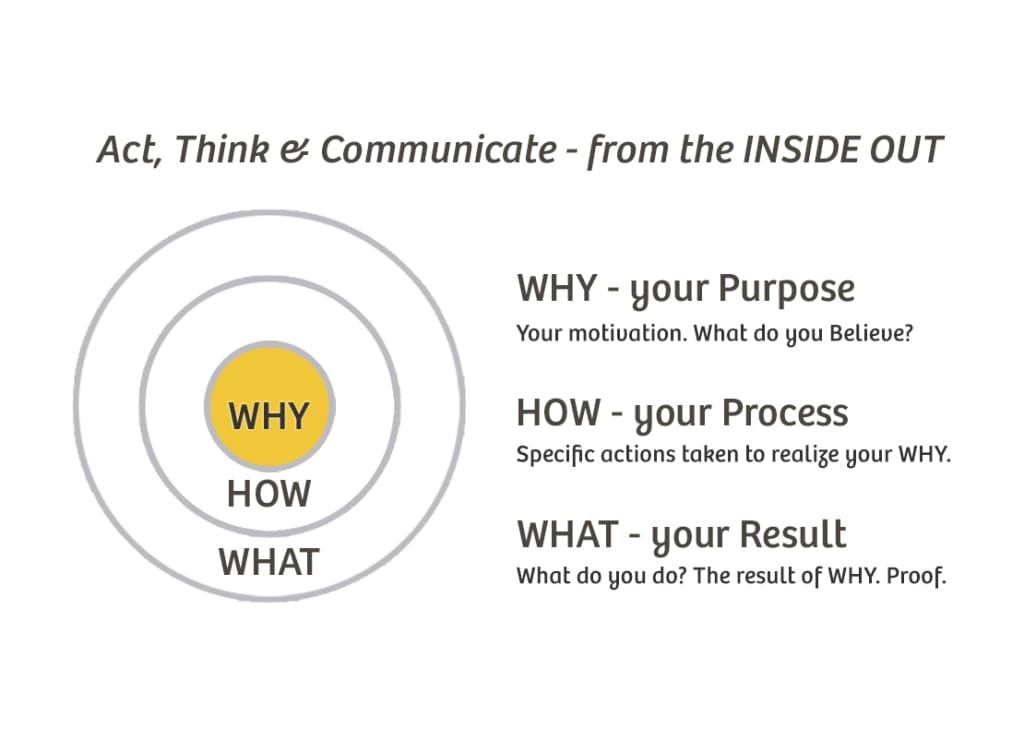
The Golden Circle is a powerful concept introduced by Simon Sinek in his influential TED Talk titled "How Great Leaders Inspire Action," which has garnered millions of views since its release. This model serves as a framework for understanding how successful leaders and organizations communicate their purpose and inspire others. At its core, the Golden Circle consists of three concentric circles that represent three critical questions: Why, How, and What. This structure not only helps clarify an organization’s mission but also guides how they convey their message to the world.
The Three Components of the Golden Circle
Why: The innermost circle represents the core belief or purpose of an organization. This is not about what the organization does or how it does it, but rather why it exists in the first place. The "Why" encapsulates the organization's fundamental motivation, its mission, and the values that drive its actions. According to Sinek, organizations that start with "Why" are able to connect with people on a deeper emotional level, inspiring loyalty and trust. For example, Tesla’s "Why" is about accelerating the world’s transition to sustainable energy, which resonates with customers who share similar values regarding environmental responsibility.
How: The middle circle describes the unique processes or approaches that an organization employs to realize its "Why." This includes the specific methods, values, or differentiators that set them apart from competitors. While many companies focus heavily on this aspect to define their brand identity, Sinek argues that it should be secondary to understanding and communicating the "Why." For instance, Apple’s "How" involves innovation and design excellence, which reflects their commitment to creating user-friendly products.
What: The outermost circle represents the tangible products or services that an organization offers. This is what most companies focus on when marketing themselves—what they sell or provide. However, Sinek emphasizes that merely stating what you do is not enough to inspire action or loyalty among customers. For example, Apple makes computers and smartphones, but this is not what makes them stand out; rather, it’s their underlying belief in challenging the status quo that resonates with consumers.
The Importance of Starting with Why
The Golden Circle model highlights a critical insight: organizations that communicate from the inside out—starting with "Why"—tend to inspire greater loyalty and engagement than those that begin with "What." This approach taps into the emotional centers of the brain responsible for decision-making and behavior, rather than just appealing to logic or reason. When people understand and connect with an organization’s purpose, they are more likely to support it—not just because they need its products or services but because they believe in its mission.
Sinek uses Apple as a prime example of this principle in action. Instead of marketing themselves as a company that simply sells high-quality technology (the "What"), Apple articulates a vision of innovation and creativity (the "Why"). This has cultivated a dedicated customer base that feels aligned with Apple’s values and vision.
Real-World Applications
The Golden Circle can be applied across various sectors beyond business, including education, non-profits, and personal branding. Leaders can use this framework to clarify their vision and mission statements, ensuring they resonate with their audience on a deeper level. For instance:
In Leadership: Leaders who articulate their purpose clearly can inspire their teams more effectively. By communicating their “Why,” they foster a sense of belonging and shared goals among team members.
In Marketing: Brands that emphasize their core beliefs in advertising campaigns often see higher engagement rates. Consumers are increasingly drawn to brands whose values align with their own.
In Personal Development: Individuals seeking personal growth can apply the Golden Circle by identifying their own “Why.” Understanding one’s motivations can lead to more fulfilling career choices and life decisions.
Challenges in Implementing the Golden Circle
While the Golden Circle provides a compelling framework for inspiration and communication, implementing it effectively can be challenging. Organizations may struggle to articulate their “Why” clearly or may find that their internal practices do not align with their stated purpose. Additionally, in highly competitive markets where differentiation is crucial, companies may feel pressured to focus primarily on “What” they offer rather than fostering deeper connections through “Why.”
Conclusion
The Golden Circle effect illustrates how starting with purpose can transform leadership styles, marketing strategies, and organizational cultures. By prioritizing “Why” over “What,” leaders can inspire action and loyalty among employees and customers alike.
Simon Sinek's model encourages us to reflect on our motivations—whether as individuals or organizations—and communicate authentically about what truly drives us.
In a world saturated with choices and noise, those who clearly articulate their purpose will stand out and forge meaningful connections that transcend mere transactions.
Understanding and applying the principles of the Golden Circle can lead to profound changes in how we engage with others, ultimately fostering environments where innovation thrives and shared values flourish.
About the Creator
Edina Jackson-Yussif
I write about lifestyle, entrepreneurship and other things.
Writer for hire [email protected]
Entrepreneur
Software Developer + Machine Learning Specialist
Founder:
➡️Creator Vibes Club
➡️Article Flow Club
Keep reading
More stories from Edina Jackson-Yussif and writers in Journal and other communities.
"The Compound Effect: Jumpstart Your Income, Your Life, Your Success" By Darren Hardy a Book Summary
"The Compound Effect: Jumpstart Your Income, Your Life, Your Success" By Darren Hardy is a powerful guide that emphasizes the importance of small, consistent actions in achieving significant results over time. Hardy, the former publisher of SUCCESS magazine, draws on his experiences and research to illustrate how tiny choices can lead to monumental changes in various aspects of life, including personal development, finances, and relationships.
By Edina Jackson-Yussif about a year ago in Journal
Author’s Advice
If you would’ve asked me 20 years ago did I know I’d become a writer and an author, I would’ve said “nope, ain’t happening”. As fate would have it I did become an author and I can honestly say I’m loving it so far. It really does feel good to be a writer. I’ve learned a lot on this journey and I feel like with even me being as new to this world as I am, there’s some wisdom I need to share with every other aspiring author.
By Joe Patterson4 days ago in Journal
Digital Product Passports: What Businesses Need to Do Now
Key Takeaways Digital Product Passports signal a shift toward supply chain transparency. Businesses that wait for enforcement deadlines risk rushed system upgrades and costly operational disruption. Preparing now means mapping data, strengthening supplier accountability, and running pilot programs. Companies that treat DPPs as a strategic advantage can build trust and gain a competitive edge.
By Aaron Smith6 days ago in Journal




Comments
There are no comments for this story
Be the first to respond and start the conversation.