
What Is Blockchain Technology? How Does Blockchain Work?
Learn what blockchain is and how it works! Understand the decentralized ledger, its benefits, and key concepts in this easy-to-grasp guide.

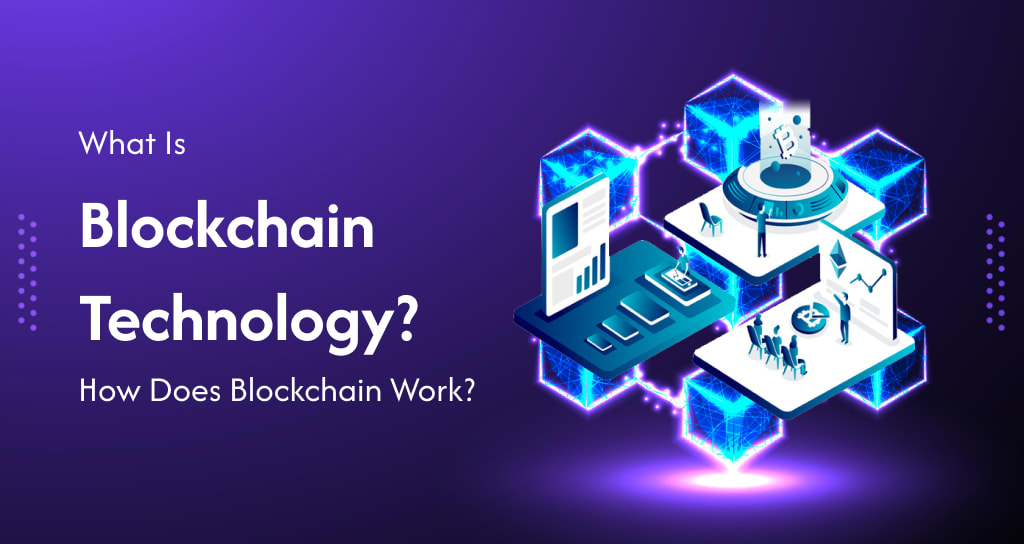
The word blockchain has become widely used in today's digital world, but what is it? Perhaps you've heard its name mentioned in relation to cryptocurrency, or in reference to its many applications in other industries, but blockchain technology is changing the way we understand software, database security, transparency and decentralized systems of all kinds. Yet you have no idea how the Virtual World works or what is the functionality of the Metaverse.
In this blog we will cover basics of the blockchain technology in simple words which will help you to understand what it is, how it works and why it is gaining momentum in every field. Whether you’re an inquisitive newcomer or a corporate worker trying to incorporate blockchain at your company, we have you covered: It’s plain and simple explanations.
What is Blockchain Technology?
Put simply, a blockchain is a very unique type of database (or digital ledger) that stores information in a way that is extremely secure and generally immutable. Instead of one individual responsible for monitoring data, there are many holders of the data (or computers) that have the data. When someone wants to add something new, such as a transaction, it gets recorded in a new “block” and, once added, cannot be easily changed or deleted. They’re all connected by blocks, and every block has a unique code that binds it to the prior blocks.
So, this makes blockchain truly secure, transparent, and reliable, which is why continuous use of it can be seen in cryptocurrencies (Bitcoin), transaction recording, and even in proving ownership over digital assets. Like a group of friends playing a game, and the way they do this is they keep each other honest by all recording their place, and checking each other’s records.
Key Features of Blockchain Technology
So, what are the features of Blockchain? Let’s find out about the main features of blockchain!
Immutability
Immutability is the feature that doesn’t allow alteration and modification. This is one of the best qualities of blockchain technology that ensures the mechanisms will remain as it is a permanent, and unaltered network. As blockchain is a distributed ledger, every node in the system has a copy of the digital ledger. When the transactions are added in the network, every node checks its validity. After the majority of nodes agree that transactions are valid, it’s added to the ledger. This shows that no transaction blocks (group of transactions) can be added to the ledger without receiving the constant of the majority of nodes. This facilitates transparency and makes it corruption-proof. Once the transaction blocks are added to the ledger no one can change, edit, or delete it.
Decentralization
The blockchain network is decentralized meaning a certain group of nodes handles the management of the network making it decentralized. This quality of blockchain technology puts users in a straightforward position. Due to its decentralized system, it doesn’t require any governing authority, a user can easily and directly access their assets from the web and store.
Consensus
The blockchain technology succeeded because of the consensus algorithm. Every blockchain system that we have today contains consensus algorithms to help the network make transactions. In simple terms, the consensus is a decision-making process for the nodes active on the network. Here, the nodes can come to one agreement without any complication and relativity faster. So, you can record a new transaction only when the majority of nodes or participants on the network give their consent.
Distributed Ledgers
It’s a public ledger that manages the transaction in the network. Users or participants can view where the transactions are made and to whom it was made. The public ledger on the blockchain network is maintained by all the nodes on the system. Distributed ledger responds to any suspicious activity. Nodes in the blockchain system act as verifiers of the ledger. If a user adds a new block in the network then others will first verify the transaction and then complete the transaction. To enable this blockchain feature to work, each active node will have to maintain the ledger and conduct validation.
Enhances Security
Being a decentralized technology, blockchain eliminates any central authority involvement, no unauthorized person or system cannot change any type of characteristics of the network for their advantage. Encryption is used for added security to ensure that the system is making it even more secure. All the data on the Blockchain is hashed using cryptography. Meaning, if you change or try to tamper with the data, all the hash IDs would change. Thus in order to corrupt the network, he/she would have to change all the data on all nodes in the network. There might be millions and millions of people, where everyone has their own copy of the ledger.
Why is Blockchain Important?
Traditional database technologies come with various challenges for recording all the financial transactions. Let’s understand this with an example, for instance consider the sale of the property. Once the deal is set and buyer gives the money to the seller and the ownership of the property is transferred to the buyer. Individually, both the buyer and the seller can record the monetary transactions, but neither sources can be trusted. The property seller can easily claim that they have not received any money even though the buyer has transferred the money. Similarly, sellers can also argue that they have already paid the money even though they haven’t.
To avoid such potential legal issues, a third-party has to intervene for verification of the transactions and deal. The involvement of central authority will not only complicate things but also create a single point of vulnerability. If somehow the central database is compromised then both seller and buyer may have to suffer as well.
This is where blockchain solves all the issues that were with the central database. Blockchain eliminates these issues by creating a decentralized, tamper-proof system to record transactions. In the case of property transactions, blockchain creates one ledger for the seller and one ledger for the buyer. So when the deal is done, they both need to approve the transaction, and are updated automatically in their ledgers in real time. Unlike the traditional transaction flow which takes 3 to 5 business days for transferring, blockchain transaction speed is instant, that means once the contract is approved the money will transfer to the seller account in the mean hour.
Any interruptions in the previous transactions will corrupt the entire ledger. These qualities of blockchain made it a forefront technology and led to its use in various fields, including the development of cryptocurrency like Bitcoin.
How Does Blockchain Work?
Have you ever worked with spreadsheets or databases? Blockchain is also somehow similar because it is also a database where the information is entered and stored. The major difference between traditional spreadsheets or databases and blockchain is how the data is structured and accessed.
A blockchain facilitates a program called scripts that conduct the task you usually would in a database: entering and accessing information, and saving and storing it somewhere. A blockchain is distributed, which means several copies are saved on many machines. And they must all match up with each other in order to be valid.
The bitcoin blockchain collects transaction information and enters into a 4MB file called block (different blockchains may have different size blocks). Once the block is completely full, the block data is run through a cryptographic hash function, which generates a hexadecimal number called the block header hash.
The hash is then entered in the following block header and encrypted with the other information in that block’s header, making a chain of blocks, that is called blockchain.
Benefits of Blockchain Technology
Advanced security
Since Blockchain systems provide the high level of security and trust that modern digital transactions require. Always, there is some fear that someone could tweak the software behind the scenes and create false savings for themselves. Instead, blockchain accomplishes a highly secure underlying software system with three principles; cryptography, decentralization, and consensus that become nearly impossible by design to maliciously tamper with. One person cannot change the transaction records and there is no single point of failure.
Improved efficiency
Deal-making between businesses can be time-consuming and creates operational bottlenecks, especially with third-party regulatory bodies and compliance. For instance, such business data transactions become faster and more efficient with smart contracts and transparency in a blockchain.
Faster auditing
Enterprises have to generate, exchange, archive and reconstruct e-transactions (when necessary) in a demonstrable manner without compromising security. Records being linked together in a tamper-proof way, means that all records are chronologically immutable. Now, audit processing is significantly faster due to this data transparency.
Key Components of Blockchain Technology
A blockchain architecture has the following key components:
A Distributed Ledger
A distributed ledger is a shared database in the blockchain network that stores the transactions like a shared file that anyone with complete access can edit. In most shared text editors, teams with editing permissions can even delete the entire file. However, distributed ledger has strict guidelines and rules about who can edit and how to edit. You won’t be able to delete any file or entries once it is recorded in the network.
Smart Contracts
A Smart Contract is an digital agreement or set of rules that govern business transactions, it’s store’s on the blockchain network and executed automatically as a part of transaction. The smart contract defines the conditions for corporate bond transfers that includes terms for travel insurance to be paid and much more. After the transactions are completed, the smart contract is permanently recorded on the blockchain network, confirming it’s immutability so altering or deleting is not possible.
Public Key Cryptography
In the context of Public Key Cryptography, it’s a security feature to uniquely identify users in the blockchain network. This feature creates two sets of keys for the network participants. One key is a public key that is common to every participant in the network. The other is a private key that is unique to every member in the network. To unlock data ledger, private key and public both are required.
Types of Blockchain Networks
There are several ways to build blockchain networks. These can be public, private, hybrid, and consortium. Let’s understand the four main types of decentralized or distributed networks in the blockchain:
Public Blockchain: Public Blockchain networks are permissionless and enable anyone to join them. All members of the blockchain network have equal authority to read, edit, and validate the blockchain. Majority of the people use public blockchain networks to exchange and mine crypto coins like Bitcoin, Ethereum, and Litecoin.
Private Blockchain: Individual organization controls private blockchain networks, also known as managed blockchains. The authority decides who can be a member and what right they will have in the network. Private blockchains are partially decentralized because they access restrictions. Ripple is a perfect example of a private blockchain that is a digital currency exchange network for businesses.
Hybrid Blockchain: The hybrid blockchain network combines the both Public and Private blockchain elements. Companies can set-up one public system on top of a private system, giving them complete control over their sensitive data.
Consortium Blockchain: A group of companies shares the responsibilities of maintaining a blockchain and determining data rights. These preselected companies decide who will submit transactions and who will access data. This blockchain network is ideal for companies who when all participants need to have access permission and have shared responsibility for the blockchain.
Conclusion
Based on the principles of the physical elements, it was followed by several other innovations and started becoming a trend in lots of already well-established industries and became a worldwide phenomenon making its mark and gaining momentum every passing day. With its key features and all the benefits they provide like transparency, trustworthiness, and tamper-proof quality, Blockchain is crucial to the development of popular concepts like Metaverse and web3. It is key to safety, effectiveness, and efficiency of commercial and governmental processes.
As the technology developed through blockchain still a work in progress so many additions are there to be made every other day to create something new and unique, something that could ultimately give the users across the world a better technology which is just oozing with efficiency and thereby you should keep an eye for new changes of such nature!
If you are someone who is looking for blockchain solutions, consider hiring a blockchain development company that holds the expertise of developing robust, scalable, exceptional blockchain solutions tailored to your business needs.
About the Creator
DC Kumawat
Being Managing Director and Co-founder of Orion InfoSolutions, a Software Development Company. I started my career in Information and Technology 12 years back as a new-age entrepreneur in emerging digital India.
Keep reading
More stories from DC Kumawat and writers in Journal and other communities.
Find Out The Best Online Platforms For Solitaire Game Fun
Solitaire, a timeless classic card game, has captured the hearts of millions with its simple yet addictive gameplay. In today's digital age, you don't need a deck of cards to enjoy a round of Solitaire. Thanks to technology, numerous online platforms offer a convenient and engaging way to indulge in this beloved game. Whether you're a casual player or a Solitaire enthusiast, these online platforms provide the perfect escape for some solitary fun.
By DC Kumawat3 years ago in Journal
Why Many Women Prefer the Abaya for Comfort and Style
Fashion trends change quickly, but some clothing pieces continue to remain meaningful and relevant over time. One such garment is the abaya. Traditionally worn in several Middle Eastern countries, the abaya has become an important part of modest fashion around the world.
By Shahnaz Khanabout 18 hours ago in Journal


Comments