
We Almost Built Our Dream Home on a Guess
How a professional construction estimate uncovered the hidden costs that would have broken our budget—and our hearts.

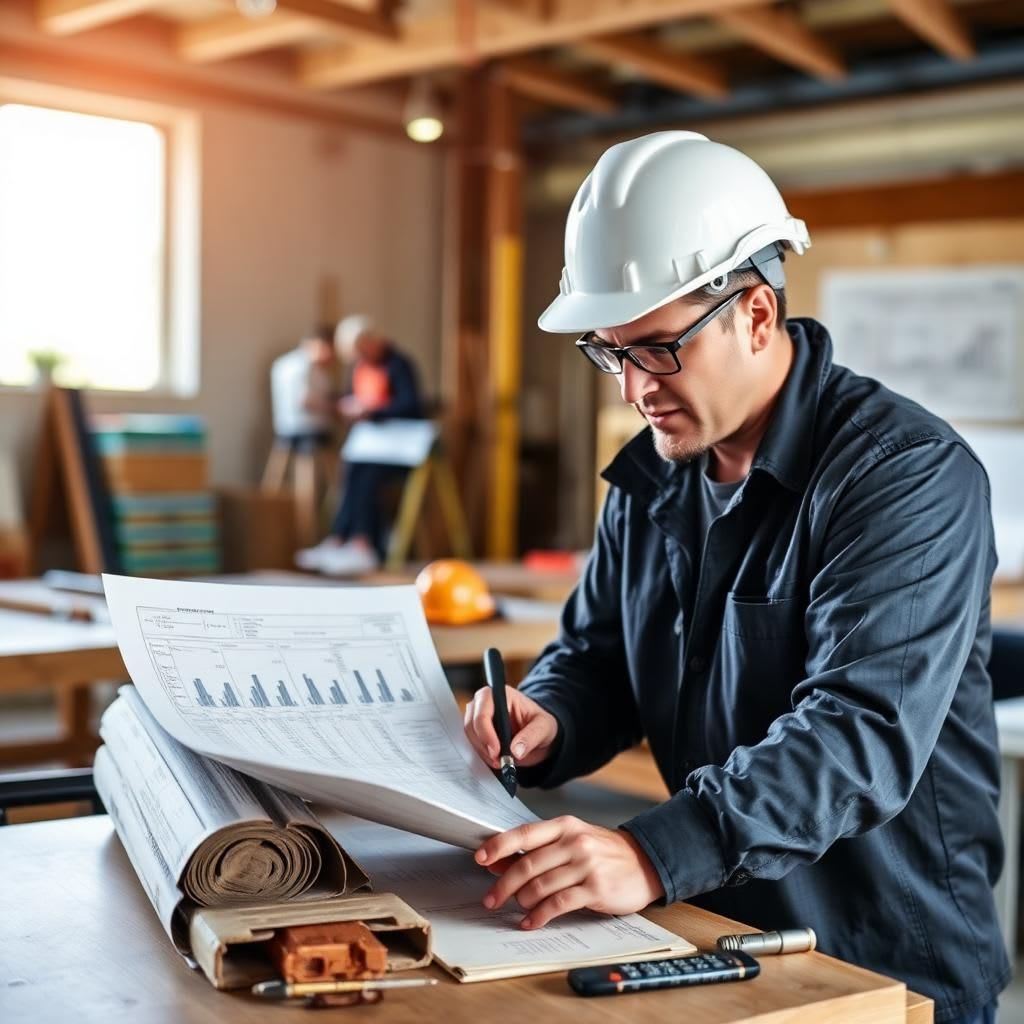
The Unseen Blueprint: How a Number Cruncher Saved My Dream Home (And Can Save Yours, Too)
The blueprint was a work of art. Curved lines denoted a bay window that would flood the kitchen with morning light. Squared-off rooms promised space for a growing family. To me, it wasn’t just a drawing; it was my future, inked on crisp, large-format paper. I held it with a reverence usually reserved for holy texts.
My contractor, a salt-and-pepper-haired man named Joe with a firm handshake, pointed to the master suite. “This is where the magic happens,” he said with a warm chuckle. Then, he handed me a single sheet of paper. “And this is the first step to getting there.”
This other document was… not a work of art. It was a dense table of numbers, line items, and abbreviations I didn’t understand. Lumber: $28,450. Concrete: $15,200. Labor: $67,500. At the bottom, a total figure made my heart perform a gymnastic feat it was not prepared for.
This was my first encounter with a general contractor estimate. It felt less like a blueprint for building and more like a financial obstacle course. I trusted Joe, but a nagging voice in the back of my head, the one that balances my checkbook and reads the fine print on warranties, whispered: “Is this all there is? How do you know?”
That whisper led me down a rabbit hole. It introduced me to the unsung hero of the construction world, the discipline that separates a successful, joyful build from a stressful, bankrupting nightmare: the art and science of construction estimating.
The Day I Realized an Estimate Isn't a Guess
I’ve always been a DIYer. I’ve tiled backsplashes, built decks, and prided myself on knowing my way around a hardware store. My method for estimating home building costs for these projects was what I call the “guesstimate-plus-fifty-percent” method. It usually worked. Usually.
But a whole house? This was a different league. My guesstimate method was like showing up to a NASA launch with a bottle rocket.
I decided to do my own research. I called a few other contractors for bids. The results were bewildering. The numbers weren't just different; they were wildly disparate. One quote came in 20% lower than Joe’s, another 30% higher. One included line items for “site cleanup” and “permit fees,” while another buried those costs elsewhere.
I was lost. Choosing the lowest bid felt risky. Choosing the highest felt foolish. I felt like I was trying to compare apples to oranges, while someone was also trying to sell me a tractor.
In a moment of desperation, I called an old college friend, a civil engineer named David. I spilled my stressed-out saga over the phone. He listened patiently and then said, “What you need isn’t a better contractor. Not yet. What you need is a translator. You need a professional construction estimating service.”
Meeting the Translator: My Lesson in Granularity
I was skeptical. Paying someone just to tell me what something should cost? It felt like an unnecessary extra step. But David insisted. “Think of it as an investment in clarity. It’s the cost of a single appliance that will save you from a dozen financial heartaches.”
Reluctantly, I hired a firm. A week later, I received a report. It was nothing like the single-page quotes I’d gotten from contractors.
This document was a novel. A beautiful, glorious, overwhelming novel of my future home.
It didn’t just say “Lumber.” It broke it down:
2x6 studs, 16" on center: 4,280 linear feet.
3/4" APA Rated Sheathing: 120 sheets.
2x10 floor joists: 1,550 linear feet.
It didn’t just say “Labor.” It detailed:
Excavation: 28 hours @ $95/hr.
Framing Crew: 240 hours @ $85/hr.
Plumbing Rough-In: 55 hours @ $110/hr.
It included everything. The exact number of doorknobs, the linear feet of HVAC ducting, the cubic yards of concrete for the foundation, the cost of porta-potties for the crew, and even a 10% contingency for the unforeseen—because, as David said, “something always comes up.”
This wasn’t an estimate; it was a revelation. It was the DNA sequence of my house. For the first time, I understood the why behind the number. I could see the cost of every choice. That bay window wasn’t just a beautiful idea; it was 15 specific hours of skilled labor and custom-sized, tempered glass.
The Power of Speaking the Language
Armed with my new “translator,” I went back to the contractors. The conversations were completely different.
Instead of saying, “Your number seems high,” I could say, “I see your quote for framing labor is at $90 an hour. My breakdown has it pegged at $85 based on local rates. Can you help me understand the difference?”
The low-ball bidder squirmed. His number was low because he’d used cheaper, lower-grade materials and hadn’t included a contingency. The high bidder? He appreciated the detail. He walked me through his numbers, showing where he used a higher-grade insulation and a more experienced (and thus more expensive) plumbing subcontractor.
I ended up choosing Joe. But I didn’t just accept his initial quote. We used my detailed estimate as a collaborative document. We found a few areas to value-engineer (opting for a slightly different siding that gave the same look for less cost) and reallocated that savings to the chef’s stove I’d been dreaming of.
I was no longer a supplicant hoping for a fair price. I was an informed partner. The general contractor estimate was no longer a barrier; it was our shared playbook.
The Foundation of Everything is a Number
The foundation of my house is made of poured concrete and rebar. But the house itself is standing on a different, equally important foundation: the confidence that came from true financial clarity.
Construction estimating is often seen as a dry, technical field. But I’ve lived its value. It’s not about pinching pennies; it’s about empowering dreams. It’s the process that transforms a frightening leap of faith into a confident step forward.
It taught me that the most important tool on any construction site isn’t the bulldozer or the nail gun. It’s a sharp pencil, a detailed spreadsheet, and the relentless pursuit of clarity. That detailed breakdown was the true unseen blueprint, the one that ensured the beautiful paper blueprint could become a happy, solid, and financially sound reality.
My advice to anyone staring at a contractor’s quote with a mix of hope and terror is simple: Before you build your house, build your knowledge. Understand the granular reality of what you’re paying for. It’s the single best investment you can make in your project, and the only thing that will ensure the home you end up with is the home you truly dreamed of.
About the Creator
Everything We Know So Far About House of the Dragon Season 3
This is another deep dive into Game of Thrones and House of the Dragon. We’re breaking down everything we currently know about House of the Dragon Season 3, now that the story has fully entered the most brutal phase of the Targaryen civil war—the infamous Dance of the Dragons.
By Bella Andersona day ago in Journal



Comments
There are no comments for this story
Be the first to respond and start the conversation.