
Was Trump Response To "No King" Marches AI Generated?
When a King is Mocked, the Realm Whispers

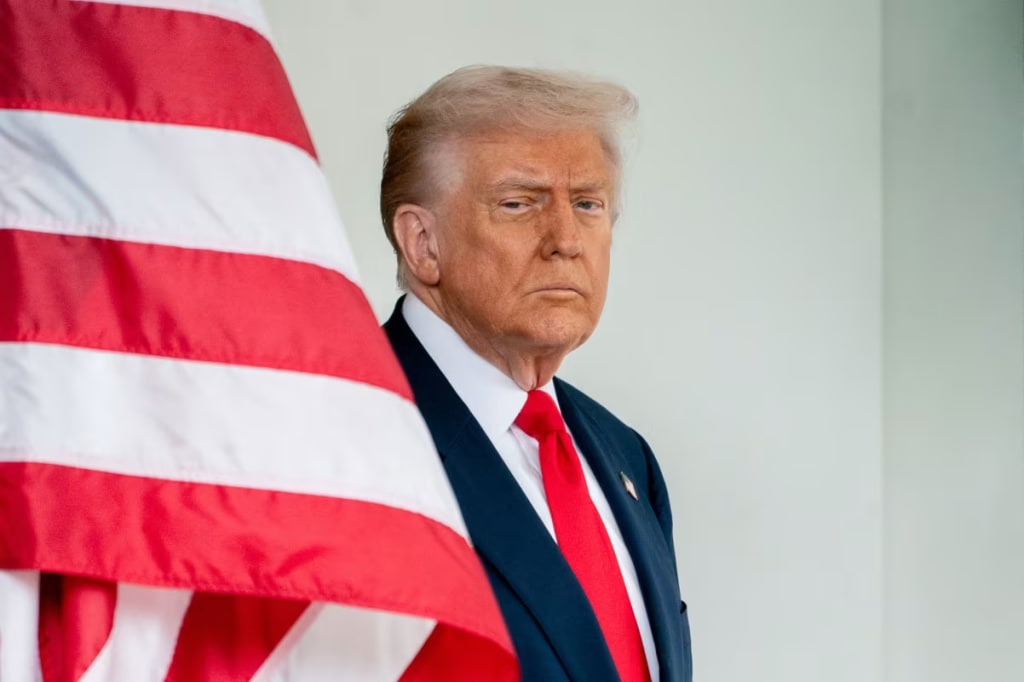
Imagine hundreds of threads woven into a grand design, each representing a person, a voice, a belief. Now picture one thread pulling so hard it distorts the weave. That’s the metaphor at the heart of the “No Kings” protests and Donald Trump’s response: one leader straining to dominate, while millions push back, tugging the tapestry toward balance.
Over the weekend, as millions of Americans took to the streets demanding accountability and resisting what they saw as creeping autocracy, Trump responded not with dialogue but with derision — mocking their voices, embracing the crown they warned him against wearing. In that choice lies the cruel irony: his reaction only strengthens the message of the protesters.
The Spark: Why “No Kings”?
Before we examine Trump’s reaction, we must understand the catalyst behind the marches.
The “No Kings” protests, held on October 18, 2025, were the second nationwide show of dissent against what participants and organizers perceived as authoritarian tendencies in Trump’s second term. In June 2025, the first No Kings protests drew millions. This October iteration, led by coalition groups like Indivisible and the ACLU, is estimated to have drawn over 7 million people across 2,700 locations in all 50 states — making it perhaps the largest single-day protest in modern U.S. history.
These were not fringe rallies. In cities from New York to Portland to small towns that once rooted heavily for Trump, people marched, chanted, held up handmade signs, donned costumes, and reclaimed public squares to say: We reject kings. We demand democracy.
The slogan is metaphorical but sharp. A king is not bound by laws, not accountable to the people, sovereign in his own realm. To call a president “king” is to accuse him of wanting to step outside constitutional limits. It’s to say: “You cannot be above us.”
So when millions answered that call, they were broadcasting a message: America is not a monarchy. We are not subjects. We are citizens.
The King’s Response: Mockery, Memes, and Monarchy
So what did Trump do when faced with this sea of dissent? He leaned into the imagery, doubled down, and mocked — refusing to deny the protests’ premise, but choosing to wear the crown rather than remove it.
AI Mockery & Digital Thrones
On social media, Trump and Vice President J.D. Vance posted AI-generated memes depicting Trump as a monarch. One video Trump shared showed him flying a fighter jet emblazoned “KING TRUMP,” dropping a brown sludge (evoking excrement) on protesters — complete with a crown.
Vance’s post showed prominent Democrats kneeling in a royal court before Trump, bowing to his supposed supremacy.
It was a twee trick — reducing the protests to meme fodder — but beneath the surface was a message of power: I can mock you, I can belittle you, because I believe I am untouchable.
One might expect a denial: “I am not a king.” But Trump preemptively said exactly that — yet continued to play king in his memes. In effect, the deny-and-mock tactic disarms the protests: anyone who objects is called humorless or oversensitive, while the monarchical symbolism creeps quietly into the conversation.

From Tweets to Pardons: Turning the Gavel
Beyond memes, Trump’s actions recently telegraphed authoritarian impulses. On the eve of the protests, he commuted the sentence of former Representative George Santos, convicted of multiple fraud charges.
The commutation underscored two things: first, that legal systems can become playthings in his hands; second, that he views his authority as above scrutiny. Pardons and commutations are among the few powers the Constitution grants the president without judicial oversight — and Trump appears eager to wield them not just as mercy, but as political weapons.
Meanwhile, Trump has publicly demanded that institutions like the DOJ pursue his critics, including ex-FBI officials.
And his administration has launched military actions, including strikes against alleged drug traffickers and covert CIA operations abroad, bypassing Congress’s oversight.
These moves are not isolated. They are threads in a pattern — an assertion of monarchical supremacy masked as executive authority.
A Mirror to the Message
When someone accuses you of being something you deny — yet act as — you do not get to rewrite what the world sees. Trump’s reaction to “No Kings” did not undercut the protesters; it reinforced their thesis: he believes he is above their time, their judgments, and their voice.
Contempt in the Crown
By mocking millions with AI-laced demeaning imagery, he signaled contempt. Rather than address concerns, he elevated himself above them — implying that dissenters are childish, unserious, or even subhuman. The very act of dumping sludge from a “King Trump” jet is an image of disgust. In rhetoric, disgust often implies dehumanization.
That’s not persuasion. It’s dismissal. It’s saying: you don’t matter, and I don’t care. That posture, more than any crown or meme, echoes autocrats through history.
The Absence of Self-Reflection
If he were secure, he might ask: What is driving this mass dissent? Which policies feel unmoored? Why are people across the political spectrum walking into streets?
Instead, he hides behind mockery. Republicans in Congress joined chorus, attacking the protests as communist, antifa-driven, or “hate America” rallies.
No curiosity. No empathy. No attempt to engage. That absence is its own message: I am the king; you are a subject.
Why the Protests Matter: More Than a Spectacle
Beyond spectacle, the “No Kings” movement taps into deeper wells of anxiety — over democracy, over power, over who controls laws, resources, and rights.
Building Critical Mass: The 3.5% Rule
Activists often point to the 3.5% rule — a principle suggesting that sustained change becomes possible when 3.5% of the population participates in a movement.
In the U.S., that would be about 11–12 million people. The October protests brought nearly 7 million — roughly 2% of the population — meaning the movement is still short of the threshold but showing momentum.
Still, even a 2% turnout for a single coordinated protest is massive. It’s a jolt. It’s a signal. And in a democracy, signals matter.
Center to Periphery: Who Showed Up?
What’s striking is the diversity. These protests were not just liberal strongholds or college towns. They popped up in small towns, red states, suburbs. Former and current federal workers — furloughed by the ongoing shutdown — marched.
Many participants said they were apolitical or moderate — concerned with democracy, not ideology.
It is harder to dismiss them as radicals when they include quiet citizens, nurses, teachers, retirees.
Peaceful But Insistent
The protests were overwhelmingly peaceful. Organizers emphasized nonviolence, trained de-escalation teams, and banned weapons.
Even in the face of aggressive rhetoric, the crowds marched, sang, chanted — refusing to submit to fear or spectacle.
That restraint is not weakness. It’s assertion. They said: We will raise our voice, but we will not break the law. We refuse to be the chaos you manufacture to justify crackdown.
The Road Ahead: Fractures, Resistance, and Reckoning
The months ahead are infusion points — places where tensions, will, and strategy will collide. The protests, powerful as they are, are only the beginning.
A Shutdown, a Weakness
Trump returns to Washington amid a government shutdown he has shown no desire to end. That vacuum of governance fuels dissatisfaction. The protests are not simply about symbolism — people feel the impact in services, wages, national stability.
If the executive maintains its course and refuses compromise, the fissures widen — not just between left and right, but between citizen and state.
Institutional Pushback
Already, judges have temporarily halted orders for troops to enter U.S. cities. University campuses are resisting ideological pressure. Various states and civil actors are mounting legal and political challenges.
These are the guard rails that democracy must maintain — institutions that refuse to be trampled even when the monarch claims divine right.
The Risk of Overreach
Power unchecked breeds hubris. A king who believes he cannot be opposed often overreaches — purging enemies, substituting loyalty for competence, using spectacle and threat to enforce obedience. We may now be watching that arc in real time.
If Trump’s impulses continue unchecked, the backlash could take many forms: legal challenges, stronger elections, local resistance, or even radical polarization. The question is whether the republic can absorb the shock.
A Fall Begun?
Kings rise. Kings fall. And often, it is their own arrogance that sows the seeds of collapse. If Trump miscalculates — by mismanaging policy, angering core allies, or alienating Middle America — his crown could slip.
But until that moment, the harder task is to maintain resistance without descending into reaction. To hold truth without violence. To build an alternative vision while defending what remains.

An Anatomy of Denial and Defiance
By his response, Trump has revealed his own interpretation of power. Let’s break it down:
Denial in Voice, Assertion in Symbol
He says “I’m not a king”, but then doubles down with AI imagery and memes that reinforce the king narrative.
Contempt for Dissent
Dismissing millions as “very small” or “ineffective,” calling protestors “whacked out,” shows disdain. That’s the posture of someone who believes they are above challenge.
Weaponization of Mercy
Pardons and commutations become not acts of compassion, but reminders: my power can rewrite consequences. It is both carrot and stick.
Assertions Abroad & Domestically
Military strikes and covert operations bypass legislative oversight. Domestically, protests are reduced to jokes or attacks on patriotism.
Isolation of the Opposition
By linking protests to “radical left lunatics,” antifa, or communism, he otherizes dissenters and seeks to delegitimize them before they can speak.
In sum, Trump acts as a king not by proclamation, but by posture and policy.
Why His Reaction Proves the Protesters’ Point
Let’s circle back to the central claim: Trump’s response proves the protesters’ point. How?
Protesters warned of authoritarian tilt. Trump responds with monarchy imagery.
The message: “No kings” — Trump dons the crown anyway.
When dissent is met with mockery instead of dialogue, one infers disdain, not respect.
Far from undercutting the movement, his posture signals belief in invulnerability — history’s hallmark of those who believe themselves above the law.
In choosing to wear the crown, he confirms it.
Bridges for the Future: What the Movement and the Country Must Do
Protests alone don’t win. They steer. They inspire. But the real work comes next. Here are a few guiding principles if the “No Kings” message is not to fade as just another viral moment.
Institutional Repair & Guardrail Strengthening
If the engine of democracy requires checks and balances, those must be reinforced:
Judicial independence must be protected from politicization.
Legislative oversight must reclaim its role against executive overreach.
Free press and civil society must be shielded from censorship or coercion.
The “king” fears accountability — we must make it unavoidable.
Broad Coalitions, Not Echo Chambers
To move from protest to power, the movement must extend beyond the usual base:
Engage moderates, independents, even disillusioned Republicans who fear consolidation of power.
Address local issues — not just national theater — where people feel the pinch: health care, infrastructure, education.
Build trust through consistent follow-through — protests can draw attention; policy and persistence change direction.
Narrative, Not Just Resistance
People don’t always vote for “against”; they vote for “for.” A winning movement must tell what it is for — justice, opportunity, dignity — not only what it opposes.
If the only story is “resist the king,” it risks simply becoming reactive. But if storytellers articulate an alternative — a regenerated democracy where leadership is accountable — the narrative changes from rebellion to renaissance.
Guard Against Extremes
Many protestors cited the need to avoid violence, to keep the protests peaceful. That strategy is wise. Authoritarian regimes often provoke violence to justify crackdowns. If the movement is painted as chaotic, it loses moral high ground.
The next phase must resist escalation, even under provocations — retaining control of the citizen’s narrative.
The Crown Can Crack
There is a danger inherent in wearing power as a costume: eventually, the mask cracks, the regal gesture looks absurd, and the performance becomes a caricature.
Trump’s response to “No Kings” — mocking, belittling, doubling down — may seem audacious. Or foolish. But it is revealing. He is not denying the crown; he is daring us to take it.
The protesters did not simply reject Trump’s policies — they rejected the posture of a king. In doing so, they affirmed something deeper: the idea that American leadership must be servant, not sovereign; accountable, not absolute.
Whether the “No Kings” movement becomes a turning point or a memory depends on what comes next: whether institutions hold, whether resistance builds, whether the people become an unstoppable force for democratic renewal.
Because in the end, a king’s throne is only as strong as the consent of the governed.
About the Creator
Omasanjuwa Ogharandukun
I'm a passionate writer & blogger crafting inspiring stories from everyday life. Through vivid words and thoughtful insights, I spark conversations and ignite change—one post at a time.
Keep reading
More stories from Omasanjuwa Ogharandukun and writers in Journal and other communities.
Huge global outage impacts Amazon, Fortnite and Snapchat
When the Cloud Fell: A Metaphor for the Modern World Imagine this: you wake up, reach for your phone, and the world has gone silent. No Snapchat stories. No Fortnite battles. Even your smart speaker—the one that always interrupts your silence with cheerful “Good mornings!”—is suddenly mute.
By Omasanjuwa Ogharandukun3 months ago in Journal
The goals I did not achieve
Every writing goal I made for the year is a wash. It has been this way for a while, but I think it's important to be open about my failures and the reality of how life can get in the way. This is especially true considering the several times I have posted on Vocal about my writing goals, how I was changing my approach, and where I was hoping to be for the upcoming year. I will probably do that again in a couple months, but for now, it is time to acknowledge where I am today.
By Kay Husnick16 days ago in Journal
Understanding CIS Payroll: A Comprehensive Guide for Employers
What is CIS Payroll? The Construction Industry Scheme (CIS) is a tax deduction system implemented by the United Kingdom's HM Revenue and Customs (HMRC) to streamline the tax process within the construction sector. CIS Payroll refers to the specific payroll system under this scheme, which dictates how payments are made from contractors to subcontractors. This system ensures that the correct amount of taxes is deducted at the source before payments are made, aiming to reduce tax evasion and streamline the process of tax collection for those involved in the construction industry.
By Outbooks UK6 days ago in Journal
Center Stage with Gina C.
*** I'm keen to republish the interviews I did for my series with Vocal creators. It's been a few years and I thought it might be nice to revisit these wonderful conversations. I'll be releasing them one at a time for a few weeks/months.
By Heather Hubler4 days ago in Interview



Comments (1)
If you write about what Trump is up to you will be writing all day. Well done!!!