
Warri's Silent Battle, How Oil Spills and Floods Are Choking the Future of Our Youths, Mothers, and Children
How Oil Spills and Floods Are Choking the Future of Our Youths, Mothers, and Children

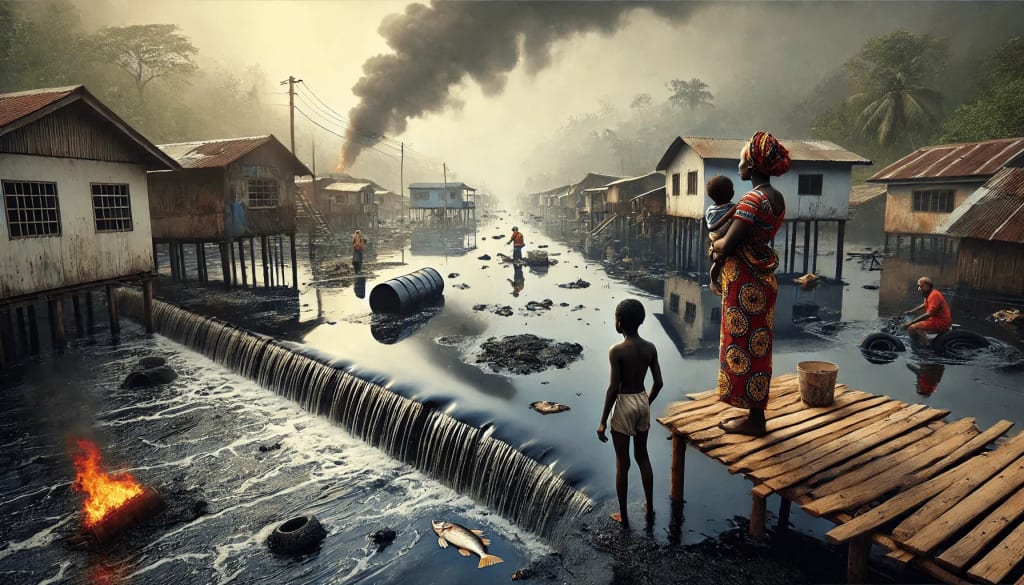
The River That Speaks No More
There was a time when the waters of Warri spoke. They whispered to fishermen about the best spots to cast their nets. They told mothers when the tides were changing. They carried children’s laughter as they splashed in the creeks, carefree, fearless. But today, the rivers of Warri are silent. Thick with oil. Choked by plastic. And when they do speak, it’s not with joy — it’s with the cough of a child battling the fumes of a burning pipeline, or the cry of a mother watching her home swallowed by the floodwaters.
Welcome to Warri, where the land is rich, but the people are struggling. A city where oil flows beneath the soil, yet clean water is scarce. Where development is promised, but destruction arrives first.
This is not just an environmental crisis. It is a war — a war that is killing the dreams of our youths, stealing the strength of our mothers, and poisoning the future of our children.
The Price of Black Gold: When Oil Turns Against Its People
Oil is supposed to be a blessing. In Dubai, it built skyscrapers that kiss the sky. In Norway, it created a wealth fund for future generations. But in Warri, oil has become a curse.
Let’s talk facts. Nigeria is the largest oil producer in Africa, and Delta State is one of its most oil-rich regions. But how much of that wealth finds its way to the people who live on this land?
Every year, thousands of barrels of crude oil spill into our rivers and farms. The air thickens with soot. Fishermen go home empty-handed. Farmers watch their crops die. And the people? They breathe in toxins and drink contaminated water.
Take Mama Alero, for example. She has lived in Warri all her life, selling fish at the market, raising four children on the little she makes. A decade ago, business was good. The river provided. But today? “No fish,” she says, shaking her head. “Only black water. No fish.”
This is the cost of oil exploration without responsibility.
The Unseen Killers: Floods and Waste That Bury Futures
Oil spills are just one side of the coin. The other side? Waste.
Drive through Warri, and you’ll see them — mountains of plastic bottles, gutters overflowing with debris, roads transformed into rivers after a heavy rain.
Flooding is no longer an occasional disaster. It is an annual event. And it is the poor who pay the price.
Here’s the reality: When the floods come, they don’t ask if your house is made of brick or wood. They don’t care if you are rich or poor. But the difference? The wealthy rebuild, the poor relocate — if they can.
A typical Warri mother — like Aunty Blessing — has no insurance, no savings, no backup plan. When the floods rise, she lifts her children onto a table and prays the water doesn’t take more than her furniture. She has seen neighbors lose everything. And she knows that next time, it could be her.
The cause? Poor drainage. Uncontrolled waste dumping. Climate change making the rains heavier than ever before.
And the solution? Ah. That’s where we hit the wall.
The Truth Nobody Wants to Say: Why Nothing Changes
Let’s be honest. This problem is not new. The oil spills, the waste, the floods — we’ve seen it all before. Every election season, politicians promise change. They talk about “environmental policies” and “sustainable development.” They hold meetings, sign papers, cut ribbons. And then?
Nothing.
Meanwhile, the people suffer.
The youth, full of dreams and potential, are forced into crime because the land that should feed them has been poisoned. The mothers, the backbone of this society, are exhausted, fighting a battle they did not start. And the children? They grow up in a world where polluted water is normal, where wearing a face mask is not just for COVID but for survival.
This is where we need to wake up.
What Must Be Done: Real Solutions, Not Empty Promises
It’s easy to blame the government. It’s easy to blame oil companies. But pointing fingers won’t clean our rivers or stop the floods.
We need real action. Here’s how:
1. Hold Polluters Accountable
Oil companies make billions off this land. They must pay to clean it. Stronger environmental laws, independent monitoring, and heavy penalties for oil spills — no more empty threats.
2. Invest in Proper Waste Management
Every bottle thrown into the gutter is a flood waiting to happen. The government must build recycling plants, enforce waste disposal rules, and create jobs around waste management.
3. Educate the People
A mother burning plastic in her backyard doesn’t know she’s poisoning her children. A youth throwing garbage into the river doesn’t see the long-term damage. We need community programs to teach environmental responsibility.
4. Push for Renewable Energy
Relying solely on crude oil is like living on borrowed time. Solar, wind, and hydroelectric power can create jobs and reduce pollution. The future is green, and Warri must not be left behind.
5. Strengthen Flood Prevention Systems
Rebuild drainage networks. Enforce building codes. Design flood-resistant infrastructure. The floods will not stop coming, but we can reduce their damage.
The Warri We Deserve
Warri’s people are strong. We have survived economic downturns, fuel scarcity, and political instability. But we should not have to survive our own environment.
The youth deserve clean water, not oil-stained rivers. The mothers deserve security, not sleepless nights fearing the next flood. The children deserve a future, not a city where breathing clean air is a luxury.
The war is not lost. But it is a war we must all fight — government, corporations, communities, and individuals. Because if we do nothing, the rivers of Warri will remain silent. And so will the dreams of its people.
The question now is: Will we fight for our land, or will we let it drown?
Omasanjuwa Ogharandukun
About the Creator
Omasanjuwa Ogharandukun
I'm a passionate writer & blogger crafting inspiring stories from everyday life. Through vivid words and thoughtful insights, I spark conversations and ignite change—one post at a time.
Keep reading
More stories from Omasanjuwa Ogharandukun and writers in Journal and other communities.
The Enigmatic Pillar Behind Dolly Parton: Unveiling the Life of Carl Dean
The Unseen Anchor in a Sea of Fame In an industry where personal lives are often as public as performances, Carl Dean stands as an anomaly. Married to one of the most iconic figures in music, he chose a path away from the limelight, crafting a narrative of love, support, and profound individuality.
By Omasanjuwa Ogharandukun11 months ago in Journal
The goals I did not achieve
Every writing goal I made for the year is a wash. It has been this way for a while, but I think it's important to be open about my failures and the reality of how life can get in the way. This is especially true considering the several times I have posted on Vocal about my writing goals, how I was changing my approach, and where I was hoping to be for the upcoming year. I will probably do that again in a couple months, but for now, it is time to acknowledge where I am today.
By Kay Husnick24 days ago in Journal


Comments (1)
Hey, just wanna let you know that this is more suitable to be posted in the Earth community 😊