
Voice Equity™: Making Inclusion Real by Centering Every Voice
"Voice Equity™ it’s about redesigning the room so more people feel safe to speak. True inclusion means building systems where every voice has the power to shape what happens next." — Sara Yahia

In too many workplaces, the loudest person in the room still gets the most airtime. Not necessarily because their ideas are better but because the system is built that way.
Voice Equity™ is about changing that.
It’s a framework for creating environments where everyone, not just the most outspoken, has a real opportunity to shape what matters. It’s not about making everyone speak the same way. It’s about ensuring that every voice has a chance to be heard, valued, and acted upon.
Why Voice Equity™ Is Needed
Let’s be honest, many people stay quiet at work. Not because they don’t have ideas but because they’ve learned their input won’t land. Maybe they were talked over. Maybe their past feedback went nowhere. Maybe the power dynamics made it feel too risky.
Even the best-intentioned leaders can miss this. It’s easy to default to the people who speak often or who sound the most confident.
Voice Equity™ challenges that default. It helps leaders identify the gap between who can speak and who feels safe doing so. It shifts us from passive inclusion to active design, creating processes that invite more people in, in more ways.
When done well, this kind of culture doesn’t just feel better; it works better. Teams are more creative, more connected, and more likely to stick around because people want to stay where their voices matter.
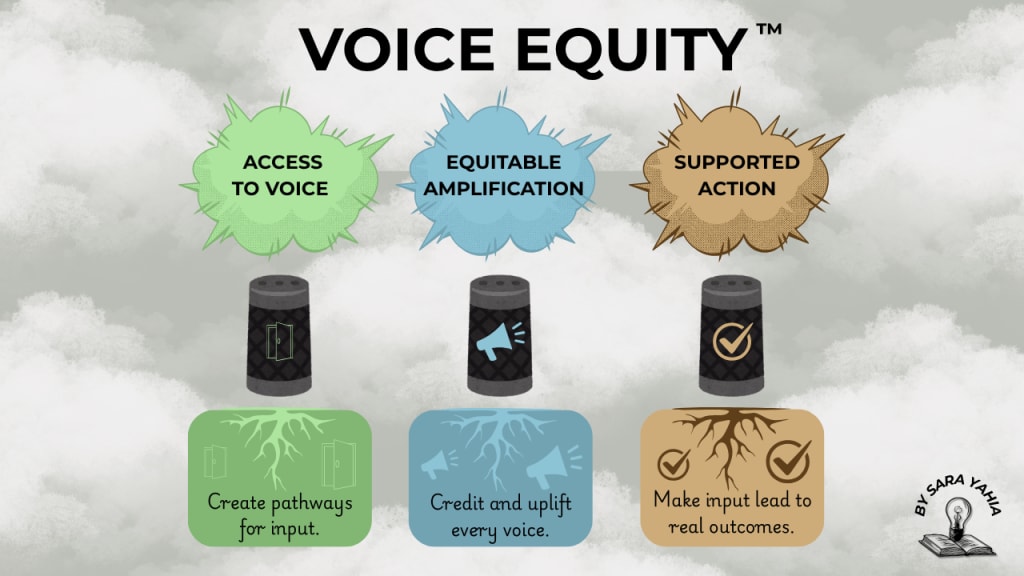
The Three Core Principles Of Voice Equity™
Access to Voice : Everyone should have a clear, comfortable path to contribute.
- Rotate who leads and speaks during meetings.
- Offer different ways to share input (written, spoken, anonymous, small group).
- Give people time to think before they respond.
It’s not about forcing people to speak; it’s about giving them the space to do so.
Equitable Amplification: If someone shares something valuable, make sure it doesn’t disappear into the air.
- Repeat and highlight ideas from folks whose voices often go unnoticed.
- Credit contributions openly and by name when appropriate
- Close the loop and let people see how their input influenced decisions.
Being heard means more when it leads to something.
Supported Action: Gathering input is only the start. Real inclusion means doing something with it.
- Track whose ideas shape outcomes.
- Connect decisions back to the people who informed them.
- Use a DEI lens to identify patterns of exclusion in decision-making processes.
A voice with no follow-through isn’t equity; it’s optics.
How to Practice Voice Equity™ (In Real, Everyday Work)
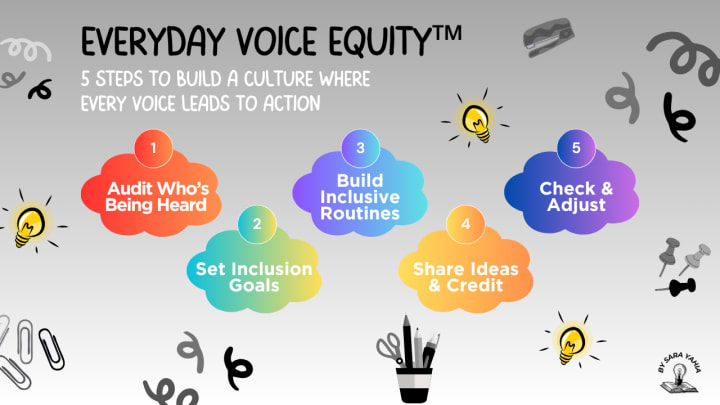
Look at Who’s Being Heard: Start with a simple audit during meetings, brainstorms, and message threads, while observing who’s speaking and who isn’t. Use pulse surveys or anonymous check-ins to get honest insights.
Set Clear Goals Around Inclusion: Treat voice equity like any other business priority. For example, aim for 75% of meetings to include visible input from at least one historically excluded voice. Track progress.
Build Inclusive Habits Into Team Routines: Try silent brainstorms. Rotate facilitators. Allow anonymous agenda submissions. These small tweaks give space to voices that might not otherwise step forward.
Share Ideas, Share Credit: Use team updates, newsletters, or even whiteboards to share who contributed what. Don’t just use the input, but highlight it. Name people. Let them be seen.
Check In, Then Adjust: Don’t assume you’ve “done inclusion.” Keep checking. Ask your team what’s working and what’s not. Partner with Employee Resource Groups (ERGs) or peer mentors to continually refine the system.
What Voice Equity™ Can Look Like
Imagine a quarterly strategy session where only a few voices usually drive the conversation. This time, the team switches it up:
- Agenda topics are submitted anonymously
- Breakout groups give everyone a chance to speak
- One team member’s job is to track key insights and make sure they’re elevated
The result? People feel seen. Input from individuals who don’t typically speak up often ends up shaping the final plan. And in the post-meeting survey, nearly two-thirds of attendees said they felt heard.
That’s Voice Equity™ in motion.
It’s not about doing more talking; it’s about building better listening, better systems, and better outcomes.
Related — Written by Sara Yahia:
Quiet Diversity: A Guide to Cultivating Introvert-Friendly Workplaces
A practical companion to the Voice Equity framework, this guide explores how to create work cultures where quieter, more reflective voices not only belong but also thrive.
About the Creator
Sara Yahia
Sara Yahia writes fearless takes on film, TV, and the HR truths no one dares to say. More Here: Website | HR Insight | All Film & TV Reviews | Romance
Keep reading
More stories from Sara Yahia and writers in Journal and other communities.
The Risk of Closed-Minded Hiring: Honest Answers to Common Questions Asked To Sara Yahia
While many hiring managers and HR leaders approach recruitment with good intentions and a clear focus on merit, it’s not unusual for unconscious biases or even personal insecurities to cloud the process. Sometimes, fear of being challenged, or discomfort with someone who breaks the mold, leads to decisions that unintentionally hold organizations back.
By Sara Yahia8 months ago in Journal
Aircraft Fuel Systems Market: What Keeps Aircraft Flying High
High above the clouds, a narrow tube of metal pushes through thinner air, carrying hundreds of souls and thousands of pounds of fuel. What most passengers never see is the intricate system of tanks, pumps, valves, and sensors that deliver energy from ground to cruising altitude.
By james robert8 days ago in Journal




Comments
There are no comments for this story
Be the first to respond and start the conversation.