
Virtual Reality – The New Medium for Everything
Unveiling a World Beyond: Exploring Virtual Reality's Boundless Potential

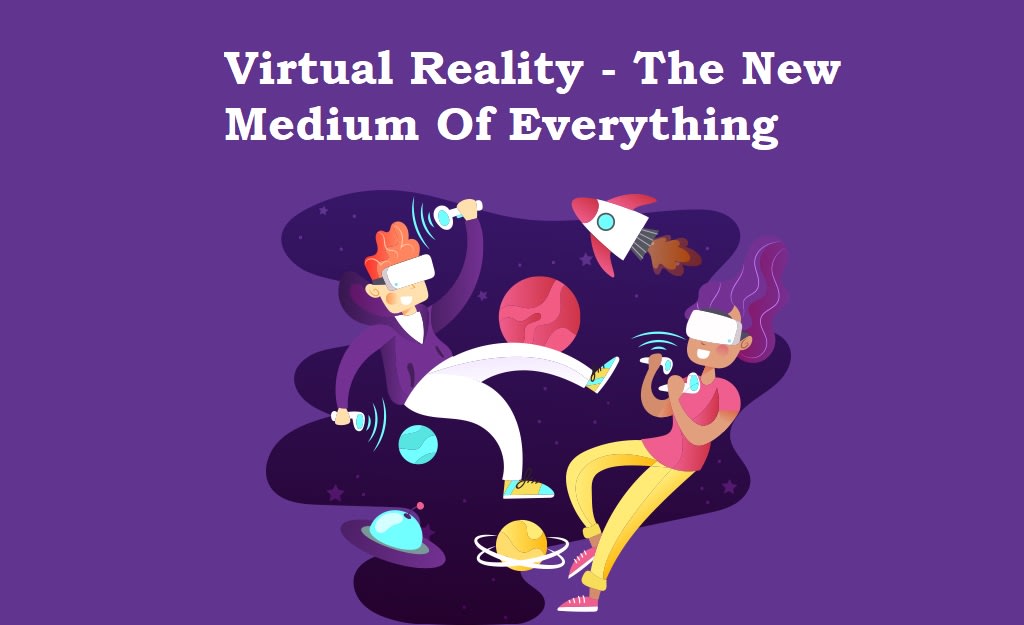
Despite being around for a while, virtual reality has only recently gained traction in mainstream media. Computer-generated simulations of three-dimensional environments can be manipulated using specialized equipment, such as VR headsets, haptic gloves, and motion trackers. Technology like this has the potential to revolutionize the way we consume media, learn, and even work.
The entertainment industry is one of the primary applications of VR. In VR, users experience things they may not be able to experience in real life by immersing themselves in a simulated world. By using VR, users can travel to another time period, location, or even universe. A number of immersive games, movies, and music videos have already been created with this technology. Users can also socialize with others in a virtual environment with social VR platforms, such as VRChat and Rec Room.
In addition to entertainment, VR can transform education as well. Students can better comprehend complex subjects by interacting with immersive simulations of historical events, scientific concepts, and engineering principles. Medical students, for instance, can practice surgical procedures without using cadavers using VR. Students can also take virtual field trips to historical landmarks, museums, and even other countries using VR. People who cannot physically travel to these locations can also access education via this technology.
Workplace VR is another application of VR. In recent years, remote work has become more common, and VR can improve its effectiveness. Meetings can be held virtually, projects can be collaborated on, and even the office can be viewed virtually. Simulating construction processes, training employees on new equipment, and designing products can also be done using this technology.
While VR has many benefits, there are still challenges to overcome. VR equipment is still relatively expensive, and not everyone can afford it. Moreover, VR is still in its infancy, so more content creators are needed to produce high-quality VR experiences. Additionally, there are concerns about motion sickness and eye strain associated with prolonged VR use.
DEVELOPMENT OF VIRTUAL REALITY: HOW TO START?
A virtual reality experience involves interacting with a simulated environment. Virtual reality headsets or head mounted displays are mostly used by users.
Virtual reality development requires a particular skill set and patience to create virtual environments. Video games, media, television, and entertainment can all benefit from these skills. There are many other uses for virtual reality, including business, education, healthcare, and more. Getting started with virtual reality development can be accomplished in a few different ways.
1. Establish a strong foundation
To Start by engaging with apps or games to get the most out of virtual reality. In addition to studying virtual reality development projects, students can also study what makes them successful. Training in practical areas such as product design, video game design, 3D modeling, animation, and design theory allows students to develop fluency in these fields. C# is useful for programming.
To put it another way, it's vital to become familiar with the technologies that support virtual reality development. Carmatec's virtual reality workshops provide students with a great opportunity to learn about the technology. Students at film schools learn how to tell compelling virtual stories in this burgeoning field by studying VR.
2. Decide on a platform and master it
Students can experiment with VR on a variety of platforms. Students do not require VR hardware to start creating games on Unity, one of the most popular platforms. Additionally, it can be downloaded for free.
The Unreal Engine is another option. Create a prototype using Google Cardboard and a Cardboard Viewer for Mobile VR. VR developers can also use WebVR as an entry point. The emergence of a 3D, immersive internet is predicted by many media companies and forecasters. VR devices will likely become more accessible and affordable as more content is developed for the 3D web.
3. Utilize free resources to the fullest extent possible
In addition to Unity's own virtual reality tutorials, there are plenty of online virtual reality courses available. As soon as the prototype is ready, add appropriate sound and art to make the experience as immersive as possible. The gyro and accelerometer sensors in mobile phones, as well as image processing and speech recognition, can also be helpful.
4. Keep up to date with the latest VR developments
Virtual reality is a constantly evolving field, and students can gain more experience by exploring it more. Keep up with the latest developments in virtual reality if you want to pursue creative goals in this field.
Follow the latest news about virtual reality, listen to virtual reality podcasts, and read interesting articles about the subject. There will always be new things to learn in the VR industry, as it is still in its infancy.
What Is VR Software?
VR Software is used to create immersive, simulated 3D environments. A suite of VR software development tools is used by teams to bring together all their digital elements.
VR vs. AR: What's the Difference? How do MR and XR differ?
Where do virtual reality, augmented reality, mixed reality, and x-ray differ?
VR (virtual reality) transports the user into a new environment, often through goggles. By shutting out the physical space, users are able to experience a new digital world - whether it's real or not.
Adding digital elements to the real world is what augmented reality (AR) is all about. Do you remember the Pokémon Go craze? In this game, people were able to travel around physically in order to collect virtual creatures. AR and VR are combined in mixed reality (MR), allowing real-world objects to interact with digital ones.
Extended reality (XR) is an umbrella term that encompasses all three terms. Technology that enhances all senses is included in this category.
How Virtual Reality Software Works?
In virtual reality, a new world is created by:
● Creating 3D objects in a virtual environment.
● Sensory feedback can be added to create a sense of presence, such as sound or haptic feedback.
● Engaging the user in interactive elements.
The level of immersion provided by software development tools determines how well they work. There are three types of VR tools: software development kits (SDKs), build tools (like game engines), and content creation/management tools.
Discover free tools for building VR experiences and deploying them (on-premises or in the cloud). The Perforce platform integrates with everything your teams need to get started.
What Software Is Used for Virtual Reality?
It must not only look real, but feel real as well. This can be accomplished with virtual reality software development tools. A few virtual reality programs are free to download.
The Software Development Kit (SDK)
A SDKs are sets of software tools and programs that are used to develop software for specific platforms. A library may include samples, guides, tutorials, blueprints, and samples of processes.
It is the VR SDK you select that determines what hardware your users will need to use your VR software. Researching options and determining the best fit for your product is important. The following are some of the most popular SDKs for VR software development:
HTC Vive
HTC Vive and other VR headset-related devices are supported by OpenVR SDK, an open-source VR software development kit. In addition to SteamVR SDK and VRTK (Virtual Reality Tool Kit), HTC Vive also uses VRTK (Virtual Reality Tool Kit). Besides controllers, chaperoning, and models, these offer previews in Unity's play mode as well as access to controllers, chaperoning, and models.
Sony Playstation
A PSVR Dev Kit and registration as a developer are required to develop for the Sony PlayStation VR. In addition to 360-degree vision and incredible visuals and audio, this VR SDK has enhanced tracking capabilities as well.
Oculus/Samsung
Oculus SDK includes game engine-specific kits for Oculus Rift, considered to be the best SDK for Oculus Rift. A variety of sample assets are also included, as well as audio packages. Supporting SDKs are also available for Windows and Oculus Mobile. C/C++ tools and libraries are included in the Oculus Mobile SDK for Samsung GearVR.
Cross Platform SDKs
Developed for the Google cardboard VR headset, the Google VR SDK works with the Google VR SDK. However, it also offers a wide range of development tools that can be used to create VR applications. In addition to Oculus Go and Rift, HTC Vive and Vive Pro, Google Daydream, and Lenovo Mirage, Amazon Sumerian works with many popular VR platforms. Besides being compatible with iOS and Android devices, it is also compatible with desktop computers.
Game Development Engines
The development of VR software requires game engines. By using a game engine, you can integrate all your assets and edit 3D elements in a powerful way. With them, you can create realistic visuals and experiences using tools from artists and designers as well as CAD software.
Unreal Engine 4
A powerful set of VR software development tools is available with Unreal Engine 4 (UE4). There are many VR technologies that it works with. You get the following with UE4:
● For customizing the tool, you have access to scripts written in C++ and/or Python.
● A flexible editor combined with a multiplayer framework.
● Prototyping is made easier with blueprint visual scripting.
Unity
Unity is a well-known game development company specializing in mobile games. However, it is also useful for designing VR solutions. Due to its compatibility with all popular VR platforms, teams across industries have used it for training and simulation. You get the following with Unity:
● 3D editor with powerful features.
● Support for CAD tools as well as built-in artist and designer tools.
● Streamline your process with collaboration features.
CRYENGINE
Game developers are familiar with CRYENGINE. However, it is also a powerful tool for developing VR software. It is compatible with a variety of platforms. CRYENGINE offers the following features:
● Characters can be created with stunning visuals.
● With their sandbox tools, you can use a VR app.
● Designed with built-in audio solutions for a truly immersive experience.
Content Creation
Design visualization and interactive creation require modeling and rendering software such as 3ds Max and Maya. Teams can create 3D animations, textures, and effects with these tools. Motion graphics can also be created with Maya. The software is used to render 3D images, model 3D objects (data or visual), and shade 3D models.
Data Management
VR app development requires a tool to manage all the digital assets and store iterations efficiently. This solution is version control, which is used in many VR projects.
The version control system allows you to store and manage all of your files. It is even possible to version your builds and other large binary assets with the right system. Think of version control as the foundation of your business. Your team can then collaborate seamlessly using all other VR software development tools or you can hire dedicated developers for the same.
CONCLUSION
We believe that Virtual Reality will be a game-changer in many areas of our lives. VR is likely to become more integrated into our daily lives as technology and content creators continue to improve. As we look forward to the future, we can look forward to seeing what new applications will emerge.
About the Creator
Nikhil Singh
A passionate tech enthusiast and occasional writer, fueled by an insatiable curiosity for the world of technology. With a deep-rooted love for all things tech.
Keep reading
More stories from Nikhil Singh and writers in Journal and other communities.
JavaScript vs. Java: Unraveling the Confusion
JavaScript and Java, despite their similar names, are two distinct programming languages with separate use cases and ecosystems. This article aims to clarify the differences between JavaScript and Java, helping you choose the right language for your specific needs.
By Nikhil Singh2 years ago in Journal
The Politics of Playing Dress-Up
Well, to start off I'd like to say a happy world book day to all who celebrate. I know I haven't really posted anything on my socials about it but I'm not a jubilant kind of person. I lay low most of the time. Let's start off with a popular anecdote from the vaults...
By Annie Kapur6 days ago in Geeks



Comments
There are no comments for this story
Be the first to respond and start the conversation.