
Veterans Day and the Quiet Strength of Remembering Togethers
Every year, on a crisp November morning, flags rise quietly across towns. Children line sidewalks, old soldiers stand in silence, and the air fills with a mix of pride and sorrow

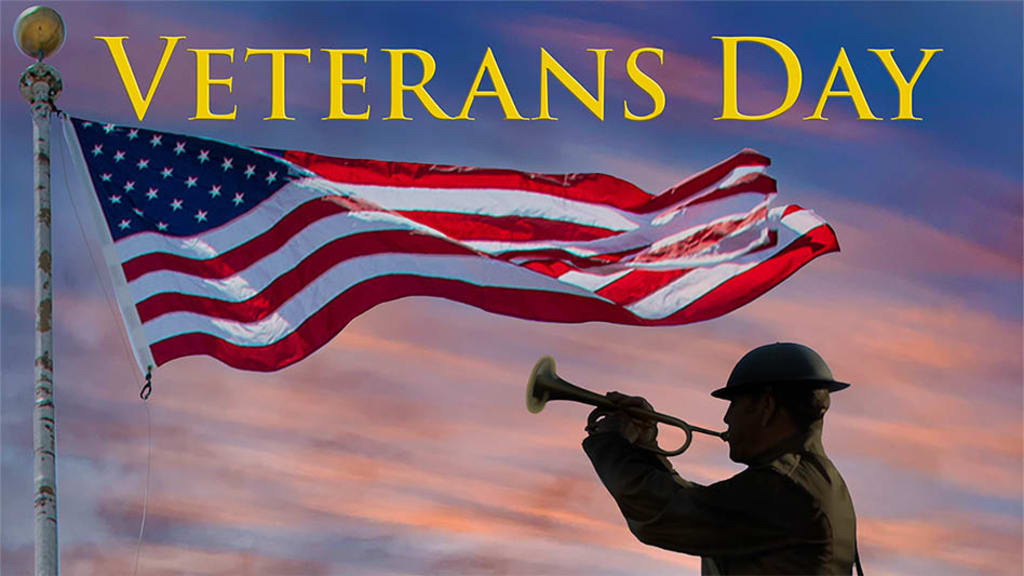
Every year, on a crisp November morning, flags rise quietly across towns. Children line sidewalks, old soldiers stand in silence, and the air fills with a mix of pride and sorrow. Veterans Day is more than a national holiday it’s a living reminder of sacrifice, endurance, and the unspoken cost of freedom. Behind every uniform lies a story not of war alone, but of humanity, resilience, and love for a home they chose to protect. Yet as time passes, remembering isn’t just about ceremonies; it’s about connection about truly seeing those who have served and hearing the stories they rarely tell. This is a reflection on Veterans Day, its meaning, and why remembering together still matters deeply in a world that often forgets to pause.
The True Meaning of Veterans Day
Veterans Day, observed on November 11 each year, honors all who have served in the United States Armed Forces. It began as Armistice Day, marking the end of World War I in 1918. The original intent was to celebrate peace, to remember the moment guns fell silent after years of devastation. But as new conflicts arose and generations of Americans took up service, the day expanded into something larger a recognition of every man and woman who has worn the uniform.
Unlike Memorial Day, which honors those who died in service, Veterans Day is for the living. It’s for the soldiers who returned home and carried their battles inward.
The Faces Behind the Uniform
When we say “veteran,” the image often feels distant someone from a textbook, a monument, or a news clip. But in truth, veterans are everywhere. They are teachers, nurses, truck drivers, and small business owners. They are parents at school events, grandparents who never speak of the past, and young men and women still adjusting to civilian life.
Take, for example, a soldier who served overseas and now works as a firefighter. His discipline on the battlefield translates into calm under pressure at home. Or the woman who flew helicopters in the Middle East and now volunteers with youth programs, teaching leadership through kindness. These are real veterans, quietly continuing their service long after the uniform comes off.
The Sound of Silence: What Veterans Carry Home
Not all wounds are visible. Many veterans return home with invisible scars memories that don’t fade easily. Some struggle to adjust to civilian routines after years of discipline and structure. Others battle anxiety, sleepless nights, or guilt over those left behind.
These are the parts of service that aren’t in parades or speeches. Yet they are as real as medals and flags. Veterans Day offers a space, however brief, to acknowledge this silence.
Imagine standing in a quiet crowd as the national anthem plays. Somewhere near you might be a man who hasn’t spoken about his deployment in decades. His posture is straight, his face unreadable. But inside, he’s remembering a friend who never came back.
Remembering Through Generations
Every generation experiences war differently. For older Americans, Veterans Day brings memories of World War II or Korea of ration cards, telegrams, and black-and-white photographs. For others, it recalls the jungles of Vietnam or the deserts of Iraq and Afghanistan. Each era has its own stories, its own pain and pride.
What binds them together is remembrance. The child holding a flag at a parade may never fully understand what it means to serve, but through stories and respect, they inherit the gratitude that keeps memory alive.
Sharing stories matters. When veterans speak, even softly, they give younger generations the gift of perspective. They remind us that freedom isn’t abstract it’s built on real lives, real families, real choices
Teaching the Young the Value of Service
In schools across the country, Veterans Day is marked by assemblies and classroom talks. But beyond songs and flags, there’s a deeper lesson to teach: that service isn’t just about military duty it’s about commitment to something greater than oneself.
Children can learn from veterans not just about war, but about endurance, teamwork, and compassion. A veteran talking to students about resilience can plant seeds of courage that grow far beyond that one day.
It’s easy to forget that honoring veterans isn’t about glorifying conflict. It’s about celebrating the human spirit’s ability to endure, to heal, and to give.
Small Acts of Gratitude That Matter Most
We often think gratitude needs to be grand a speech, a ceremony, a flag display. But the truth is, most veterans remember the small gestures. A simple thank you. A handshake. A letter from a child.
Those moments tell them that their sacrifices haven’t been forgotten.
Communities can make Veterans Day meaningful without extravagance. Visiting a nursing home to talk with aging veterans. Donating to organizations that help with housing or therapy. Offering free meals or rides to appointments. These gestures don’t fix everything, but they remind veterans they’re seen and valued.
The Women Who Served: Stories Often Untold
For decades, women’s service in the military was overlooked. They worked as nurses, pilots, analysts, and front-line leaders, yet history often wrote their roles in small print. Veterans Day gives space to their stories too.
Think of the women who flew supply planes across dangerous skies in World War II, or the medics who saved lives in Iraq. Their courage matched that of any soldier, though their recognition came late. Today, more women than ever serve in active roles, balancing the same risks and responsibilities as their male counterparts.
When we thank veterans, we thank them all those in combat boots, those behind intelligence screens, those who returned home to raise families or continue serving in civilian life.
Families :The Silent Veterans
Behind every veteran is a family that served in its own way. The spouse who endured long absences. The parents who watched their child board a plane, hoping for their safe return. The children who learned to be brave by example.
Veterans Day is also their day. Their quiet waiting, their strength, and their sacrifices deserve recognition.
Families often carry the unseen emotional toll of service. When a soldier comes home, the adjustment belongs to everyone. That’s why community understanding matters because healing is not an individual process; it’s shared.
Healing Through Connection and Conversation
For many veterans, isolation is one of the hardest challenges after service. They return to a world that feels changed where few understand what they’ve seen. Veterans Day offers a chance to bridge that distance, to reach out and simply listen.
Sometimes healing begins with a conversation. Sitting across from a veteran and asking about their experiences without judgment, without interruption can mean more than grand ceremonies. It tells them they’re not forgotten.
Local gatherings, storytelling nights, and veterans’ coffee meetups have become quiet sanctuaries. In those spaces, men and women who’ve seen the worst of humanity remind each other and us that kindness still exists.
The Power of Collective Memory
As time moves forward, fewer people personally know a veteran from earlier wars. That makes collective memory even more important. Memorials, monuments, and local tributes aren’t just stone and ceremony they’re anchors to truth.
When people gather every November, the ritual of remembrance connects generations. The sound of a bugle, the folding of a flag, the soft hum of a crowd all of it reminds us that gratitude must be practiced, not assumed.
In towns big and small, from parades to moments of silence, Veterans Day becomes a shared act of remembering. It says, “We see you. We haven’t forgotten.”
Why Remembering Together Still Matters
Modern life moves quickly. News cycles fade, and social media scrolls past even the most heartfelt tributes. But Veterans Day endures because it’s about presence slowing down to acknowledge something permanent.
Remembering together restores a sense of unity. In a divided world, gratitude is one of the few languages that still unites people. When a community stands side by side, hands over hearts, differences dissolve for a moment. All that remains is respect for those who served, and a shared recognition of what they gave up.
Looking Forward :The Future of Veterans Day
As younger generations of veterans return from service, Veterans Day continues to evolve. Today’s soldiers face new challenges: reintegration into civilian work, access to healthcare, and the constant adjustment from combat to calm.
The way we honor them must evolve too. Beyond annual events, there’s a growing effort to support veterans year-round with education opportunities, community programs, and mental health services.
True respect means not just thanking them once a year, but standing beside them throughout their lives. Veterans Day can be a reminder to act, to give back, and to ensure that no one who served feels forgotten once the parades end.
A Promise to Keep
The promise of Veterans Day is simple: never forget. Never forget the cold nights in distant places, the letters that went unread, the years lost to service and recovery. Never forget that freedom is carried on the backs of ordinary people who did extraordinary things.
We keep that promise not through ceremony alone, but through how we live how we treat others, how we listen, and how we care for those who once carried our flag.
Final Reflections: Gratitude Beyond Words
Veterans Day is not only a date on the calendar. It’s a reminder that gratitude should be a habit, not a headline. It asks us to live with awareness to see the quiet strength in those who have served and to honor them through empathy and action.
When we stand in silence, we are not only remembering the battles fought, but also the peace preserved. When we thank a veteran, we are saying, your story matters.
So this November, pause a little longer. Say thank you not just with words, but with understanding. Listen to the stories. Carry them forward. Because remembrance, at its truest, is not about the past it’s about keeping humanity alive in the present.
About the Creator
Muqadas khan
Hi! Welcome to my Vocal page. I’ll be sharing fresh articles every day covering stories, ideas, and a bit of inspiration to brighten your feed. Thanks for reading and supporting daily writing! 📖💫
Keep reading
More stories from Muqadas khan and writers in Journal and other communities.
The Quiet Magic of the Starbucks Bearista Cup: Why Everyone Wants One
It started like any other winter release Starbucks unveiled a new cup, a limited-edition design meant to celebrate the season. But this one, the Starbucks Bearista Cup, became something different. Within hours, people were lining up, posting pictures, and sharing stories of joy and disappointment. Some found one and held it with pride; others searched store after store, their hearts sinking at the words “sold out.”
By Muqadas khan4 months ago in Journal
Author’s Advice
If you would’ve asked me 20 years ago did I know I’d become a writer and an author, I would’ve said “nope, ain’t happening”. As fate would have it I did become an author and I can honestly say I’m loving it so far. It really does feel good to be a writer. I’ve learned a lot on this journey and I feel like with even me being as new to this world as I am, there’s some wisdom I need to share with every other aspiring author.
By Joe Patterson3 days ago in Journal




Comments
There are no comments for this story
Be the first to respond and start the conversation.