
Ustad Karamatullah Khan: Remembering a Legend of the Farukhabad Gharana
A tribute to the Farukhabad gharana maestro whose artistry shaped generations of tabla players.

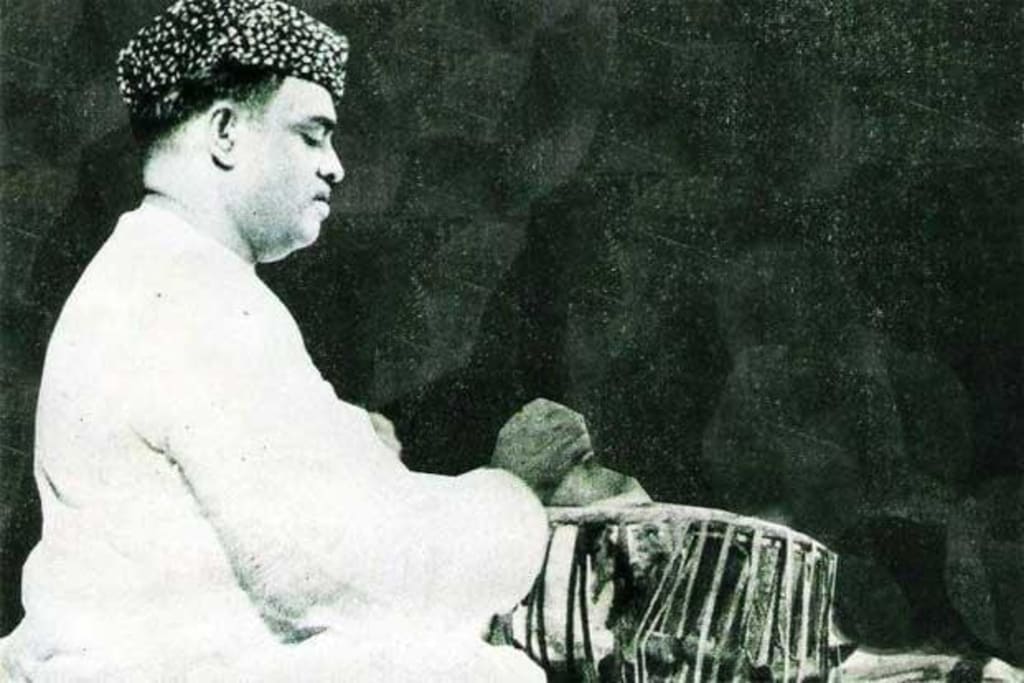
In the vast landscape of Indian classical music, certain names linger in the air long after they are gone, spoken with warmth by students, recalled with awe by fellow artists, and rediscovered by listeners who come across a rare recording. Ustad Karamatullah Khan is one such figure. A towering tabla maestro of the Farukhabad gharana, he is surprisingly under-documented, with only scattered references online and the occasional anecdote preserved by disciples and admirers. Yet his music, for those who have heard it, leaves no doubt about his stature.
Karamatullah Khan belonged to a distinguished musical lineage. His father, Ustad Masit Khan, was one of the most celebrated exponents of the Farukhabad style in the early twentieth century. Masit Khan performed with some of the most revered musicians of his era, including Ustad Fayyaz Khan, Hafiz Ali Khan, Enayat Hussain Khan and Wazir Khan. He played a central role in bringing the Farukhabad style to West Bengal, where it took root and flourished. Through his teaching, he shaped an entire generation of performers, including Pandit Jnan Prakash Ghosh, Rai Chand Boral, Montu Bannerjee, Kanai Dutta and his own son, Karamatullah.
While Masit Khan laid the foundation, it was Ustad Karamatullah Khan who created an identity that blended deep traditional training with a spirit of innovation. Musicians who worked with him often spoke of his versatility and his ability to accompany vocalists, instrumentalists and dancers with equal confidence. At a time when tabla accompaniment was becoming more nuanced and technically demanding, Khan Saheb expanded the expressive possibilities of the instrument while remaining firmly within the discipline of the gharana. His contribution was recognised nationally when he received the Sangeet Natak Akademi Award.
For today’s listeners, one of the clearest windows into his artistry is a treasured recording on YouTube, set in teental, the sixteen beat cycle that forms the backbone of much of Hindustani music. What makes this performance so captivating is not only the clarity of his stroke but also the character he brings to every phrase. After an opening composition that sets the depth of the Farukhabad tradition, Khan Saheb moves into a chellan with a gentle folk like sway. It is a rhythmic idea familiar to some through other lineages as well. Also, Abhiman Kaushal, has played it with the same graceful feel. It floats almost magically between chatusra, or fours, and tisra, or threes, creating a swing that feels both rooted and playful.
He follows this with a rela crafted in tisra jati, the rapid three unit subdivision that gives tabla passages a distinctive galloping energy. The clarity with which he shapes each phrase shows a rare combination of speed and softness. The playing is fast, yet never rushed. It is lively, yet never harsh. Then comes another unusual rela, this time built around the phrase dhera dhera, articulated with such precision that each repetition feels like a brushstroke in a larger rhythmic painting.
The recording concludes with yet another rare composition, the kind that reminds listeners how much of the tabla’s traditional repertoire still lives through oral transmission. For students of percussion, this performance is more than a showcase. It is a reminder of the depth of the Farukhabad gharana and of the individuality each maestro brings to it.
In an age when digital archives grow every day, the lack of detailed writing on Ustad Karamatullah Khan feels surprising. Yet perhaps his legacy survives in the way great classical traditions often do, through sound, memory and the admiration of those who continue to listen. His music, preserved in fragments and recordings, invites us to look closer, not only at his life but also at the history of the tabla. For that, he will indeed be remembered for generations to come.
Karamatullah Khan’s musical legacy continued through his family. His son, Ustad Sabir Khan, emerged as a leading representative of the Farukhabad gharana in his own right, carrying forward the technical clarity and compositional depth associated with the lineage. The tradition has since passed to the next generation as well, with his grandsons Asif Khan, Ariff Khan and Ameen Khan all active as tabla players and torchbearers of the gharana’s repertoire. Their work ensures that the stylistic identity shaped by Masit Khan and refined by Karamatullah Khan remains a living and evolving tradition.
About the Creator
Aarohi Mehta
Aarohi is an independent journalist and art enthusiast who covers culture, creativity, and modern digital trends. She brings a fresh, expressive voice to her stories, blending clear reporting with a strong artistic perspective.
Keep reading
More stories from Aarohi Mehta and writers in Journal and other communities.
Mehtab Ali Niyazi: A Modern Torchbearer of the Bhendi Bazaar Gharana
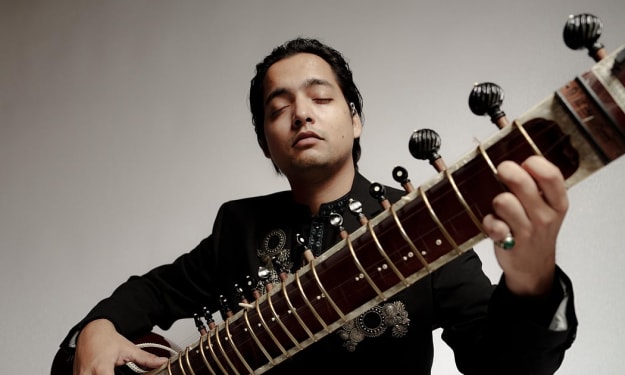
In a time when musical tastes evolve rapidly and digital trends shift every day, sitarist Mehtab Ali Niyazi has carved a distinct place for himself. He remains deeply connected to the traditions of the Bhendi Bazaar Gharana of Mumbai while also engaging a new generation of listeners who are discovering classical music through fresh and inviting formats. As a seventh generation musician, he carries the weight of a remarkable legacy yet expresses it with a voice that feels current and sincere.
By Aarohi Mehta4 months ago in Journal
Author’s Advice
If you would’ve asked me 20 years ago did I know I’d become a writer and an author, I would’ve said “nope, ain’t happening”. As fate would have it I did become an author and I can honestly say I’m loving it so far. It really does feel good to be a writer. I’ve learned a lot on this journey and I feel like with even me being as new to this world as I am, there’s some wisdom I need to share with every other aspiring author.
By Joe Patterson5 days ago in Journal
8 Things You Should Do Now to Prepare for War or Major Global Conflict
War is something many people assume will always happen somewhere else. But recent global tensions — from cyber warfare to drone attacks and escalating geopolitical conflicts — have made many people wonder how prepared ordinary civilians really are.
By Navigating the World4 days ago in Journal



Comments