
US Reports First Human Case of Flesh-Eating Screwworm
What You Need to Know

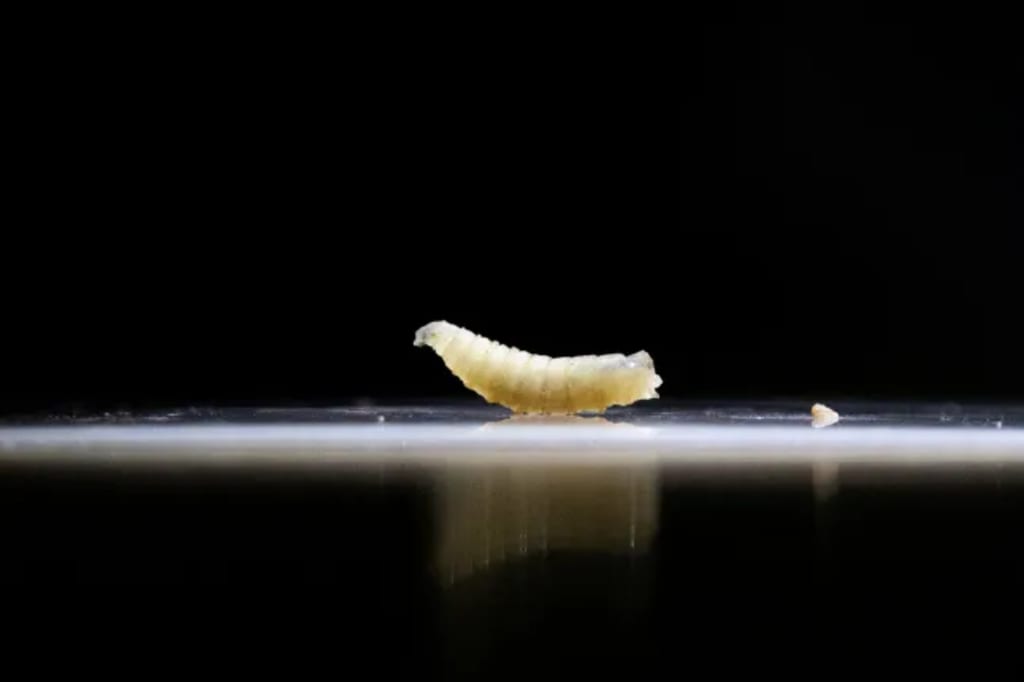
On August 24, 2025, U.S. health authorities confirmed something that sounds like it belongs in a horror movie: the first-ever reported human case of New World screwworm in the United States.
The announcement, made by the Maryland Department of Health in partnership with the Centers for Disease Control and Prevention (CDC), has set off ripples of concern—not only among public health experts but also in the agricultural sector, where the parasite has historically wreaked havoc.
But before panic takes root, let’s break down what this means for everyday Americans, for farmers, and for global health.
What Exactly Is the Screwworm?
The New World screwworm (Cochliomyia hominivorax) is a parasitic fly species notorious for its gruesome feeding habits. Unlike typical maggots that feed on dead tissue, screwworm larvae target living flesh.
Here’s how it works:
Female screwworm flies lay eggs in open wounds of warm-blooded animals (and rarely humans).
Within hours, the eggs hatch into larvae.
These larvae burrow into the wound, screwing deeper into tissue as they feed.
The process is excruciatingly painful and, if untreated, can be fatal.
The name “screwworm” comes from the larvae’s corkscrew-like burrowing motion—a disturbing detail that highlights how difficult they are to remove once inside tissue.
The First U.S. Human Case: What We Know
The reported case involved a patient in Maryland who had recently returned from El Salvador, a region where screwworm is still present. According to officials, the infection was identified quickly, treated aggressively, and contained.
Andrew G. Nixon, spokesperson for the U.S. Department of Health and Human Services, emphasized:
“The risk to public health in the United States from this introduction is very low.”
Still, this marks a historic first: while screwworm infestations have devastated animals in the past, this is the first documented human case inside U.S. borders.
Why Livestock Experts Are Alarmed
While human cases are extremely rare, the livestock industry has long recognized the screwworm as one of its greatest threats.
In untreated cattle, screwworm infestations can kill animals within one to two weeks.
Female flies lay up to 300 eggs at a time, and multiple infestations are common.
If re-established in U.S. herds, screwworm could cause billions of dollars in losses.
In fact, the U.S. Department of Agriculture (USDA) estimates that a screwworm outbreak in Texas alone could drain about $1.8 billion from the economy. That figure doesn’t even account for the ripple effects on meat exports, jobs, and rural economies.
A Look Back: How the US Once Defeated Screwworm
This isn’t America’s first dance with the parasite.
Screwworm was a serious problem in U.S. livestock throughout the early 20th century.
By the 1950s, infestations were causing widespread losses in southern states.
The USDA pioneered the Sterile Insect Technique (SIT)—a game-changing solution.
Here’s how SIT works:
Scientists rear millions of screwworm flies in labs.
Males are sterilized using radiation.
These sterile males are released into the wild.
They mate with wild females, but no offspring result.
Over time, this drastically reduces the screwworm population. Thanks to this program, the U.S. was declared screwworm-free by 1966.
Why Are Screwworms a Threat Again?
If the U.S. already eradicated screwworm, why is it resurfacing? The answer lies in globalization and climate change.
Travel & Trade
The Maryland case proves that people (and possibly pets or livestock) traveling across borders can accidentally reintroduce the parasite.
Warming Temperatures
Scientists warn that climate change is expanding the habitat of tropical parasites like screwworm.
Warmer U.S. regions (Texas, Florida, southern California) may become more suitable breeding grounds.
Wildlife Movement
Migratory animals and cross-border livestock trade increase the risk of spread from Central and South America, where screwworm remains endemic.
The Response: Containment and Prevention
To counter this threat, U.S. authorities are mobilizing quickly.
Sterile Fly Facility in Texas
Agriculture Secretary Brooke Rollins announced plans for a new sterile fly production facility. This facility will mass-produce sterilized males to protect U.S. borders and prevent outbreaks.
Surveillance
The USDA is increasing inspections at ports, airports, and livestock entry points.
Public Awareness
Farmers, veterinarians, and pet owners are being urged to monitor wounds in animals closely. Early detection is key.
Symptoms of Screwworm in Humans
Although rare, knowing the signs of screwworm in humans is critical.
Painful wounds that worsen instead of healing
Swelling and pus, sometimes with foul odor
Movement in the wound (larvae visible in severe cases)
Fever and malaise if infection spreads
Treatment involves:
Careful removal of larvae (often under anesthesia).
Disinfection and wound care.
Antibiotics to prevent secondary infections.
Why This Matters Globally
This isn’t just an American problem. Screwworm infestations are still a major challenge in parts of South America, Central America, and the Caribbean.
Global health experts argue that outbreaks highlight the need for:
Stronger international surveillance networks.
Cross-border collaborations (the sterile fly method works best when entire regions participate).
Climate-focused health strategies, since warming patterns will increase outbreaks.
SEO-Focused FAQ
1. Is screwworm dangerous to humans?
Yes. While rare, untreated infections can be fatal due to tissue destruction and secondary infections.
2. How do humans get screwworm?
From exposure to infected flies, usually through open wounds during travel in endemic regions.
3. Can pets get screwworm?
Absolutely. Dogs and livestock are more vulnerable than humans. Pet owners returning from Central or South America should check their animals carefully.
4. Can screwworm spread in the U.S.?
Currently, the risk is low. The U.S. has robust prevention programs, but climate change and international travel increase the chances of reintroduction.
5. How was screwworm eradicated before?
Through the Sterile Insect Technique, where millions of sterilized male flies were released to collapse populations.
Conclusion: A Warning and a Reminder
The first human case of screwworm in the U.S. is not just a medical curiosity—it is a warning sign.
It reminds us of three truths:
Global health is interconnected. A parasite in El Salvador can appear in Maryland within days.
Climate change is reshaping disease landscapes. What was once “tropical” may soon be local.
Preparedness works. America defeated screwworm once before, and with vigilance, it can prevent resurgence.
For now, health officials assure the public that the risk remains very low. But as history shows, vigilance is everything when dealing with parasites that literally eat flesh.
About the Creator
Omasanjuwa Ogharandukun
I'm a passionate writer & blogger crafting inspiring stories from everyday life. Through vivid words and thoughtful insights, I spark conversations and ignite change—one post at a time.
Keep reading
More stories from Omasanjuwa Ogharandukun and writers in Journal and other communities.
The Emergence of Itsekiri Youths
In the last decade, something remarkable has been brewing in the Niger Delta, far from the skyscrapers of Lagos and the political echo chambers of Abuja. The Itsekiri youth—once dismissed as passive spectators in national discourse—are charting a new path. What began as online conversations, memes, hashtags, and debates has now transformed into a full-scale movement for community development.
By Omasanjuwa Ogharandukun5 months ago in Journal
The Rosary and How It Leads to Christ
The Rosary is one of the most recognizable and cherished prayers in the Catholic Church. To many, it may appear as a repetitive sequence of words, beads, and Hail Marys, but in reality, it is a spiritual journey that leads the faithful closer to Christ. Praying the Rosary is not about counting prayers as if they were tokens. It is about meditation, reflection, and entering into the mysteries of salvation history through the life of Jesus.
By Sound and Spirit7 days ago in Journal
How to Succeed at the Benson Directory®
Congratulations and welcome to the Benson Directory® employee #22391! As our newest call handler, you will have the privilege of speaking with dozens of unique and interesting people on a daily basis as well as the opportunity to earn bonuses for high performance. Contained within this handbook you will find a set of ease to follow instructions designed to help you settle in to your new role and begin paving the way to success.
By S. A. Crawford4 days ago in Fiction




Comments
There are no comments for this story
Be the first to respond and start the conversation.