
US Q1 Economic Growth Falls Short of Expectations, Up by 1.1%
Analyzing the Impact of Slow Q1 GDP Growth on the US Economy and Global Trade Relations

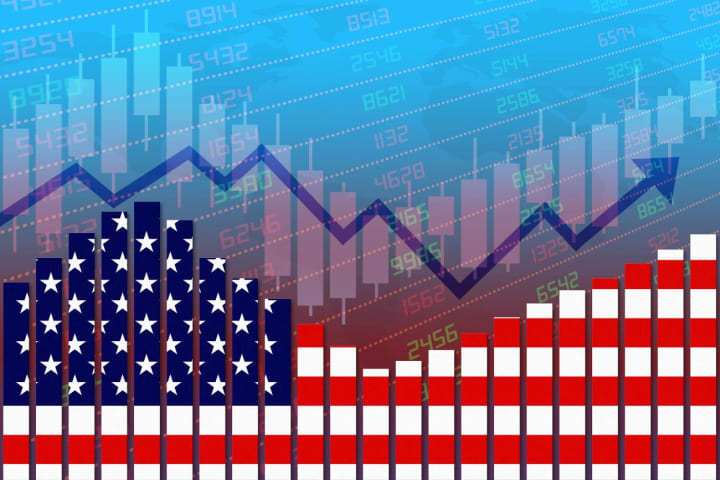
The United States' gross domestic product (GDP) is a critical indicator of economic growth, international trade, fiscal policy, investor confidence, and social welfare. On Thursday, the US Department of Commerce released the latest GDP data, revealing a growth rate of 1.1% for Q1 2023. This growth rate falls short of the expected 2%, signaling that the US economy is slowing down at a faster rate than anticipated.
The housing and business investment sectors are experiencing weakness in Q1, which can be attributed to their sensitivity to interest rates. The Federal Reserve has raised rates by approximately five percentage points since early last year, attempting to curb inflation. However, these actions have had negative effects on the growth of these sectors. This decline could also have long-term implications for the economy, as the housing market is a crucial component of the US economy.
Despite the slowdown in the housing and business investment sectors, there have been increases in consumer spending, federal government spending, exports, state and local government spending, and nonresidential fixed investment. However, these gains were offset by the drop in private inventory investment and residential fixed investment.
The news of slower-than-expected economic growth comes at a time when nations worldwide are diversifying away from the US dollar. Countries have become increasingly aware of the risks of relying on the US dollar, which is subject to fluctuations in value due to various factors, including US monetary policy. This diversification could have long-term implications for the US economy and its ability to compete globally.
The slowdown in the US economy could also impact investor confidence, which is critical to maintaining a strong economy. With the economy growing at a slower pace than expected, investors may lose confidence in the market, which could result in a decline in investment and further slowdowns in economic growth.
Despite these concerns, some economists believe that the slowdown is only temporary and that the US economy will bounce back. The increase in consumer spending is a positive sign, as it is a significant driver of economic growth. Additionally, the Federal Reserve's actions to curb inflation could help prevent a more severe economic downturn.
The US government could take further steps to stimulate economic growth. For example, they could introduce policies aimed at encouraging investment in the housing and business investment sectors. They could also increase spending on infrastructure, which would create jobs and stimulate the economy. Additionally, they could introduce policies aimed at increasing international trade, which would help boost exports and increase economic growth.
In conclusion, the US economy grew at a slower pace than expected in Q1 2023, with the housing and business investment sectors experiencing significant declines. However, there have been increases in consumer spending, federal government spending, exports, state and local government spending, and nonresidential fixed investment. While this news is concerning, it is essential to note that the slowdown is only temporary and that the US economy could bounce back. Policymakers could introduce policies aimed at stimulating economic growth, which would help prevent a more severe downturn.
In conclusion, the Q1 GDP growth of the US has been lower than expected, raising concerns about the overall health of the economy. While the rise in consumer spending and government spending has offset some of the weakness in the business investment and housing sectors, the slow growth rate can be attributed to the impact of rising interest rates and inflation concerns. The Federal Reserve's decision to raise rates has contributed to the slowing of the economy, and the trade tensions with other nations have also added to the uncertainty. However, it is important to note that the GDP growth rate is just one of many economic indicators, and a slow growth rate in one quarter does not necessarily indicate a recession or long-term economic downturn. As the US government and Federal Reserve continue to implement policies to address inflation and other economic challenges, it will be important to closely monitor the impact on GDP growth and other indicators of economic health. Furthermore, the global trade relations with other nations may play a key role in determining the future of the US economy, making it imperative for the US to negotiate trade agreements that are favorable to the country and its economic interests.
About the Creator
Top News ttok
Top News For Today
Keep reading
More stories from Top News ttok and writers in Journal and other communities.
Tyson Foods is set to eliminate 10% of corporate jobs including 15% of senior leaders
Tyson Foods Inc is one of the largest food companies in the world and has been providing chicken, beef, and pork products for over 85 years. Founded in 1935, the company has grown to be a significant player in the US and global food markets. However, Tyson's recent decision to eliminate 10% of corporate jobs and 15% of senior leadership roles has raised concerns among investors and analysts.
By Top News ttok3 years ago in Journal
The Woman Behind the Name
I used to think being known was a gift. Then I watched a woman walk into a room and become invisible the moment her husband’s name was called. One minute, she was herself—sharp-eyed, quick-witted, full of stories. The next, she was “the wife of,” a footnote in someone else’s narrative. Her degrees, her work, her dreams—all folded neatly into parentheses.
By KAMRAN AHMAD8 days ago in Journal
The Duelist
The rays of a dying red sun flashed against the onrushing blade. The grey beards say the key to dueling lies in size, speed, reach, righteous fury, whatever the person in front of them pays them to say. Matteo knew better than any it was none of these and had an undefeated record on these sands to prove it.
By Matthew J. Fromm3 days ago in Fiction


Comments
There are no comments for this story
Be the first to respond and start the conversation.