
Understanding the Benefits of Decentralized Exchange Development
Understanding the Benefits of Decentralized Exchange Development

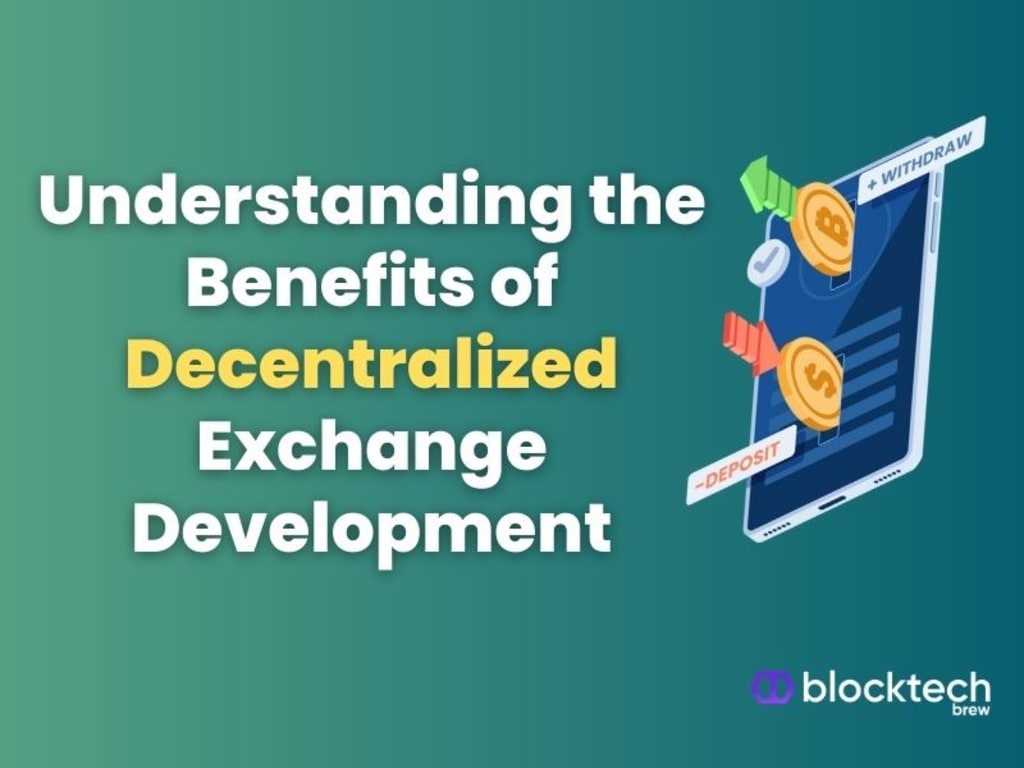
Decentralized exchange (DEX) development has gained significant attention in recent years, revolutionizing the way people trade digital assets. Unlike traditional centralized exchanges that rely on intermediaries and centralized control, DEXs operate on blockchain technology, providing users with greater security, privacy, and control over their assets. In this article, we will explore the benefits of decentralized exchange development and understand why it has become a game-changer in the world of cryptocurrency trading.
1. Introduction to Decentralized Exchange Development
Decentralized exchange development involves creating platforms that facilitate peer-to-peer trading of cryptocurrencies without the need for intermediaries. DEXs leverage blockchain technology, smart contracts, and cryptographic protocols to enable secure and trustless transactions. By eliminating the reliance on central authorities, DEXs offer several advantages over centralized exchanges.
2. Enhanced Security and Privacy
One of the key benefits of decentralized exchanges is enhanced security and privacy. Unlike centralized exchanges that store users' funds in a central wallet, DEXs allow users to retain control of their assets throughout the trading process. This reduces the risk of hacks and security breaches, as the funds are not susceptible to attacks targeting a centralized point of failure. Additionally, DEXs employ encryption techniques and anonymity features, providing users with increased privacy and confidentiality.
3. Elimination of Intermediaries
Decentralized exchanges eliminate the need for intermediaries such as brokers or custodians. Instead, they rely on smart contracts to automate trade execution and asset transfers. This direct peer-to-peer interaction reduces the counterparty risk and eliminates the possibility of manipulation or insider trading. By cutting out intermediaries, DEXs enable faster and more efficient transactions, leading to increased liquidity and market depth.
4. Increased Asset Control
With decentralized exchanges, users have complete control over their digital assets. They retain ownership of their private keys, which are required to access and manage their funds. This eliminates the risk of funds being frozen or seized by a centralized authority. Users can trade directly from their wallets, ensuring that they are always in control of their assets.
5. Global Accessibility
Decentralized exchanges are accessible to anyone with an internet connection, regardless of their geographical location. This global accessibility opens up opportunities for individuals in underserved regions to participate in cryptocurrency trading. Moreover, DEXs enable peer-to-peer trading between users from different countries without the need for complex cross-border transactions or currency conversions.
6. Lower Costs and Fees
Traditional centralized exchanges often charge substantial fees for trading and withdrawals. In contrast, decentralized exchanges significantly reduce costs by eliminating intermediaries and utilizing automated smart contracts. Users only pay minimal transaction fees required to process their trades on the blockchain network. This cost reduction makes DEXs more attractive, especially for frequent traders and individuals looking to minimize their trading expenses.
7. Transparent and Immutable Transactions
Decentralized exchanges operate on blockchain technology, which provides transparency and immutability to transactions. Every trade executed on a DEX is recorded on the blockchain, creating a public ledger that is accessible to all participants. This transparency helps prevent fraudulent activities and ensures the integrity of the trading process. Once a transaction is recorded on the blockchain, it cannot be altered or tampered with, providing users with a high level of trust and auditability.
8. Liquidity and Market Efficiency
DEXs have witnessed significant growth in liquidity, thanks to the introduction of automated market-making protocols. These protocols incentivize liquidity providers by offering them rewards for contributing funds to the exchange's liquidity pool. As a result, DEXs can offer competitive liquidity and narrower bid-ask spreads, enhancing market efficiency and reducing slippage during trading.
9. Resilience to Hacks and Downtime
Decentralized exchanges are more resilient to hacks and downtime compared to centralized exchanges. Since DEXs operate on a decentralized network of nodes, there is no single point of failure that can be targeted by hackers. Even if one node goes down, the exchange can continue to operate seamlessly. This robustness ensures that users can always access their funds and execute trades without disruptions caused by technical issues or security breaches.
10. Innovation and Token Listing Opportunities
Decentralized exchanges provide a platform for innovative projects and new cryptocurrencies to gain exposure and liquidity. Unlike centralized exchanges that often have strict listing requirements and approval processes, DEXs allow anyone to create and list their tokens. This democratization of token listing encourages innovation and provides a level playing field for both established and emerging projects, fostering a vibrant and diverse cryptocurrency ecosystem.
11. Regulatory Compliance and Self-Custody
DEXs offer regulatory compliance and self-custody features, addressing concerns related to Know Your Customer (KYC) and Anti-Money Laundering (AML) regulations. Some decentralized exchanges integrate KYC procedures for users who wish to trade large volumes or access advanced features. However, unlike centralized exchanges, DEXs do not hold users' personal information, ensuring privacy and reducing the risk of data breaches.
12. User Empowerment and Financial Inclusion
Decentralized exchanges empower users by providing them with full control over their financial activities. Users can trade, invest, and manage their assets without relying on traditional financial institutions. This financial inclusion is particularly beneficial for individuals in countries with limited access to banking services or unstable financial systems. DEXs enable them to participate in the global economy and protect their wealth in a secure and transparent manner.
13. Integration with DeFi Ecosystem
Decentralized exchanges are an integral part of the decentralized finance (DeFi) ecosystem. They facilitate the seamless exchange of tokens that power various DeFi applications such as lending, borrowing, and yield farming. The interoperability between DEXs and other DeFi protocols creates a decentralized financial infrastructure that offers innovative and permissionless financial services to users worldwide.
14. Challenges and Limitations
While decentralized exchanges offer numerous benefits, they also face certain challenges and limitations. Some of the challenges include lower trading volumes compared to centralized exchanges, slower transaction speeds due to blockchain limitations, and the potential for smart contract vulnerabilities. Additionally, the user experience on DEXs can be less intuitive for beginners compared to centralized platforms. However, ongoing technological advancements and user interface improvements are addressing these limitations to make DEXs more user-friendly and accessible.
15. Conclusion
Decentralized exchange development has revolutionized the cryptocurrency trading landscape by providing users with enhanced security, privacy, and control over their assets. DEXs offer benefits such as increased security, elimination of intermediaries, global accessibility, lower costs, and transparent transactions. They empower users, foster financial inclusion, and promote innovation in the cryptocurrency space. As the decentralized finance ecosystem continues to grow, decentralized exchanges will play a crucial role in shaping the future of digital asset trading.
About the Creator
Cooper jones
Copper Jones here, and I work at Block Tech Brew. I'm the Marketing Manager at Blocktech Brew and a blockchain specialist. Blocktech Brew is a leading crypto exchange development company
Keep reading
More stories from Cooper jones and writers in Journal and other communities.
P2P Exchange Development Company
As more individuals look for decentralized, safe, and transparent platforms to trade cryptocurrencies, peer-to-peer (P2P) exchange development has been more and more popular in recent years. The world of P2P exchange development company, their advantages, and how to pick the best one for your purposes will all be covered in this article.
By Cooper jones3 years ago in Lifehack
The Secret Most AI Gurus Won't Tell You: Why I Switched to Open-Source Models (And My Content Has Never Been Better).
How I Stopped Paying the "AI Tax" and Took Back Control: My Open-Source Awakening Let’s be real. For the last year and a half, I felt like I was standing at the edge of a technological tsunami. Every day, a new headline. Every week, a new “revolutionary” AI tool promising to transform my business. I run a niche educational website for hobbyist woodworkers. My readers are passionate, detail-oriented people who can sense insincerity from a mile away. My content needs to be trustworthy, deeply practical, and human.
By John Arthor5 days ago in Journal



Comments
There are no comments for this story
Be the first to respond and start the conversation.