
Understand Container Native Storage technology also the best one for AWS Public Cloud
Container Native Storage is the future thing for computing environments. IoT, edge computing and data centers will be benefited from CNS. The portability of data and application are the winning advantage of container technology.

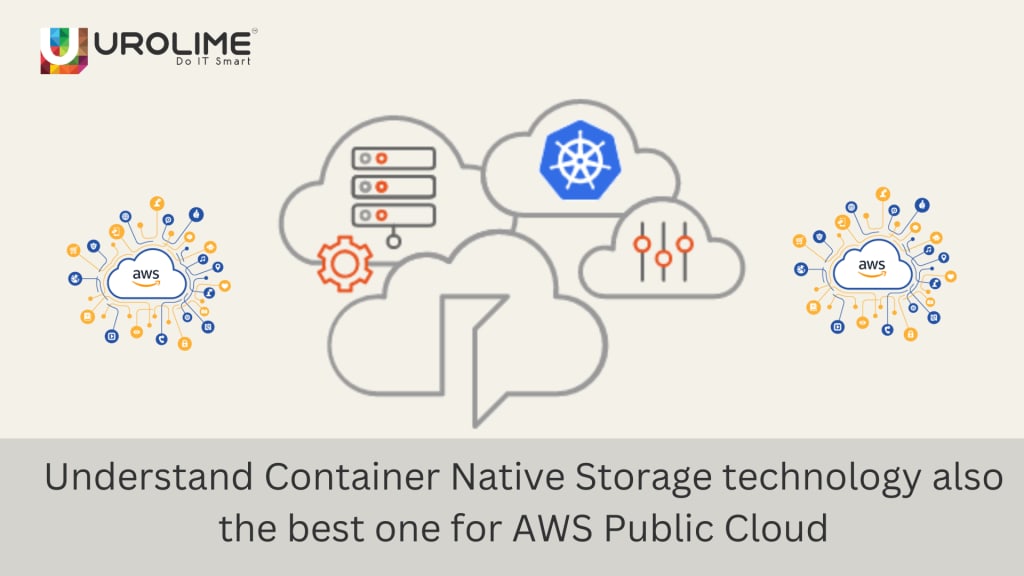
Container Native Storage is any kind of independent storage that provides high scalability and faster container management on Kubernetes. It is basically a software-defined data storage that is highly required to run and manage applications in containers due to the persistent data storage required for applications. The best Container Native Storage provides many benefits similar to container workloads. Many container orchestration platforms similar to Kubernetes also require the best Container Native Storage for cloud platforms. In this article, we will elucidate the top Container Native Storage as well as which suits the best AWS public cloud.
Container Cloud Native Storage
Container Native Storage gives containers persistent volumes storage interoperability. As a business owner, you can choose a wide range of storage services according to workload while considering factors such as cost and speed. The following are some of the attributes of a Container Cloud Native Storage.
- Container orchestration platforms such as Kubernetes, Docker and Mesos use this software.
- It's a portable pattern
- Container workload can choose their own best storage
- Data persists beyond pods, hosts as well as containers
A Cloud Native Storage can handle different datatypes such as
- Metadata
- User Defined Schema
- Blobs
- Files
- Time Series
- Media streaming
- Log/log streaming
- Documents such as XML, YAML and JSON
How does a Container Native Storage work?
The virtual environment created by the Container Native Storage needs persistent data to run and that is what CNS provides. It is a software-denied data storage solution that helps your business to be the top provider of technological solutions. Kubernetes applications can use Container Native Storage and run applications without relying on any dependencies. Managing and allocating containers are easier with CNS.
Benefits of a Container Native Storage
- The benefits of Container Native Storage are as follows:
- Its best for e-commerce transactions as it supports SQL with strong consistency and replication
- Product photos can be stored as it has a low-cost object storage with a caching layer
- Automates and abstracts the underlying storage infrastructure
- Scalability of pool in a multi-tenant environment
- Ensures performance of each workload
- High portability as storage units can be easily transported from one environment to another. For instance, datacentre to the production environment.
- Isolation means this storage software has no dependencies
- Additional features are always provided such as data replication, snapshots and enhanced storage.
For many years, developers have been contemplating a solution that helps them to run active workloads at the same time store data that the application demand. Whether you run a big, small or medium business, containers as well as Container Native Storage can be specifically helpful.
- Containers and related technologies are future-centric as data centers cannot exist without them.
- Containerization has revolutionized how businesses run and deploy applications. They are portable and lightweight as they require less space than virtual machines.
- Splitting workloads of applications as well as application migration are the easiest to execute.
Container Native Storage is the future thing for computing environments. IoT, edge computing and data centers will be benefited from CNS. The portability of data and application are the winning advantage of container technology. A slight disadvantage of a container is a slight flow of security breaches will lead to a great loss but with Container Native Storage security is guaranteed. Redhat Open Shift Container Storage and POrtworx PX- store are the two major Container Native Storage providers.
Things to look at before choosing a Container Native Storage
If you are planning to have a Container Native Storage for the public cloud, you need to find out the answers to these questions and select one for your AWS public cloud.
- Does it interoperates with container orchestration and runtimes
- Common abstraction of core capabilities such as size, type, invoice
- Common data services such as snapshot, replication, encryption
- Lifecycle and operations
- The elasticity of performance and capacity
Summary
Modern applications are typically built out of multiple distributed components that communicate with each other. Container technology as well as container orchestration tools have been changing since their discovery. Containerized applications will be reigning the industry and understanding the benefits of container Native Storage for AWS cloud is really a plus point. AWS consulting company can be a great help in embracing Container Native Storage for AWS public cloud.
About the Creator
Urolime Technologies
Urolime is one of the leading DevOps consulting companies with a handful of experience in supporting customers around the globe in adopting DevOps practices.
Keep reading
More stories from Urolime Technologies and writers in Journal and other communities.
How to create a Digital Transformation strategy that works
Since the COVID-19 breakout across the globe, most organisations have opted to migrate their businesses to digital platforms as they found difficulties operating under a traditional methodology. Even though most businesses understood the value of digital transformation, they failed. The main reason for business failure is not having the right strategy to implement it successfully. Knowing alone what digital transformation can do for a business is not enough, but you can enjoy the value it brings to the table only when you implement it.
By Urolime Technologies3 years ago in Journal
The goals I did not achieve
Every writing goal I made for the year is a wash. It has been this way for a while, but I think it's important to be open about my failures and the reality of how life can get in the way. This is especially true considering the several times I have posted on Vocal about my writing goals, how I was changing my approach, and where I was hoping to be for the upcoming year. I will probably do that again in a couple months, but for now, it is time to acknowledge where I am today.
By Kay Husnick23 days ago in Journal
Stanislav Kondrashov: How Social Media Is Quietly Changing the Way We Experience Travel Photography
Travel photography has always been about more than images. At its best, it captures atmosphere, emotion, and the subtle details that define a place beyond landmarks and guidebooks. Yet the way these stories are created and shared has changed dramatically in recent years. Social media platforms have not simply introduced new tools; they have reshaped the language of travel photography itself.
By Stanislav Kondrashov 3 days ago in Journal
The Devil's Cut
“Comrade, finally you’re awake.” The voice was smooth, sensual. A flickering incandescent bar was all that lit the white, sterile room. All Vladimir remembered was everything going black. He tried to move his arms and found them strapped to the gurney.
By Matthew J. Fromm5 days ago in Fiction



Comments
There are no comments for this story
Be the first to respond and start the conversation.