
Uliana Poltavets on Ukraine: Drones, Blackouts, and Attacks on Health Care
Uliana Poltavets: How are drone strikes and energy attacks reshaping health care delivery, maternal safety, and medical neutrality in Ukraine?

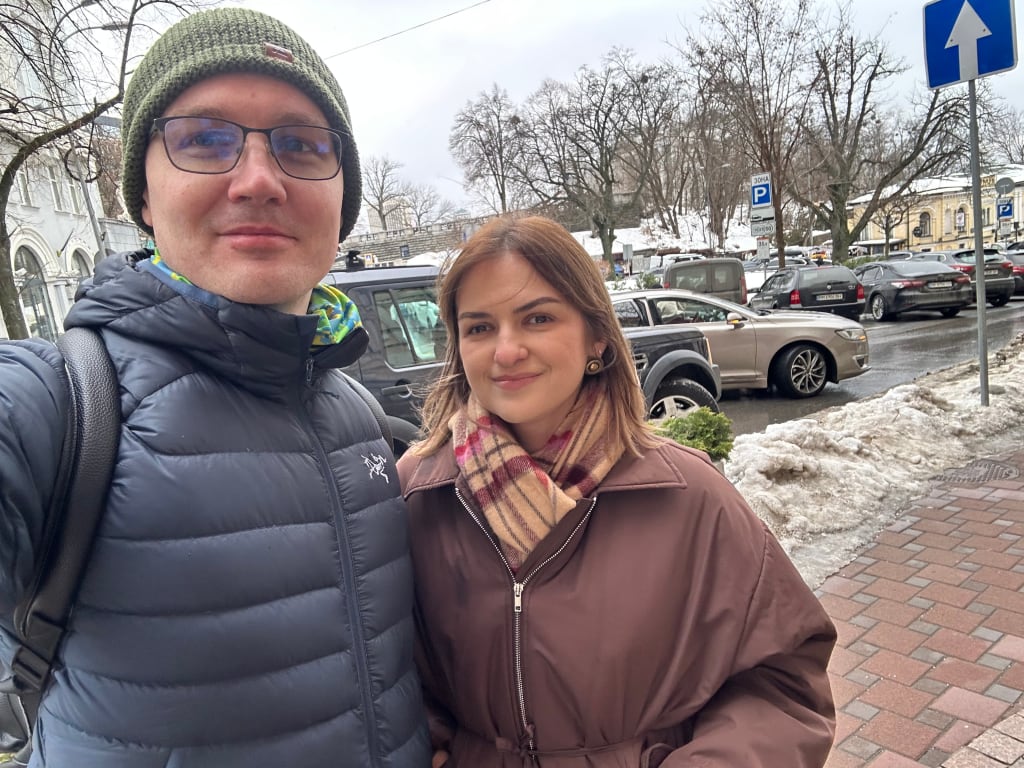
Uliana Poltavets, MS, is the International Advocacy and Ukraine Program Coordinator at Physicians for Human Rights. She focuses on documenting attacks on health care in Ukraine since Russia’s full-scale invasion and supporting accountability work. Before joining PHR, she spent roughly a decade strengthening Ukraine’s civil society. Poltavets’ advocacy highlights how drone strikes on hospitals, ambulance targeting, and attacks on energy infrastructure disrupt clinical services, strain health workers, and endanger vulnerable groups, including pregnant women, people with disabilities, and older adults. Her work links open-source verification, partner reporting, and hospital testimony into usable evidence for investigators, courts, and public decision-makers worldwide.
In conversation, Scott Douglas Jacobsen interviews Uliana Poltavets of Physicians for Human Rights on attacks against Ukraine’s health system. Poltavets describes documenting hospital bombings, detained and tortured health workers, and the illegality of striking maternity facilities. She reports that 2025 saw a sharp rise in drone attacks and continued targeting of ambulances, discouraging use of protective Red Cross emblems. She links assaults on energy infrastructure to disrupted procedures, burnout, and severe risks for dialysis, palliative, disabled, elderly, and pregnant patients. Poltavets notes verified-case counting, Berkeley Protocol methods, and major evidence gaps in occupied territories where monitoring and access remain impossible.
Scott Douglas Jacobsen: What originally led you to this work?
Uliana Poltavets: I have worked on the development of Ukraine’s civil society for the last 10–15 years. When the full-scale invasion began, I wanted to do something that mattered at that moment. I felt we needed to document the atrocities happening on the ground. I was drawn to Physicians for Human Rights because we saw bombings of hospitals, and healthcare workers being arrested, detained, and tortured. For me, that was at the core of this war. It is unjust, and it is against the norms of international law, to attack a maternity hospital or any place that serves as a refuge for communities.
Jacobsen: Based on your recent reports, including those not yet released, what distinct trends have emerged throughout 2025?
Poltavets: In 2025, one of the main trends we saw was the prominent use of drones to attack hospitals. We also observed a very large increase in drone use compared to earlier periods.
Another major trend is the targeting of ambulances, which has been rising, especially in frontline regions such as Kherson and Zaporizhia. It has reached the point where medics are reluctant to put a Red Cross emblem on their vehicles because they fear they will be attacked specifically because the vehicle is an ambulance or a medical evacuation vehicle. That is contrary to the law, because the emblem is intended to protect medical services from attack.
We are also looking at trends in maternity healthcare and how they relate to the developing legal concept of reproductive violence. In Ukraine, birth rates are lower than mortality, and maternal deaths are increasing. We are analyzing how attacks on maternity healthcare, which have been rising, may be contributing to these dynamics. Women want to know they can give birth in a safe place and a safe facility. When hospitals are attacked, it affects decisions about whether to give birth, whether to have children, and whether to give birth in a hospital.
We do not have statistical data that fully captures this, but we have anecdotal evidence from doctors reporting preterm deliveries linked to stress from attacks. Women have to move repeatedly during air raids, including going up and down to shelters. Some pregnant women are on bed rest near term, but during air raids they still have to go to a shelter, which means constant movement
It affects many decisions for women. Another major issue is attacks on energy infrastructure and how they affect healthcare delivery and population health. Last year, we conducted a nationwide survey of more than 2,261 healthcare workers. Over 90 percent reported experiencing power interruptions in their facilities, and more than 66% said those outages directly affected medical procedures.
Although many hospitals have generators or solar power, these systems cannot fully sustain hospital operations. A generator may supply power to an intensive care unit or neonatal unit, but it cannot power elevators, storage facilities, or maintain full functionality. This creates serious challenges for bedridden or immobile patients who cannot be moved manually. The burden falls on healthcare workers.
More than 83% of respondents reported high levels of burnout and stress related to energy attacks and power cuts, in addition to the overall strain of war. The healthcare workforce has decreased by appoximately 20% since the start of the full-scale invasion, while demand has increased. Energy attacks impose additional responsibilities. When there is no electricity, electronic medical records cannot be updated, so staff must work extra hours when power is restored.
Water, sanitation, heating in winter, and air conditioning during extreme summer heat have also been affected. In the summer of 2024, healthcare workers reported nonfunctioning toilets and disrupted water supply in hospitals, which is critical for medical care.
Our recent research also examined at-home care. For example, an at-home dialysis patient must run her machine several times a day for extended periods. She organizes her life around the power outage schedule, because if the machine stops during an outage, it can be life-threatening.
We also spoke with organizations supporting palliative care patients. These patients and their families experience significant psychological stress, knowing that a power outage could interrupt essential care. Organizations working with people with disabilities report that many individuals are confined to their homes during outages. Even if they go downstairs while electricity is available, they may not be able to return if elevators stop working. As a result, they are less likely to seek medical care during power cuts.
We have also spoken with organizations that work with elderly populations, and the situation is similar. Many older people become trapped in their homes during power outages and are less likely to seek medical care. The psychological burden is severe across all groups we interviewed. People must plan their lives around power cuts and constantly anticipate the worst, especially if they depend on electricity for medical care. That has a profound impact on vulnerable populations.
We examined how multiple factors interact. For example, a person with a disability who lives on an upper floor in an apartment building may have limited mobility, rely on electrical medical equipment, and face nonfunctioning elevators during outages. Even if they reach a hospital, that hospital may also be operating with limited capacity due to power cuts. These combined pressures can have serious health consequences.
This winter has been extremely harsh, and we expect to see more severe effects following prolonged cold temperatures.
Jacobsen: We have seen reports of deaths among vulnerable people. I recall a story about a Holocaust survivor in her eighties who froze to death in Kyiv. There will likely be more stories like that.
Poltavets: It does not require a snowstorm for freezing to occur. If the temperature inside an apartment remains below 15 degrees Celsius for an extended period, it can have serious health consequences, particularly for people with thermoregulation issues. Many people with disabilities experience difficulty regulating body temperature. Cold exposure can trigger spasticity, which is involuntary muscle tightening that is painful and difficult to control without warmth. Living in such conditions is physically painful and medically dangerous.
The number of people with disabilities has increased because of the war, including veterans and civilians injured by mines and other hostilities. This is a large and growing vulnerable population.
Jacobsen: Do you have documented cases of pregnant women or women who had just given birth being killed in hospitals?
Poltavets: I do not have individual case files with me, but there have been reports of pregnant women and women who had recently given birth being killed, as well as infants. Since the start of the full-scale invasion, we have documented 94 attacks on maternal healthcare facilities. Many of those attacks resulted in fatalities.
Jacobsen: Are there gaps in that systematic reporting? Is it possible that the actual number of attacks is higher than documented?
Poltavets: This is a fundamental limitation of our work. The actual number of attacks is likely higher than what we document. We collect data from open sources and verify it through a structured process based on the Berkeley Protocol on Digital Open Source Investigations. We record only what we can confirm with a high degree of confidence to ensure accuracy.
We also triangulate information through multiple channels. We work with partners on the ground who report what they observe in hospitals. We collect testimonies from hospital representatives. Some partner organizations conduct site visits. We also collaborate with Eyewitness to Atrocities, a secure documentation app that preserves metadata and prevents tampering with images. Photographs submitted through that system can be authenticated and added to our database. Our records are built from multiple verified sources.
Even with these methods, there are significant gaps. We cannot access remote areas, and we cannot operate in occupied territories, which constitute approximately 20 percent of Ukraine’s territory. We rely on accounts from people who have left those areas and on media reporting, but we cannot independently verify most of it.
Jacobsen: According to press freedom indices, Ukraine’s ranking has improved significantly in recent years, while Russia’s has declined. In occupied territories, reporting is likely to be far less reliable, and many journalists are understandably reluctant to go there because of the risks.
Poltavets: Access to occupied territories is extremely dangerous. I know individuals who went there, and the consequences were severe. International organizations, including major agencies such as the World Health Organization, also lack systematic monitoring in those areas. Without reliable health and system-level indicators, we cannot fully assess conditions there.
In our methodology, an attack on healthcare is defined broadly as any act that obstructs the provision of healthcare. It is not limited to bombings or attacks on ambulances. For example, in occupied territories there is a practice often described as “passportization,” in which residents are pressured to obtain Russian passports. In some cases, access to healthcare is conditioned on accepting that passport. When access to medical care is tied to political coercion, that constitutes an obstruction of healthcare and, in our framework, an attack on health.
Jacobsen: Thank you very much for the opportunity and your time, Uliana.
Scott Douglas Jacobsen is a blogger on Vocal with over 120 posts on the platform. He is the publisher of In-Sight Publishing (ISBN: 978–1–0692343) and the Editor-in-Chief of In-Sight: Interviews (ISSN: 2369–6885). He writes for The Good Men Project, International Policy Digest (ISSN: 2332–9416), The Humanist (Print: ISSN 0018–7399; Online: ISSN 2163–3576), Basic Income Earth Network (UK Registered Charity 1177066), A Further Inquiry, The Washington Outsider, The Rabble, and The Washington Outsider, and other media. He is a member in good standing of numerous media associations/organizations.
Image Credit: Scott Douglas Jacobsen.
About the Creator
Scott Douglas Jacobsen
Scott Douglas Jacobsen is the publisher of In-Sight Publishing (ISBN: 978-1-0692343) and Editor-in-Chief of In-Sight: Interviews (ISSN: 2369-6885). He is a member in good standing of numerous media organizations.
Keep reading
More stories from Scott Douglas Jacobsen and writers in Journal and other communities.
Maayan Aviv: Jewish Leaders on Practicing Tzedakah as Justice, Dignity, and Repair
Maayan Aviv (she/her) is Executive Director and CEO of American Friends of NATAL, leading the organization since March 2023. Trained in international relations, she brings 15 years of nonprofit leadership across strategic planning, community partnerships, fundraising, donor stewardship, and mission-driven marketing. Aviv emphasizes collaboration that strengthens psychosocial resilience and healthier societies. Before joining AFN, she served as Executive Director of American Friends of ALYN Hospital, supporting pediatric rehabilitation initiatives. She is a public-facing spokesperson who links philanthropy, governance, and impact measurement to durable, dignified support for communities in daily practice.
By Scott Douglas Jacobsen4 days ago in Journal
Operational Strategy and Manufacturing Resilience: Kenneth Kremsky Philadelphia
Manufacturing organizations operate under continuous pressure. Global competition, rapid technological advancement, workforce constraints, and evolving customer expectations require facilities to perform at consistently high levels. Companies must deliver reliable quality, maintain cost control, and adapt quickly to shifting demand patterns.
By Kenneth Kremsky5 days ago in Journal
The Pride Flag and the Diversion
For nearly a decade, the LGBTQIA Pride Flag rippled in the wind at Christopher Park, a kaleidoscope of color staked into the soil of America’s first national monument to LGBTQIA+ liberation. That flag came down this week. Federal officials, citing new guidance from the Trump Administration, silently lowered the rainbow flag from its pole across the street from the Stonewall Inn. The birthplace of the modern gay rights movement now flies only the United States flag.
By Tim Carmichael6 days ago in Pride




Comments
There are no comments for this story
Be the first to respond and start the conversation.