
U.S. Next-Generation Sequencing Market Poised for Strong Growth, Set to Dominate North American Genomics Landscape
Driven by precision medicine initiatives, research funding, and rapid clinical adoption, the U.S. leads the North American NGS market through 2029
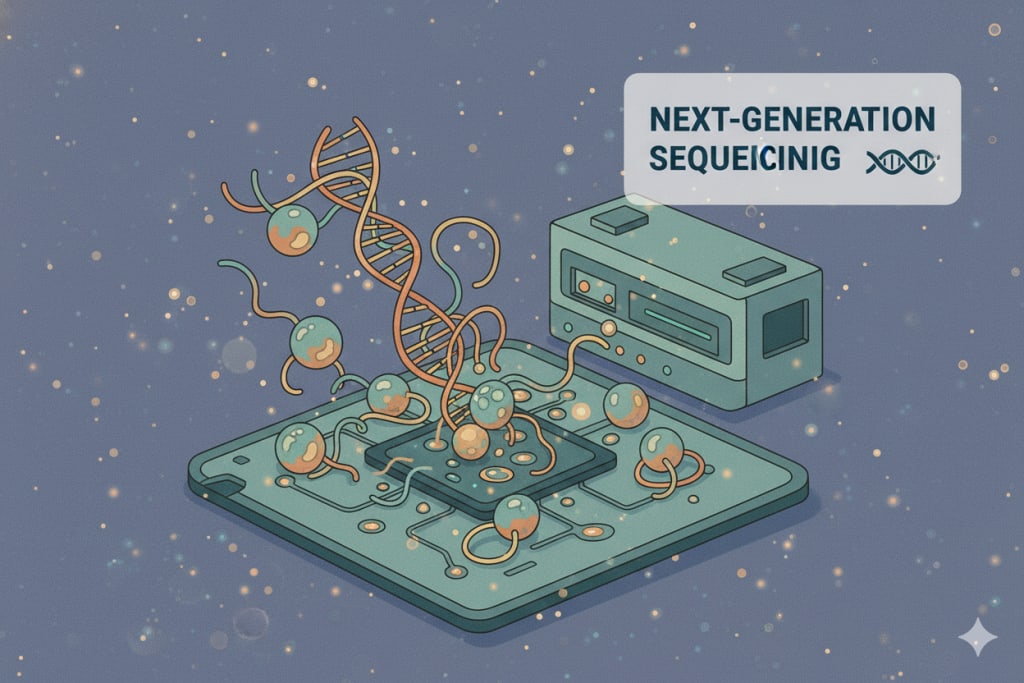
The global Next-Generation Sequencing (NGS) market, valued at US$12.13 billion in 2023, rose to US$12.65 billion in 2024 and is projected to expand at a compound annual growth rate (CAGR) of 13.2% through 2029, reaching an estimated US$23.55 billion by the end of the forecast period, according to the latest market analysis.
This strong growth trajectory is fueled by the rising demand for precision medicine, which leverages NGS for identifying genetic mutations and biomarkers that enable targeted therapies and personalized healthcare solutions. The declining cost of sequencing and its broadened accessibility in large-scale research and clinical diagnostics are further accelerating market adoption worldwide.
Key Market Drivers
Advancements in Sequencing Platforms:
Technological innovation remains at the core of NGS expansion. Enhanced sequencing chemistries—such as improved fluorescent labeling and error-correction mechanisms—have significantly increased data accuracy and throughput while reducing time and costs. The advent of automated compact systems and benchtop sequencers has made sequencing more accessible to smaller laboratories and clinical settings. Additionally, scalable workflows and integrated bioinformatics tools have simplified data analysis across diverse applications including targeted sequencing, transcriptomics, and epigenetics.
Market Restraints
High Initial Capital Investment:
Despite its transformative potential, the adoption of NGS technology remains challenged by substantial upfront costs associated with purchasing high-end sequencing instruments and establishing supportive infrastructure for data storage, computation, and automation. For many smaller laboratories and academic institutions, outsourcing sequencing services continues to be a more viable alternative, limiting broader market penetration—particularly in emerging markets.
Opportunities Ahead
Expanding Role of Genomics in Precision Medicine:
Rapid progress in long-read sequencing technologies—offered by companies such as Pacific Biosciences and Oxford Nanopore Technologies—is opening new avenues for comprehensive genomic analysis, including de novo genome assembly and full-length transcriptomics. These advances are driving integration of NGS into clinical diagnostics, cancer genomics, and rare disease research, enabling more accurate and actionable insights.
Key Challenges
Standardization and Data Consistency:
The lack of uniform protocols in sample preparation, library construction, and data analysis continues to pose a major hurdle. Variability across laboratories and platforms undermines reproducibility and hinders multi-center collaboration. Establishing global standards and regulatory guidelines is critical to ensuring quality, reliability, and clinical adoption of NGS technologies.
Market Insights by Segment
By Offering: The product segment (instruments, consumables, and reagents) held the largest market share in 2023, driven by their indispensable role in sequencing workflows across research and clinical applications.
By Technology: Sequencing by Synthesis (SBS) dominated in 2023 due to its low error rates and high-quality data, making it the preferred choice for whole-genome and clinical sequencing.
By Application: Cancer diagnostics led the diagnostic application segment, attributed to the increasing prevalence of cancer and the growing importance of tumor genomic profiling in guiding targeted therapies.
By Region: North America accounted for the largest market share in 2023, supported by significant funding, advanced healthcare infrastructure, and large-scale genomic initiatives such as the All of Us Research Program. The Asia Pacific region, meanwhile, is projected to witness the fastest growth due to expanding clinical adoption and rising investments in precision medicine.
Key Players
Prominent companies operating in the global next-generation sequencing market include Illumina, Thermo Fisher Scientific, Agilent Technologies, Roche, QIAGEN, Danaher Corporation, Revvity, Eurofins Scientific, Pacific Biosciences, Oxford Nanopore Technologies, and BGI Group, among others. These industry leaders continue to drive innovation through platform enhancements, partnerships, and expansion into clinical and translational research applications.
About the Creator
Keep reading
More stories from Juan Martinez and writers in Journal and other communities.
U.S. Pharmaceutical Contract Manufacturing Market: High Clinical Trial and Drug Discovery Activities to Foster Growth
The global pharmaceutical contract manufacturing market, valued at US$193.52 billion in 2024, rose to US$209.90 billion in 2025 and is projected to achieve a remarkable US$311.95 billion by 2030, advancing at a compound annual growth rate (CAGR) of 8.2% during the forecast period (2025–2030).
By Juan Martinez4 months ago in Journal
The Invisible Hand That Rules
In the heart of the city, there’s a building that no one notices. Its glass walls reflect the sun, its elevators glide silently, and its corridors smell of polished ambition. Decisions are made here that shape millions of lives, yet outside, the city breathes, unaware. The air hums with traffic, the chatter of cafes, the distant wail of sirens, and life moves on as though the building’s influence is nothing more than an echo.
By Jhon smith6 days ago in Journal




Comments
There are no comments for this story
Be the first to respond and start the conversation.