
Trump Says He Doubts US Will Go to War With Venezuela
Former U.S. President Donald Trump downplays the possibility of military conflict with Venezuela, urging diplomacy and caution amid strained relations between Washington and Caracas.

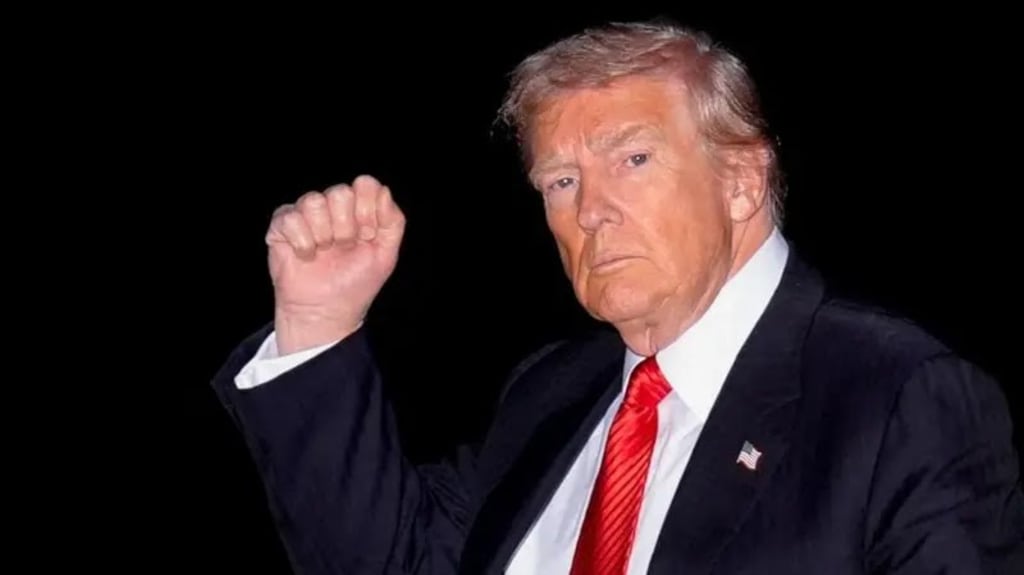
In a recent statement that stirred international attention, former U.S. President Donald Trump said he doubts the United States will go to war with Venezuela. His comments came during a political rally, where he addressed ongoing debates about foreign intervention, oil politics, and America’s global military role.
The remark reflects Trump’s familiar stance of questioning U.S. involvement in overseas conflicts. But it also reopens conversations about the complex and often strained relationship between Washington and Caracas—a relationship shaped by decades of political rivalry, economic sanctions, and the global race for energy resources.
---
A Complicated Relationship
The relationship between the United States and Venezuela has been tense for years. What was once a strong trade partnership built around oil has evolved into one of mutual suspicion and political hostility.
Venezuela, one of the world’s richest countries in oil reserves, has long been a strategic interest for the United States. However, after years of political and economic crisis under the governments of Hugo Chávez and Nicolás Maduro, the two countries have moved further apart.
When Trump was in office, his administration recognized opposition leader Juan Guaidó as the legitimate president of Venezuela. This led to intense diplomatic pressure on Maduro’s regime and several rounds of economic sanctions designed to isolate the country’s leadership.
Now, Trump’s latest statement seems to downplay the possibility of direct conflict, suggesting that Washington’s interest in Venezuela may have shifted toward negotiation rather than confrontation.
---
Why Venezuela Still Matters
Even though the U.S. has many global concerns—ranging from Eastern Europe to the Middle East—Venezuela continues to be a significant player in the Western Hemisphere. Its vast oil reserves make it an essential piece of the global energy puzzle.
As the U.S. faces rising fuel costs and shifting alliances in OPEC, some American leaders believe that re-engaging with Venezuela’s oil sector could stabilize markets. Others warn that negotiating with the Maduro regime would legitimize authoritarianism and weaken the U.S. stance on human rights.
Trump’s comments, therefore, carry weight beyond politics—they raise questions about how America should balance its moral values with its economic interests.
---
War Talk and Public Opinion
The idea of military intervention in Venezuela has appeared before. During Trump’s presidency, there were reports that some advisors discussed the possibility of using force to push Maduro out of power.
However, most Americans—and even many in Congress—opposed that approach. Critics warned that a war in Venezuela could destabilize Latin America, spark mass migration, and drag the U.S. into another prolonged conflict.
By saying he doubts the U.S. will go to war, Trump is likely echoing the sentiments of many Americans who are weary of international conflicts after decades of involvement in Iraq and Afghanistan.
---
Venezuelan Reaction
In Caracas, officials dismissed Trump’s remarks as “political theater,” saying that the United States should stop “interfering” in Venezuelan affairs altogether. Maduro’s government maintains that U.S. sanctions have crippled its economy and caused unnecessary suffering among ordinary citizens.
Still, some Venezuelans—especially those who oppose the government—view U.S. involvement as necessary to pressure Maduro into democratic reforms. This divide reflects how deeply politics and survival are intertwined in Venezuela today.
---
Looking Ahead
Whether the U.S. under future administrations decides to take a softer or harder stance on Venezuela will depend on several factors: global oil prices, domestic politics, and international alliances.
Trump’s statement doesn’t mark a change in official policy—since he’s no longer in office—but it highlights the ongoing debate about how America should engage with struggling nations in its own hemisphere.
Should the U.S. step back and let internal political processes take their course? Or should it continue applying diplomatic and economic pressure? These are questions policymakers continue to wrestle with as Venezuela tries to rebuild its fractured economy and political system.
---
A Moment of Reflection
At its core, Trump’s comment—“I doubt we’ll go to war with Venezuela”—captures a growing fatigue among both politicians and citizens regarding foreign interventions. For many Americans, the priority now is domestic stability, not new conflicts abroad.
Yet, Venezuela’s crisis remains a humanitarian concern. Millions have fled the country due to poverty, lack of medicine, and political repression. Even without war, the world continues to watch, hoping that diplomatic solutions will eventually bring peace and prosperity to the Venezuelan people.
About the Creator
Fiaz Ahmed
I am Fiaz Ahmed. I am a passionate writer. I love covering trending topics and breaking news. With a sharp eye for what’s happening around the world, and crafts timely and engaging stories that keep readers informed and updated.
Keep reading
More stories from Fiaz Ahmed and writers in Journal and other communities.
I’m the Luckiest Man Alive, But Also Suffering,” Says Air India Crash Sole Survivor
When Ravi Kumar opened his eyes in a hospital bed, surrounded by doctors and flashing lights, his first thought was disbelief. Moments earlier, he had been on board Air India Flight 582, a routine domestic journey that turned into a tragedy when the plane crashed while attempting to land during heavy rain. Out of more than 100 passengers, Ravi was the only one to survive.
By Fiaz Ahmed 4 months ago in Journal
Author’s Advice
If you would’ve asked me 20 years ago did I know I’d become a writer and an author, I would’ve said “nope, ain’t happening”. As fate would have it I did become an author and I can honestly say I’m loving it so far. It really does feel good to be a writer. I’ve learned a lot on this journey and I feel like with even me being as new to this world as I am, there’s some wisdom I need to share with every other aspiring author.
By Joe Patterson4 days ago in Journal
Rebuilding a Skincare Routine From Scratch: What a 30-Day Reset Can Teach You
Skincare routines can become surprisingly complicated over time. What often starts with a cleanser and moisturizer can quickly turn into a crowded shelf of serums, treatments, masks, exfoliants, and creams that promise to solve every possible skin concern.
By Shahid Sipra6 days ago in Journal


Comments
There are no comments for this story
Be the first to respond and start the conversation.